

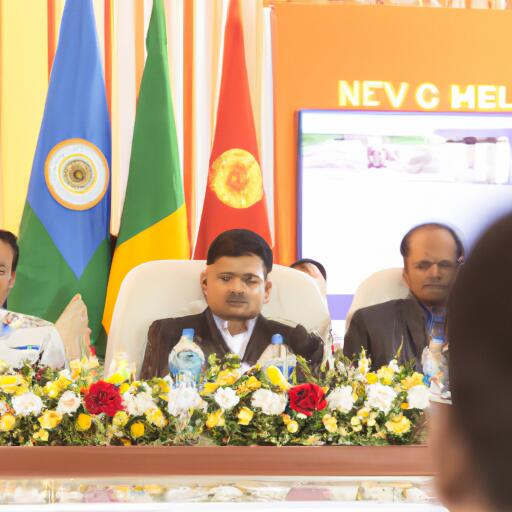
Economy, Science & Technology, And Environment: The Three New Pillars Of Vietnam – India Cooperation
Across the Indo-Pacific, growth and geopolitics are reshaping partnerships—and Vietnam and India are responding by deepening their Comprehensive Strategic Partnership. Since 2016, cooperation has broadened well beyond traditional areas. With the 2024–2028 Action Plan, both countries have placed economy, science and technology, and the environment at the core of a more results‑driven agenda focused on innovation, digital transformation, energy transition, and sustainable development.
Economy: Building resilient, complementary supply chains
Economic ties have strengthened steadily, with two‑way trade rising from more than USD 14 billion in 2023 to nearly USD 16.5 billion by 2025. The trade basket reflects striking complementarity: Vietnam has expanded exports of electronics, machinery, processed farm goods, timber products, and seafood, while India remains a key supplier of steel, pharmaceuticals, chemicals, and textiles.
As global supply chains recalibrate, both sides aim to diversify partners and minimize concentration risks. This creates space for joint value chains in manufacturing and processing, supplier networks for components, modern logistics, and technology‑enabled agriculture. Vietnam’s position at the heart of Southeast Asia offers Indian firms a springboard into ASEAN markets; India, for its part, offers a large and growing consumer base and robust industrial ecosystem.
Priorities ahead include reducing non‑tariff barriers, smoothing customs and standards convergence, upgrading logistics links, and advancing the review and modernization of the ASEAN–India Trade in Goods Agreement. Co‑investment in pharmaceuticals, the blue economy, renewable energy equipment, and key supporting industries could anchor longer‑term industrial partnerships.
Science & technology: From exchanges to co‑innovation
Technology collaboration has shifted from ad‑hoc exchanges to mission‑oriented projects aligned with national development needs. Joint initiatives—ranging from satellite data reception and image processing to nuclear science collaboration in Da Lat, software parks, and centers of excellence—have helped upgrade Vietnam’s digital and research capacity. Training programs have also equipped Vietnamese officials and specialists with modern management and technical expertise through Indian institutions.
The next phase targets co‑innovation in areas with high spillover effects: artificial intelligence, semiconductor design and packaging, cybersecurity, digital finance, biotechnology, and clean energy technologies. Practical steps include joint research calls, shared laboratories and testing facilities, streamlined intellectual property frameworks, and industry‑university consortia that link researchers with market demand. Talent pipelines—fellowships, joint degrees, and engineer exchanges—will be essential to sustain momentum and ensure technology transfer translates into commercial products and public‑service improvements.
Environment and climate: The fast‑rising pillar
Climate impacts—from heatwaves and floods to coastal erosion and saline intrusion—are sharpening the case for environmental cooperation. Both countries are scaling work on renewable energy, water resources, the circular economy, and disaster‑resilient infrastructure.
Recent efforts include marine science collaboration and community‑level projects that deliver clean water, mitigate drought, and curb saltwater intrusion in the Mekong Delta. Engagement with disaster‑resilient infrastructure initiatives is opening access to standards, data sharing, and financing models tailored to climate risks.
Looking ahead, promising avenues include utility‑scale and rooftop solar, battery storage and grid modernization, waste‑to‑energy and materials recovery, ocean pollution monitoring, nature‑based solutions for coastal protection, and early‑warning systems for storms and floods. Joint pilots that blend public finance with private capital—and that involve local communities in design and operation—can accelerate deployment while ensuring social benefits.
Roadmap and political momentum
The 2024–2028 Action Plan provides structure and timelines, while upcoming high‑level engagements—including a state visit scheduled for May 2026—offer political impetus. The focus now is converting strategic intent into bankable projects with clear milestones and resources.
- Economy: Streamline customs and standards, enhance logistics corridors, and advance the upgrade of regional trade arrangements. Prioritize co‑investment in pharmaceuticals, marine industries, renewables, and component manufacturing.
- Science & technology: Launch joint research funds, establish shared labs, strengthen university‑industry linkages, and scale expert exchanges and technology transfer in AI, chips, cybersecurity, and biotech.
- Environment: Build a comprehensive green cooperation framework spanning water stewardship, marine science, plastic and waste reduction, clean energy deployment, and resilient infrastructure—leveraging regional mechanisms where useful.
Outlook: A partnership for a greener, smarter economy
With complementary strengths and aligned priorities in the digital economy, the green transition, and innovation, Vietnam and India are positioned to move from plans to outcomes. If implemented with discipline and transparency, the three pillars—economy, science and technology, and environment—can deliver resilient supply chains, competitive industries, cleaner energy systems, and safer communities across the Indo‑Pacific.



Leave a Reply