

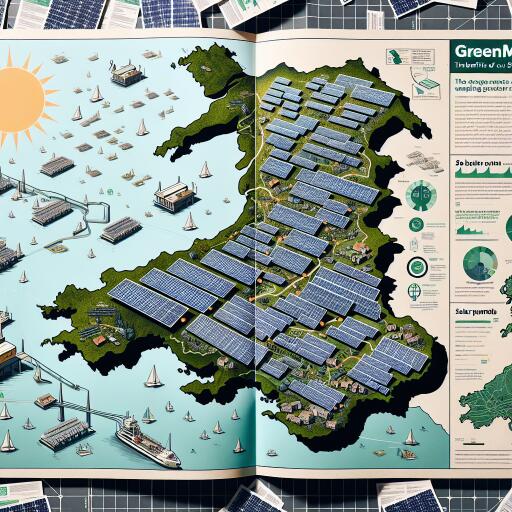
The Surprising Solar Potential of Wales
Despite common assumptions, Wales experiences enough sunlight to make solar panels a smart investment for homes and businesses alike. Solar panels offer a sustainable way to generate free electricity by harnessing this energy from the sun. With the region receiving a considerable amount of sunshine, solar energy is an excellent solution for leveraging renewable power sources that are naturally abundant.
In 2021, Wales achieved an impressive milestone by installing photovoltaic systems with a total capacity of 1,221 megawatts across the region. Solar panels are versatile and can be installed in various structures, ranging from residential homes to larger commercial establishments. Furthermore, efforts by the Welsh government to introduce solar panels in schools and public buildings are enhancing the region’s aim for community-owned renewable energy projects.
Understanding Solar Panel Efficiency in Wales
Wales enjoys a relatively good number of sunny days, making solar panels an effective energy source. The efficiency of a solar system depends largely on panel orientation and seasonal variations. Generally speaking, panels that face south tend to perform better throughout the year compared to those that face north.
Cost of Solar Panels in Wales
The financial investment required for a solar system installation in an average Welsh household is estimated to be between £5,000 and £6,000. It’s important to note that the cost of solar panels in the UK has decreased in recent years. In 2024, prices fluctuated between £2,500 and £10,500 for domestic system installations.
Several factors influence the cost of installing solar panels, such as the size of the solar system, the nature of the installation, and the option to include a solar battery. Costs can also vary depending on the choice of supplier and the type of panels selected.
Government Support and Schemes
For those interested in installing solar panels in Wales, government initiatives offer different options for grants, rebates, and schemes aimed at reducing the costs for households.
- Nest Scheme: Provides energy-saving advice and support to all Welsh residents, as well as funding for home energy improvements.
- ECO4 Scheme: Available for UK homeowners, including renters, who meet specific conditions such as receiving government benefits or having an inefficient heating system.
- Smart Export Guarantee (SEG): Energy companies purchase the excess renewable energy exported to the national grid, allowing homeowners to profit from their surplus energy.
- VAT Reductions: In response to rising energy prices in 2022, VAT on energy-efficient systems dropped from 5% to 0%, potentially reducing installation costs by up to £1,000. This VAT reduction is set to continue until 2027.
Determining the Right Solar System for Your Home
The number of solar panels required for a household largely depends on your energy consumption, roof space, and panel size. For example, if your energy needs total 3,000 kWh annually and you wish to rely primarily on solar energy, installing approximately 30 square meters of panels can yield around 2,190 kWh per year.
Consulting a professional solar installer is advisable to ensure that your home meets all necessary requirements for optimal solar panel installations.
Finding the Ideal Solar Panel Supplier
Several factors should be considered when selecting a solar panel supplier. In seeking cost-effective solar panel solutions, you have the flexibility to choose between a nationwide supplier, a specialized regional company, or local installers.
By leveraging a network of local installers, you can confidently find the most competitive solar installation offers in Wales. You will have the advantage of receiving multiple quotes, enabling you to compare and select the best deal tailored to your home and energy requirements.



Leave a Reply