

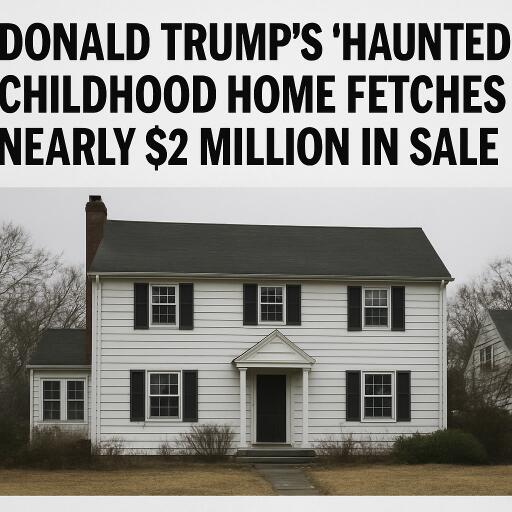
Donald Trump’s ‘Haunted’ Childhood Home Fetches Nearly $2 Million in Sale
The Queens house where Donald Trump spent his earliest years has finally traded hands for $1.93 million, capping an extraordinary turnaround for a property that locals once described as abandoned, overrun by stray animals, and downright “haunted.”
Set among tree-lined streets in Jamaica Estates, the five-bedroom Tudor-style home was built in 1940 by Fred Trump. The future president lived there until age four, before the family moved to a larger residence nearby. In recent years, however, the house became a neighborhood sore spot—vacant for long stretches and beset by problems that ranged from a leaky roof and flooding to repeated utility issues.
That reputation is now largely in the rearview. After changing hands multiple times over the last decade—at one point even being marketed as a short-term rental festooned with presidential memorabilia—the property underwent a full-scale rescue. A developer acquired it last year for $835,000, then poured roughly $500,000 and eight months into a gut renovation that swapped dilapidation for a crisp, urban aesthetic. The makeover introduced a chef’s kitchen, herringbone wood floors, spa-style bathrooms, refreshed landscaping, and a sleeker facade with new windows, a tiled approach, and a sturdy modern door.
The strategy paid off: relisted at just under $2 million, the approximately 3,100-square-foot residence ultimately sold over the summer for $1.93 million to an undisclosed buyer—about $70,000 below its final asking price, yet still delivering a substantial profit on the initial purchase. It’s a striking arc for a property that had been offered for far more—even in rundown condition—before years of neglect and bad luck sank buyer interest.
Neighbors say the turnaround is a relief. For years, the home’s decline was hard to ignore: weeds and fallen branches swallowed the yard, official notices piled up on the front door, and residents on the block complained of pests, water damage, and repeated stress on utilities during heatwaves. One resident said the place “looked like an abandoned set piece,” and several neighbors described the yard, once dotted with feral cats, as an eyesore they occasionally paid to maintain themselves. Security concerns also mounted, including reports of attempted intrusions when the house sat empty.
Today, the interior is nearly unrecognizable. The renovation team gutted aging systems, refreshed finishes, and opened spaces to better light and flow—trading fusty Tudor gloom for a bright, contemporary look. The design nods to classic materials but leans on clean lines and a palette more in step with 21st-century tastes than with the home’s mid-century origins.
Key timeline highlights:
- 1940: Fred Trump builds the home; Donald Trump spends his infancy and toddler years here.
- 2016–2017: A flurry of flips pushes the price above $2 million as national attention intensifies.
- Late 2010s–early 2020s: The property sees intermittent rentals, extended vacancies, and mounting maintenance issues.
- 2025: A developer buys, strips, and refits the house, investing heavily in a top-to-bottom overhaul.
- 2026: The residence sells for $1.93 million, closing a turbulent chapter.
The sale underscores the enduring pull of provenance in real estate. While the house’s connection to a polarizing public figure complicated its mid-2010s trading frenzy, it also ensured that—once it was properly restored—curiosity and demand remained. For the developer, the project’s historical backstory justified the risk; for buyers, the draw was a blend of fresh finishes and a tangible slice of New York lore.
From a neighborhood standpoint, the comeback also matters for practical reasons. Long-neglected homes can strain local infrastructure and morale: clogged gutters and unmanaged vegetation exacerbate storm runoff, broken windows invite trespass, and sporadic maintenance can ripple across a block in the form of outages or emergency calls. Bringing a property like this back into full use tends to stabilize a micro-ecosystem—curb appeal improves, wildlife incursions diminish, and the cadence of regular occupancy supports safer, cleaner streets.
While the renovation focused on aesthetics and livability, the revival of a prewar Tudor also opens a conversation about deep energy retrofits in older homes. Without speaking to the specifics of this project, similar gut jobs often provide ideal moments to add high-performance insulation, seal the building envelope, replace aging boilers with electric heat pumps, install induction cooking, and pre-wire for rooftop solar. Such upgrades can trim energy costs, cut indoor air pollution, and build resilience against heatwaves and storms—pressures New York already feels more acutely due to climate change.
For now, what’s certain is that the storied house on its quiet Queens block is no longer a neighborhood cautionary tale. After years of false starts, citations, and would-be break-ins, it has reemerged as a polished family home—with a complicated past, a refreshed present, and, at long last, a buyer.



Leave a Reply