

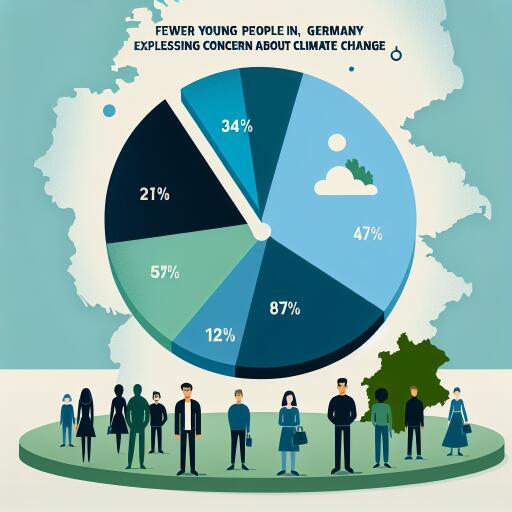
Survey: Fewer young people in Germany worried about climate change
Concern about the climate crisis appears to be waning among adolescents in Germany. A recent nationwide survey of teenagers finds that only around four in ten now view climate change as a very important issue—down from roughly six in ten just a few years ago. Over the same period, the proportion who consider the topic unimportant has nearly doubled, rising from 9% to 17%.
The poll, conducted online between October 16 and November 20 among 2,000 respondents aged 14 to 17, also tracked how intensely young people feel about the risks. In 2025, about 31% said they were personally very afraid of climate change, compared with 39% in 2021. Those who reported no fear increased from 14% to 22%, while almost half—47%—described mixed feelings, a share that has remained essentially unchanged.
These shifts suggest a complicated recalibration rather than a simple retreat. The steady share of ambivalence hints at a generation that is neither uniformly alarmed nor indifferent, but pulled between recognition of risk and the pressures of daily life. Competing crises, from cost-of-living concerns to geopolitical tensions, may be crowding the mental space once dominated by climate headlines. At the same time, the perceived gap between individual action and systemic change can breed fatigue or resignation, especially among those who feel they have little influence over decisions made by adults and institutions.
Yet the signal from the physical climate system is moving in the opposite direction. Recent assessments indicate that Europe has warmed roughly twice as fast as the global average since the 1980s. In 2025 alone, the continent saw a pronounced decline in snow and ice cover alongside widespread droughts, punishing heatwaves, destructive wildfires, and unusual marine warmth—many of these indicators pushing toward or reaching record levels. This contrast between rising impacts and falling salience among some young people should concern educators, policymakers, and climate communicators alike.
Why does this matter? Young people are both among the most affected by long-term climate risks and among the most crucial voices in shaping future policy. If attention drifts, hard-won progress can stall. But the survey’s “mixed feelings” majority also points to a large segment that remains reachable—neither disengaged nor fully mobilized—waiting for clear pathways to meaningful participation.
How to reconnect climate with youth priorities
- Link solutions to everyday benefits: cleaner air in cities, safer schools during heatwaves, cheaper and more reliable public transport.
- Emphasize fairness and opportunity: highlight training and jobs in clean industries, especially in regions undergoing economic transition.
- Bring climate into classrooms through practice: school heat action plans, citizen-science monitoring of local air quality, and hands-on energy projects.
- Offer real influence: youth councils with a mandate to shape municipal climate budgets and adaptation priorities.
- Show progress, not just peril: communicate emissions cuts, restored ecosystems, and communities that have reduced flood risk.
- Support wellbeing: acknowledge climate anxiety and provide resources that channel concern into agency and community-building.
Methodologically, the findings reflect a snapshot of sentiment among adolescents across Germany: 2,000 youths aged 14–17 were surveyed online over roughly five weeks in late 2025. While any single poll has limits, the pattern it describes—declining intensity of concern and rising indifference compared with 2021—aligns with broader signs of issue fatigue in an era of overlapping crises.
The lesson is not that climate change has vanished from young people’s minds, but that attention is a finite resource. To earn and hold it, climate action must feel tangible, fair, and effective—showing that choices made today can cool summers in the decades ahead, reduce wildfire smoke in the near term, and protect the places teens call home. The climate is moving quickly; our engagement strategies have to move just as fast.



Leave a Reply