

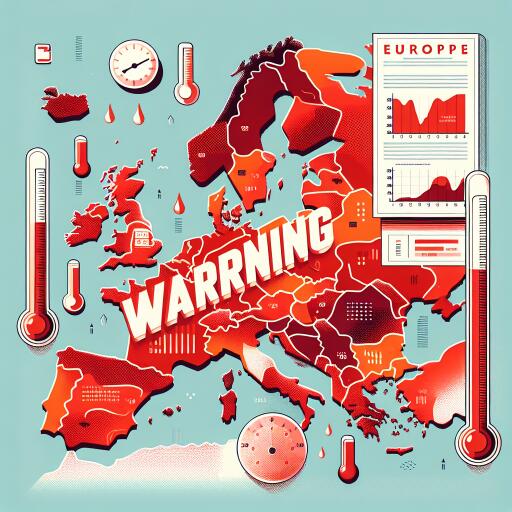
Almost all of Europe affected by above-average temperatures last year, report warns
Europe just endured a year of extraordinary heat and fire. A new joint assessment by global and European climate agencies finds that at least 95% of the continent registered temperatures above the long-term average, while wildfires scorched more than one million hectares—an area exceeding the size of Cyprus—in the largest annual burn total on record.
The figures underscore how swiftly climate change is reshaping Europe. While some governments are reconsidering environmental rules amid economic headwinds, the report stresses that the costs of inaction are rising: degraded ecosystems, mounting wildfire risks, and heat extremes that strain health systems, energy grids, and agriculture.
Heat on land and at sea
- Widespread anomalies: At least 95% of European territory experienced above-average temperatures across the year.
- Persistent dryness: More than half the continent faced drought conditions in May, and the year ranked among the three driest for soil moisture since 1992.
- Record-warm seas: Europe’s average sea-surface temperature hit a new annual high, with strong marine heatwaves affecting roughly 86% of regional waters.
These shifts were not confined to Europe’s warmer south. In July, parts of sub-Arctic Norway, Sweden, and Finland endured their most intense heatwave on record, lasting three consecutive weeks. Temperatures surpassed 30°C inside the Arctic Circle, a stark signal that the planet’s cold regions are rapidly losing their climatic safety buffer.
Why changes in the north matter
Snow and ice serve as a natural shield against warming. Their bright surfaces reflect sunlight back into space—a process known as the albedo effect. When higher temperatures reduce snow cover and accelerate ice melt, that reflectivity declines. Darker land and open water absorb more heat, which in turn fuels further warming. The report flags this feedback loop as a growing concern across northern Europe, where the loss of reflective surfaces can amplify temperature spikes and disrupt weather patterns far beyond the region.
Europe’s wildfire wake-up call
The vast area burned last year highlights how hotter, drier conditions are priming landscapes for extreme fire behavior. Longer fire seasons, parched vegetation, and more frequent heatwaves mean blazes can spread faster and prove harder to control. The consequences stretch well beyond the forest, with smoke affecting air quality in cities and tourism and rural livelihoods suffering prolonged disruptions.
Reducing these risks demands a dual strategy: sharply cutting greenhouse gas emissions to stabilize the climate over time, and accelerating adaptation now. That includes restoring wetlands and forests to retain moisture, thinning overgrown woodlands and managing fuel loads, improving early warning systems, and supporting fire-resilient building standards in vulnerable regions.
Policy pressures and the path forward
The European Union has reaffirmed its long-term climate ambitions, yet last year saw some standards for vehicles and industrial sectors eased under pressure to support struggling businesses. The new climate assessment arrives amid this policy recalibration, offering a reminder that the trajectory of warming and its impacts is already visible in Europe’s fields, rivers, and coastlines.
Aligning economic stability with climate action is no longer a future exercise. Investments in clean energy, energy efficiency, and resilient infrastructure can reduce exposure to volatile fossil fuel markets, cut household energy bills over time, and create jobs, while also lowering emissions. In water-stressed regions, upgrading irrigation, capturing stormwater, and modernizing distribution networks can keep farms productive and cities supplied through heatwaves and droughts.
What to watch next
- Heat and health: More frequent and longer heatwaves will intensify health risks, particularly for older adults and outdoor workers. Expanded cooling centers, urban shade, and real-time alerts can save lives.
- Food and water security: Dry soils and marine heatwaves threaten harvests, fisheries, and hydropower. Diversifying crops, improving soil health, and protecting coastal ecosystems can cushion shocks.
- Insurance and infrastructure: Rising wildfire and flood risks are straining insurance systems and exposing infrastructure vulnerabilities. Climate-proofing roads, rail, and grids is becoming a baseline requirement.
The latest data portrays a continent warming faster than the global average, with impacts now touching almost every corner of Europe—from alpine snowfields to Baltic shores. The message is clear: the climate crisis is unfolding in real time. Swift, coordinated action to cut emissions and fortify communities against extremes will determine how livable Europe remains in the decades ahead.



Leave a Reply