

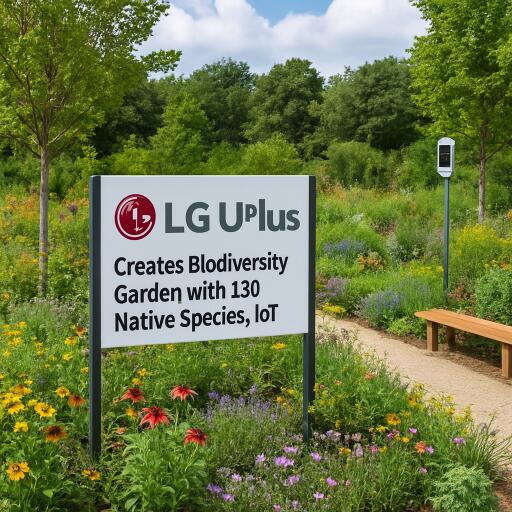
LG Uplus Builds Biodiversity Garden With 120 Native Plant Species and IoT Monitoring
LG Uplus has partnered with the LG Sangrok Foundation to develop a new biodiversity-focused garden inside Hwadam Forest in Gwangju, Gyeonggi Province, combining ecological restoration with connected monitoring technology.
The newly created site covers about 1,600 square meters and brings together roughly 120 varieties of native and endemic plants, including 34 species indigenous to Korea. Around 10,000 young plants have been introduced as part of the project, which is designed to strengthen habitat diversity while giving visitors a closer look at lesser-known local flora.
Rather than carving out a completely separate exhibition zone, the garden was integrated into the forest’s existing terrain and surrounding woodland. This approach preserves the natural character of the landscape and allows visitors to encounter the planting area along the current walking route.
The planting palette highlights species tied to Korea’s distinct ecosystems, with an emphasis on plants that are native or geographically unique. Organizers say the collection may grow over time as additional native species become available for cultivation and conservation use.
Technology plays a central role in the garden’s upkeep. Internet of Things sensors have been installed to gather information beneath the surface, including readings on soil moisture and acidity. These measurements are expected to help managers better understand growing conditions and make more precise maintenance decisions.
Additional IoT devices are being used to monitor structural safety in the area. Sensors designed to detect vibration and tilt can alert managers to potential signs of instability in built elements around the garden. By combining environmental and structural data, the project aims to create a long-term maintenance record that can support both conservation and visitor safety.
Hwadam Forest, operated by the LG Sangrok Foundation, has functioned as a nature-centered ecological park since opening in 2013. The new garden adds a conservation layer to the site by showcasing plant biodiversity in a public setting while also testing how digital tools can support landscape management.
Before the official rollout, the site was also used to assess accessibility. About 40 visually impaired visitors and family members were invited to experience the space in advance, offering a practical review of how inclusive the route and garden environment are for different users.
The garden is also expected to be featured during a customer event scheduled for October, where thousands of long-term users will be introduced to the project.
With this initiative, LG Uplus and the foundation are positioning the garden as both a conservation effort and a model for smarter ecological stewardship. The project reflects a growing trend in which telecommunications and sensor systems are being applied beyond cities and factories, extending into forests, gardens, and other living landscapes where real-time data can improve care and resilience.



Leave a Reply