

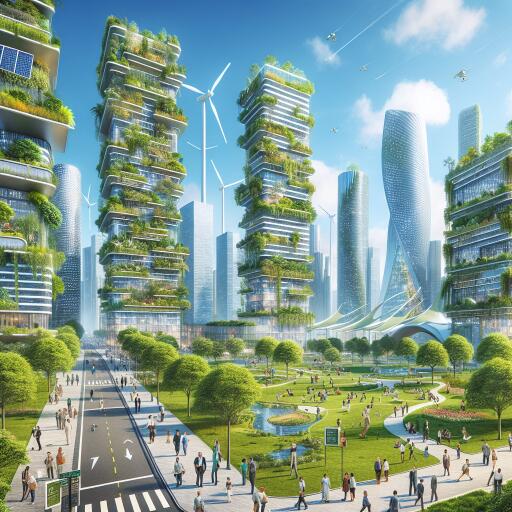
Green Cities: A Pathway to Sustainability
As the global community pauses to acknowledge Earth Day on April 22, the pressing need for sustainable development in urban landscapes has never been more urgent. Urban areas are major contributors to greenhouse gas emissions, making up a staggering 70% of the total emissions worldwide. In India, as the urban population is set to surge to 800 million by the year 2050, the demand for infrastructure will rise exponentially, equivalent to building a city the size of Chicago every year. While urban hotspots drive 80% of the nation’s economic activities, they are not immune to the potential economic setbacks induced by climate changes, which could result in a 4.5% drop in GDP by 2030. Furthermore, climate change poses a risk to the urban population, pushing an estimated 77 million people into poverty due to extreme weather conditions.
India’s Urban Solutions
Confronted with these challenges, India has embarked on a journey of urban transformation through various initiatives such as the Smart Cities Mission, Swachh Bharat Mission, PM Awas Yojana, and the Atal Mission for Rejuvenation and Urban Transformation. Significant achievements have been noted through these programs, including the successful construction of millions of affordable housing units. Nevertheless, financial dependencies persist, as a substantial portion of municipal budgets still rely heavily on state or central funding. Remarkably, while buildings account for a significant percentage of electricity consumption and greenhouse gas emissions, only a minority of them are certified as green.
To bridge this sustainability gap, India has adopted the Climate Smart Cities Assessment Framework and has established Integrated Control and Command Centers in over 100 cities to promote data-driven governance. Despite these progressive measures, the road to efficiency is muddled by policy implementation hiccups and financial limitations.
Delhi: A Case Study of Urban Vulnerability
The plight of Delhi, India’s vibrant capital, highlights the grim realities of urban climate challenges. The city battles alarming air pollution, pressing water scarcity, waste management complications, and flood risks. Delhi faces projected climate-related economic impacts amounting to astounding figures by 2050. The air pollution levels surpass safety limits exponentially, compromising the average life expectancy by several years. Meanwhile, waste management poses a significant challenge, and the city’s dependency on neighboring states for its water supply underscores a critical water crisis. Temperature shifts are expected progressively, with an increase in flood risks intensified by encroachments on floodplains. Additionally, the housing scenario is bleak, with a large portion of the population living in unauthorized settlements lacking basic infrastructure.
To commemorate Earth Day, India must spearhead efforts to dismantle barriers hindering effective urban sustainability. Comparative insights suggest that adopting a Specific, Measurable, Achievable, Relevant, and Time-bound framework could improve Delhi’s climate policy efficiency. Essential reforms include empowering local governance, expanding green spaces, decentralizing waste management systems, and prioritizing water conservation and river restoration. Implementing stringent groundwater regulations and embracing rainwater harvesting practices are crucial steps forward.
Ensuring Resilience Through Real-time Planning
Integrating real-time climate resilience indicators into urban planning processes is paramount. While Delhi has made strides in deploying air pollution tracking systems, the lack of real-time climate risk assessments hampers proactive decision-making. Encouraging public participation is vital as the issue of resource overconsumption compounds the strain on sustainability endeavors. Without decisive action, urban centers will continue to face ecological degradation, infrastructure collapses, and economic interruptions.
On this Earth Day, the call to construct resilient and sustainable urban landscapes rings clear and resolute. Transitioning to green cities is not merely a choice; it is an undeniable necessity for sustaining life on our planet and within our burgeoning urbanized environments. By advancing these efforts, cities can pave the way towards sustainability, ensuring a healthy and harmonious future.



Leave a Reply