

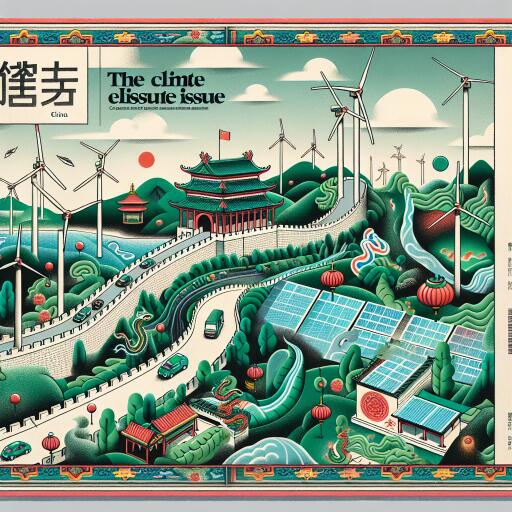
The Climate Issue newsletter: China, the climate superpower
As climate negotiators, activists and observers converge on Belém for the next UN climate summit, one reality looms over the gathering: the center of gravity in the clean-energy revolution sits squarely in China. A decade after the Paris Agreement set a course for slashing emissions, global temperatures continue to surge and the world is drifting past 1.5°C of warming. Emissions growth has slowed compared with the early 2000s, but heat records keep falling. In that sobering context, China’s clean-tech machine has become the most powerful force pushing down the cost of decarbonization worldwide.
A decade of Paris, remade by scale
The past ten years delivered plenty of policy talk and uneven implementation. What changed the game wasn’t diplomacy—it was manufacturing. China’s industrial push transformed solar, batteries and electric vehicles from niche options into mass-market products. That scale has slashed costs, sped up deployment and made it politically and economically easier for other countries to raise their climate ambition.
Solar tells the story best. Module prices have collapsed—roughly a twentyfold decrease from early-2000s levels—turning sunshine into one of the cheapest sources of electricity in history. Supply chains from polysilicon to inverters now operate at extraordinary volumes, with new capacity coming online at a clip once considered impossible. China’s factories are capable of adding on the order of 500 gigawatts to 1 terawatt of solar and related components annually, with credible scenarios pointing to 2 terawatts in the early 2030s and potentially double that by the decade’s end.
The promise and the pressure
This speed comes with turbulence. Overcapacity, brutal price competition and razor-thin margins haunt manufacturers. A stumble in the solar sector—or a broader slowdown—cannot be ruled out. Yet even with volatility, the structural trajectory is clear: a continuous expansion of low-cost, low-carbon hardware that undercuts fossil-fuel demand across continents.
China’s domestic electricity use is immense, but even it cannot absorb all the capacity implied by those production rates. That’s not a flaw; it’s a feature. As costs fall, exports of panels, batteries, EVs and grid equipment flow outward. Increasingly, shipments are heading to emerging economies where energy demand is growing fastest, energy access is still uneven, and the economics of renewables are most compelling.
From bottlenecks to opportunities
Cheap generation is only half the transition. Power systems built around centralized, inflexible fossil plants struggle to integrate variable solar and wind. For years, that was a reason to dismiss renewables. Today, it’s an invitation to innovate: expand transmission, modernize grids, build storage, reform electricity markets, and tap flexible demand from industry and EVs. The cheaper the electrons, the greater the payoff from solving these system challenges. And here, too, China’s scale matters—from high-voltage equipment to batteries and smart-grid tech, it has the manufacturing heft to drive costs down for the enabling infrastructure.
How China shifts the Paris dynamic
The Paris Agreement relies on countries ratcheting up ambition over time. Its weakness has always been the missing engine: why would governments voluntarily do more? China’s industrial strategy supplies a concrete answer. As long as Chinese firms can profit by selling clean technologies abroad, Beijing has an economic stake in other countries moving faster. The interests of climate policy and industrial policy overlap: more ambitious targets abroad mean bigger markets for clean tech.
This alignment isn’t guaranteed to deliver smooth progress. Domestic politics, trade barriers and energy security concerns can cut both ways. Still, the gravitational pull of cheaper clean energy is strong. As prices drop, voters, utilities and businesses press for solutions that save money as well as carbon.
Global South at the leading edge
A striking shift is underway as more clean-energy hardware heads to lower- and middle-income countries than to wealthy ones. Falling costs, simpler deployment models and rising power needs make solar, storage and EVs attractive in places where building new fossil infrastructure is costly, slow or dependent on volatile fuel imports. When paired with innovative finance and faster permitting, these technologies can leapfrog legacy systems—improving health, resilience and economic prospects while cutting emissions.
What cheap renewables can’t do alone
No tsunami of solar panels and batteries will, by itself, steer the planet back below 1.5°C once that threshold is exceeded. The world will also need deep energy efficiency, massive transmission build-outs, long-duration storage, firm low-carbon power, electrification of heat and industry, methane abatement, nature protection and—most likely—carbon removal. Adaptation will be essential to protect lives as extremes intensify.
China’s outsized role intersects with all of this. It can accelerate the tools of decarbonization, but choices at home still matter: coal power operations, grid reform, curtailment, and market rules will shape how efficiently the country deploys what it manufactures. Abroad, perceptions of overreach or unfair trade can provoke resistance, even when the climate case is strong.
A realistic source of hope
Some bristle at the idea of China as the indispensable engine of the energy transition. Yet the evidence is hard to ignore: costs keep falling and deployment keeps rising because of industrial scale. That doesn’t negate concerns over market distortions or supply-chain concentration; those require policy responses. But it does mean that the second decade after Paris has a better shot at bending the emissions curve than the first.
If governments seize this moment—pairing cheap clean hardware with smarter grids, resilient supply chains, fair competition, and strong social protections—the payoff could be enormous: cleaner air, lower energy bills, and a faster exit from fossil fuels. In a warming world short on optimism, that’s a pragmatic kind of hope worth acting on.



Leave a Reply