

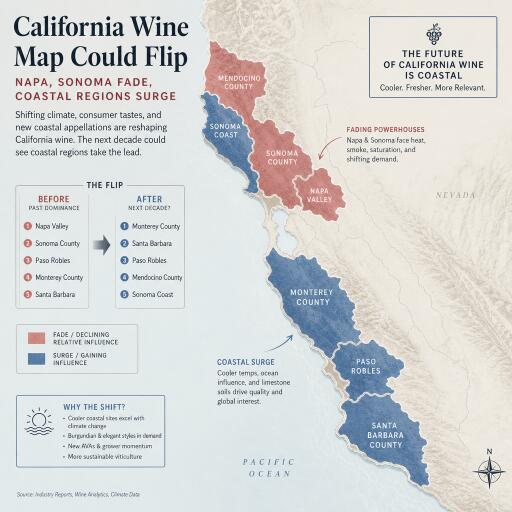
California wine map could flip as Napa, Sonoma fade, and coastal regions surge
California’s fine-wine geography may be on the verge of a profound shift. As heat, drought, and wildfire danger intensify, traditional strongholds such as Napa and Sonoma could lose some of their climatic edge, while cooler stretches of the coast look poised to gain ground. The stakes are high for growers, workers, local governments, and wine lovers alike, with ripple effects across tourism, exports, and regional tax bases.
A new map is coming into focus
Fresh academic analysis of hundreds of vineyard locations across the state suggests a reshuffling of suitability as the century wears on. Using high-resolution climate projections and machine-learning tools trained on nearly three decades of critics’ ratings, researchers estimated both how well sites may perform and how vintage quality could evolve under different warming pathways.
The signals are consistent: If global heat-trapping emissions remain elevated, several marquee regions — including Napa, Sonoma, San Luis Obispo, and Santa Barbara counties — are projected to move beyond the optimal thermal and moisture ranges for many current varieties. Meanwhile, Mendocino, Monterey, and swaths of the central and southern coast, bolstered by persistent marine influence, could become increasingly favorable for premium grapes. In short, areas that once played a supporting role may be positioned for a starring turn.
Why it matters
Wine in California is far more than a luxury good. The sector underpins tens of thousands of jobs, attracts millions of visitors, supports restaurants and hotels, and contributes substantially to local revenues. The state produces the lion’s share of American wine by volume, helping anchor the nation’s place among top global producers.
As climate pressures rise, growers in established regions face a narrowing margin for error: heat spikes that compromise acidity and aromatics, prolonged drought that stresses vines and raises pumping costs, and wildfire seasons that threaten property and can taint fruit with smoke compounds. Those forces can translate into lower yields, higher insurance premiums, pricier fire protection, and complex water management — costs that may ultimately flow through to consumers.
Yet the evolving climate also creates opportunity. If coastal and northern zones gain suitability, strategic investment could preserve domestic production and diversify the state’s high-quality output. Better forecasting and risk planning can help communities adapt before losses mount, smoothing the transition for workers, wineries, and regional economies.
How growers can adapt now
- Smart siting and expansion: Favor cooler microsites — higher elevations, north- and east-facing slopes, and parcels with reliable marine layers or wind exposure. Evaluate coastal corridors where upwelling and fog can buffer heat.
- Varietal and rootstock shifts: Introduce or expand heat- and drought-tolerant grapes and clones. Reconsider the current mix of varieties in hotter zones, and use rootstocks that improve water-use efficiency and resilience.
- Vineyard architecture: Adjust row orientation, trellis height, and canopy density to shade fruit and reduce sunburn; deploy shade cloths selectively; increase ground cover and mulches to cool soils and retain moisture.
- Water and soil strategy: Use deficit irrigation guided by sensors, recycled or captured water where feasible, and soil-building practices (composts, cover crops, reduced tillage) that enhance infiltration and drought tolerance.
- Harvest and cellar timing: Advance or split picks to protect acidity and phenolic balance; increase night harvesting; adapt fermentation and maturation choices to preserve freshness in warmer vintages.
- Wildfire preparedness: Maintain defensible space, fuel breaks, and fire-resilient landscaping; coordinate with neighbors on response plans; refine protocols for rapid smoke exposure testing and selective fruit handling.
- Risk management and finance: Reassess insurance coverage, consider parametric or catastrophe products, and diversify revenue with agritourism and direct-to-consumer channels that can cushion volatile harvests.
- Lowering emissions: Electrify tractors and ATVs, adopt solar and battery storage, optimize glass weight and logistics, and improve cold-chain efficiency to cut operating costs and climate impact.
Signals to watch
- Heat and dryness metrics: Growing degree days, heatwave frequency, and vapor pressure deficit trends at the block level.
- Fire and smoke exposure: Seasonal outlooks, fuel conditions, and the number of smoke-impacted days during ripening.
- Water reliability: Groundwater levels, recharge progress, recycled water availability, and allocation changes.
- Insurance and financing: Premium trajectories, coverage exclusions, and lending terms for high-risk zones.
- Land and permit activity: Vineyard acquisitions and new plantings in coastal counties and higher elevations.
The bigger picture
California’s wine story has always been one of adaptation — from phylloxera to drought cycles to evolving consumer tastes. The emerging climate era will demand the same ingenuity, guided by data and a willingness to rethink long-standing assumptions about place and variety.
Public policy can accelerate a successful pivot: incentives for climate‑smart agriculture, investments in coastal ecosystem health, expanded prescribed burning and forest restoration, groundwater recharge projects, and support for farmworker safety and training. With focused planning and science-driven decisions, the state can sustain its reputation for world-class wines — even as the map of where those wines are grown shifts toward the coast.



Leave a Reply