

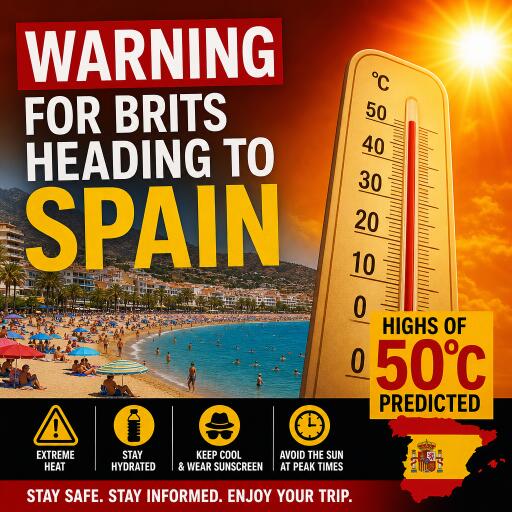
Warning for Brits heading to Spain as blistering highs of 50C predicted
British holidaymakers planning Mediterranean getaways are being urged to prepare for extreme heat as parts of Spain brace for temperatures that could push towards an unprecedented 50C. Large swathes of the country have already sweltered at around 44C in recent days, and forecasters caution that the most intense phase of the season may still be ahead.
Heat building across Iberia
The current heatwave has driven dangerous conditions across the Iberian Peninsula, with the hot, dry air also stoking wildfires in parts of Spain and neighboring France. Thousands have faced evacuation orders in some affected areas, underscoring how quickly heat and wind can turn parched landscapes into fire grounds.
Could 50C be reached?
Climate and hazard specialists warn that the ceiling for summer heat in southern Europe is rising. Bill McGuire, an emeritus professor of geophysical and climate hazards, notes that a spike to 50C is plausible either later this summer or next year, as a strong El Niño adds further warmth on top of long-term global heating. He cautions travelers to be realistic about plans: during peak heat, it may be safer and more comfortable to spend extended periods indoors, ideally in air-conditioned spaces, and shift outdoor activities to the coolest parts of the day.
Hotspots and health risks
In the hottest interior valleys of Spain and Portugal, temperatures can climb into the upper 40s, pushing the limits of human comfort. Meteorologist and climate scientist Hanna Cloke highlights that high humidity can make it feel even hotter than the thermometer suggests, dramatically increasing heat stress. This is the kind of heat that can be lethal, particularly for older people, young children, pregnant individuals, and those with underlying health conditions. Tourists are advised to take extra care if forecasts creep above 40C—seek shade, hydrate frequently, and cancel or postpone strenuous plans.
Why this is happening
Experts are unequivocal that human-driven climate change is amplifying Europe’s heat extremes. The continent is warming faster than most of the world, and average temperatures across Europe are now more than 2C higher than a century ago. As a result, heatwaves are becoming longer, hotter, and more frequent—costing thousands of lives each year. Scientists stress that this is not a stable “new normal” but a stepping stone to even hotter summers if greenhouse gas emissions continue largely unchecked.
Records under threat
Europe’s official heat record stands at 48.8C, set in Sicily in 2021. Before that, the mark was 48C in Greece back in 1977. Any push to 50C would shatter the continental record and signal a new threshold for summer extremes around the Mediterranean.
Travel advice for extreme heat
- Plan around the heat: Prioritize mornings and late evenings for sightseeing; rest indoors during the hottest hours (typically 12–6pm).
- Keep cool: Choose accommodation with reliable air conditioning or effective cooling; use fans and keep curtains closed in the daytime.
- Hydrate and refuel: Drink water regularly, even if you don’t feel thirsty. Limit alcohol and very sugary drinks, which can worsen dehydration. Eat light, salty snacks if you’re sweating heavily.
- Dress for the weather: Wear loose, light-colored clothing, a wide-brimmed hat, and UV-protective sunglasses; apply high-SPF sunscreen frequently.
- Watch for heat illness: Headache, dizziness, nausea, cramps, confusion, or a rapid pulse are red flags. Move to a cool place, sip water, and seek medical help if symptoms persist.
- Travel smart: Check local heat and wildfire advisories daily. Be prepared to change plans, reroute, or delay trips if authorities issue warnings.
- Fire awareness: Avoid open flames and disposable barbecues in dry areas; heed all closure notices for parks and trails. If smoke is present, limit outdoor exertion.
The summer ahead
With seasonal heat building and El Niño adding a temporary boost to global temperatures, southern Europe faces elevated risk of more intense and prolonged heatwaves. For those heading to Spain in the coming weeks, flexibility and preparation will be essential: think siesta schedules, cool indoor refuges, and constant hydration. The broader message from scientists is equally clear—until emissions fall sharply, each Mediterranean summer will test new limits, reshaping what safe and enjoyable travel looks like in a warming world.



Leave a Reply