

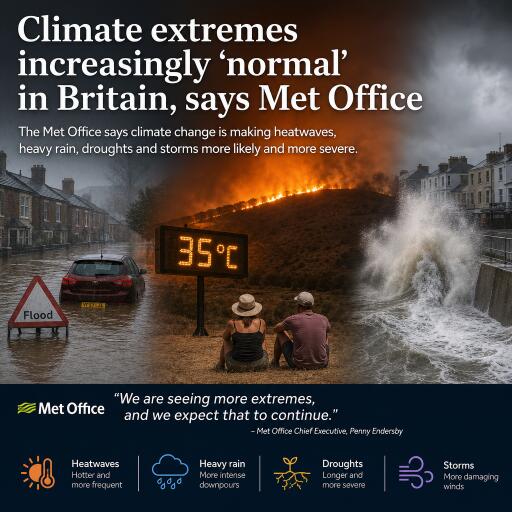
Climate extremes increasingly ‘normal’ in Britain, says Met Office
Weather that once felt out of the ordinary is fast becoming a feature of British life. The nation’s latest annual climate assessment indicates that the character of the UK’s seasons is shifting, with hotter peaks and more frequent bouts of exceptional conditions now part of the expected pattern rather than rare exceptions.
Hot days are getting hotter
One of the clearest signals comes from summer heat. In parts of southeast England, the hottest day in an average year is now more than 8.1 degrees Fahrenheit warmer than it was during the 1961–1990 baseline period. That might sound like a technical statistic, but it translates into tangible impacts: higher odds of surpassing temperature thresholds that strain health services, stress wildlife, and disrupt work and travel.
This warming of the yearly peak sits atop a broader rise in background temperatures. As the baseline shifts, what used to be considered a “heatwave” can be triggered more often and arrive earlier or linger longer. Nights are warming too, making it harder for people and ecosystems to recover between hot days.
Extremes beget extremes
Warmer air holds more moisture. That simple physical fact means the atmosphere can unleash heavier downpours when conditions align, raising the risk of flash flooding even during otherwise dry spells. At the same time, warmer, drier stretches can intensify soil moisture deficits, setting the stage for faster drought development. Britain is experiencing a climate that can swing more sharply between these ends of the spectrum, sometimes within a single season.
Storm behavior is also influenced by a warming planet. While the exact year-to-year path of storms still varies, warmer seas and altered temperature contrasts can feed more intense rainfall events. In coastal areas, rising sea levels compound storm surge risks, pushing higher water farther inland during severe weather.
Consequences across society and nature
- Health: Hot spells elevate the risk of heat-related illness, especially for older people, young children, and those with pre-existing conditions. Warmer nights reduce recovery time and increase stress on the body.
- Infrastructure: Rails can buckle, roads soften, and overhead power lines sag in extreme heat. Heavy rain can overwhelm drainage systems, bringing localized flooding to homes and businesses.
- Water and food: Longer dry periods challenge water resources, while intense rain can erode soils and damage crops. Farmers must adapt planting schedules, crop varieties, and soil management to shifting patterns.
- Nature: Species adapted to cooler, wetter conditions face mounting pressure. Phenological shifts—such as earlier flowering or insect emergence—can decouple food sources from the animals that rely on them.
- Cities: Urban heat islands amplify temperature spikes. Without more shade, ventilation, and reflective surfaces, densely built areas face disproportionate health and energy burdens.
Why the baseline matters
Calling these conditions “the new normal” is not about resignation; it is a recognition that what we design for must match what we are likely to experience. Planning based on past climate alone—especially the mid-20th-century averages—now underestimates stress on people and systems. The reported warming of the hottest days above the 1961–1990 baseline is a clear signal to update thresholds for heat alerts, infrastructure standards, and insurance models.
Adapting with urgency
Reducing greenhouse gas emissions remains essential to limit further warming and prevent future extremes from escalating. But adaptation can’t wait. Practical steps include:
- Expanding early warning systems for heat and floods, and tailoring alerts to vulnerable communities.
- Retrofitting buildings for passive cooling, improved ventilation, and better insulation to handle both heat and cold.
- Designing streetscapes with trees, green roofs, and permeable surfaces to cut heat and manage stormwater.
- Upgrading transport and energy networks to withstand higher temperature ranges and heavier rainfall.
- Restoring wetlands, rivers, and peatlands to buffer floods, store carbon, and support biodiversity.
A shifting climate, a clear signal
Britain’s climate is not just warming on paper; it is transforming daily experience—hotter summer peaks, heavier bursts of rainfall, and a greater likelihood of extremes clustering together. The finding that the hottest day in a typical year is already more than 8°F warmer in parts of the southeast than during the late 20th century captures the scale of change underway. Decisions made now—about energy, land use, buildings, and transport—will determine how well the country weathers the decades ahead. The sooner planning aligns with today’s climate reality, the more resilient communities and nature can become.



Leave a Reply