

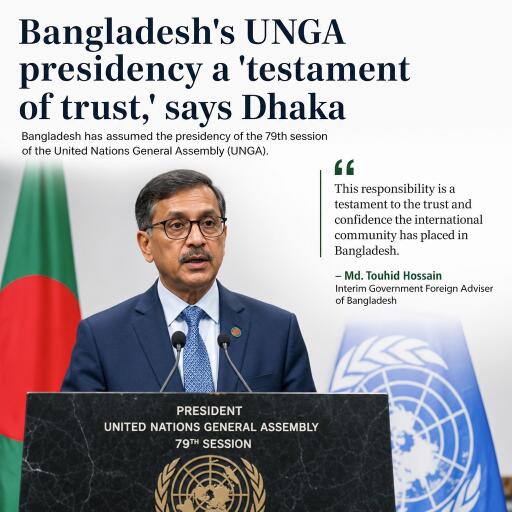
Bangladesh’s UNGA presidency a ‘testament of trust,’ says Dhaka
Bangladesh’s Foreign Minister Khalilur Rahman has been elected to preside over the 81st session of the United Nations General Assembly, a one-year term beginning in September. Dhaka hailed the outcome as a powerful vote of confidence from the international community, underscoring the country’s rising profile in multilateral diplomacy.
Rahman secured 99 votes from the UN’s 193 member states in the ballot at UN headquarters in New York, defeating a Cypriot candidate who received 91. It is the second time Bangladesh will hold the Assembly’s top post; the first was in 1986. Officials in Dhaka framed the result as international recognition of Bangladesh’s sustained engagement on peace, security, sustainable development, and global cooperation.
Speaking after the vote, Rahman outlined priorities that will shape the Assembly’s agenda over the next year. He signaled a focus on reforming elements of the UN system, preparing for the next stage of the global development agenda, and addressing a set of interlocking crises: climate change, escalating geopolitical tensions, energy insecurity, and widening development gaps between and within nations.
Why this matters for climate action
Bangladesh’s new role lands at a pivotal moment for the climate conversation. As one of the world’s most climate-exposed nations—home to vast low-lying deltas and a population highly vulnerable to cyclones, floods, and sea-level rise—Bangladesh has long pushed within the UN for stronger adaptation measures, disaster risk reduction, and equitable access to finance. With climate change explicitly highlighted among Rahman’s priorities, the presidency could help keep resilience and implementation at the forefront of General Assembly debates.
The UNGA presidency does not wield executive power over treaties or negotiations, but it shapes the tone, timing, and ambition of plenary debates, high-level meetings, and thematic dialogues. In practice, that means the presidency can convene political attention around issues like scaling up climate finance, closing the gap on loss and damage support, and accelerating a just energy transition—topics that intersect directly with energy security and development divides referenced in Rahman’s agenda.
Bridging development divides
The coming session will also be about navigating the persistent gulf between the promises of global development frameworks and on-the-ground delivery. Preparations for the “next generation” of the development agenda are likely to consider how to align poverty reduction, nature protection, and decarbonization while ensuring that vulnerable economies are not left behind. For a country like Bangladesh—where adaptation needs are rising even as fiscal space tightens—keeping equity and implementation at the center of multilateral discussions will be crucial.
Energy insecurity, another item Rahman emphasized, is tightly linked to climate resilience and economic stability. The Assembly’s debates may therefore explore how to de-risk clean energy investment in emerging markets, build out resilient grids, and broaden access to affordable technologies. Attention to these issues could help reduce the pressure on countries still reliant on imported fossil fuels, while curbing emissions and improving air quality.
A platform for consensus
By tradition, the UNGA presidency rotates among regional groups for a single year, with the president facilitating negotiations, steering high-level weeks, and guiding member states through a dense calendar of resolutions and dialogues. The role demands careful balancing—especially when geopolitical rifts threaten to overshadow cooperative agendas on climate, health, food security, and humanitarian relief.
Bangladesh’s election signals trust in its ability to help broker consensus in such conditions. The margin—99 votes to 91—suggests an engaged and closely watched contest, and the outcome places Dhaka at the center of efforts to keep the UN’s most representative body focused on shared solutions.
The 81st session opens in September. As the world navigates intensifying climate impacts and a fragile global economy, the test for the presidency will be translating political momentum into practical steps—amplifying voices from the most affected regions, fostering cooperation across divides, and helping ensure that multilateral commitments lead to measurable progress on the ground.



Leave a Reply