

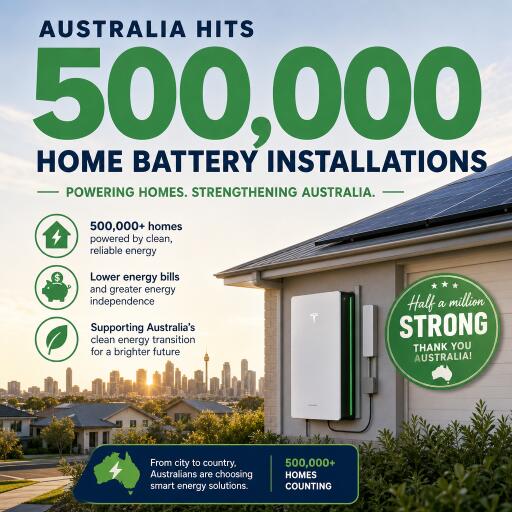
Australia Hits 500,000 Home Battery Installations
Australia has crossed a landmark in its clean energy transition: more than half a million home batteries are now operating in suburbs and towns across the country. The milestone underscores how quickly household energy storage has moved from early adoption to the mainstream, pairing with Australia’s world‑leading rooftop solar to help households cut bills, reduce emissions, and take greater control over when and how they use electricity.
Policy momentum drives rapid uptake
The surge has been propelled by the Federal Government’s Cheaper Home Batteries Program, which slashes upfront costs for eligible systems. Initially launched with a multibillion‑dollar investment, the program has since been expanded to $7.2 billion over four years and is targeting more than two million household battery installations by 2030. Hitting 500,000 places Australia roughly a quarter of the way to that goal.
For solar households, the economics are compelling. Instead of exporting surplus daytime generation to the grid at low feed‑in tariffs, batteries allow families to store that energy and use it in the evening peak, insulating them from high power prices and volatile market conditions. The approach increases self‑consumption, improves energy independence, and can help stabilize local networks by smoothing demand.
National leaders have framed the program as simultaneously easing cost‑of‑living pressures and accelerating emissions cuts. They point to new jobs in installation, service, and manufacturing, alongside a rapidly expanding ecosystem of local suppliers and training programs.
14 GWh of storage and 2,000 installs a day
Beyond the headline count of battery systems, the scale of storage now available in Australian homes is striking. Residential installations have amassed around 14 gigawatt hours of capacity—enough to shift a meaningful slice of solar energy from sunny afternoons to night‑time use. Industry data indicates around 2,000 batteries are being installed every working day, a pace that has transformed household storage into a visible pillar of the national energy landscape.
For many homes, the combination of solar and storage has pushed bills toward zero across the year, particularly when paired with smart controls that optimize when to charge, discharge, and export. As more systems connect to virtual power plants, these distributed batteries can also provide grid services during heatwaves and unexpected outages, adding resilience as coal exits the system.
Building out the supply chain
Manufacturers and service providers have raced to meet demand, expanding Australian operations and support teams. Several companies have established offices in major cities and grown local workforces to handle installation, maintenance, and customer support. New production capacity commissioned in 2026 has also increased the availability of residential systems, helping keep pace with the accelerating rollout. High‑profile ambassadors from the sporting world have lent their voices to the shift, highlighting the broad public appeal of homegrown renewable energy.
The ‘missing middle’ comes into focus
Attention is now turning to the commercial and industrial sector—the so‑called “missing middle” between home batteries and grid‑scale projects. Policies and regulatory work underway aim to unlock storage for small and medium businesses, factories, and community facilities. Batteries in these settings can shave peak demand charges, bolster onsite solar, and reduce exposure to price spikes.
Success in the residential market offers a playbook for scaling: streamlined approvals, clear standards, skilled installers, and reliable after‑sales service. Extending these lessons to businesses could accelerate Australia’s distributed storage capacity, complementing utility‑scale batteries and pumped hydro while reducing the need for costly network upgrades.
What the milestone means—and what comes next
Reaching 500,000 home batteries signals a deeper shift in how Australians think about energy. Rooftop solar turned millions of households into generators; batteries turn them into flexible participants in a modern grid. With installations climbing, this quiet fleet of suburban storage is set to play an ever larger role in balancing renewables, improving reliability, and cutting emissions.
Maintaining momentum will require continued focus on equity and access so renters, apartments, and regional communities share the benefits. Workforce development will remain critical as installation volumes rise, as will robust safety standards and end‑of‑life planning to support recycling and reuse of battery materials. Clear incentives for smart operation—time‑of‑use tariffs, demand response, and participation in virtual power plants—can help ensure batteries deliver both private savings and public value.
Australia’s clean energy transition is no longer theoretical; it is unfolding on rooftops and garage walls at remarkable speed. The next chapter will be about scale, integration, and fairness—ensuring that the promise of cheaper, cleaner, more reliable power reaches every corner of the country.



Leave a Reply