

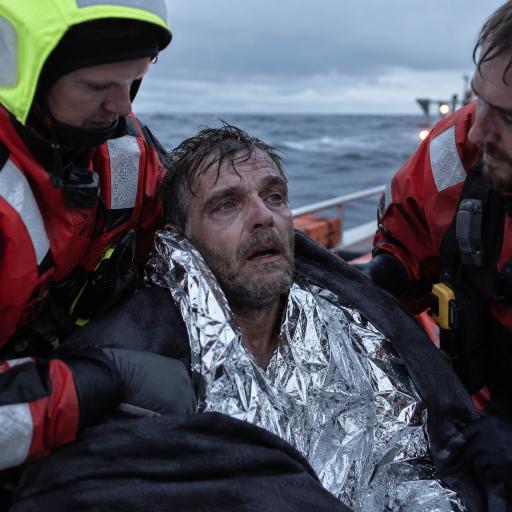
A man is rescued after nine hours in the sea. That’s not necessarily good news
A passenger who fell from a cruise ship off the coast of California survived for approximately nine hours in the Pacific Ocean before two fishermen found him about 30 kilometres from Newport Beach.
One factor may have made the difference between life and death: the water was close to 24°C, around five to six degrees warmer than would normally be expected in November. Elsewhere along the California coast, sea temperatures have climbed even further above seasonal averages.
For the survivor, that unusual warmth reduced the immediate danger of hypothermia. For the planet, however, it is another warning sign. Conditions that help one person endure a night at sea can simultaneously intensify heat deaths, destabilise fisheries and damage ecosystems across entire ocean basins.
An exceptional Pacific heat anomaly
El Niño is a natural climate pattern in which unusually warm surface waters spread across the central and eastern tropical Pacific. The current event has produced temperature anomalies of as much as 4°C in some areas, placing it among the most extreme episodes observed.
El Niño is the immediate driver of much of the Pacific’s abnormal warmth, but it is now unfolding on top of a steadily heating climate. Greenhouse gases from fossil fuels and other human activities have raised the baseline temperature of both the atmosphere and the ocean, making natural warm phases hotter and potentially more destructive.
Recent assessments indicate that human-caused global warming is proceeding at roughly 0.27°C per decade—more than twice the rate recorded during the late 20th century. One estimate suggests that the 2026-27 El Niño could contribute to more than 450,000 additional heat-related deaths worldwide.
The hidden crisis below the surface
Climate change is often illustrated through wildfires, droughts, storms and floods. Yet most of the extra heat trapped by greenhouse gas pollution does not remain in the air. About 90 per cent is absorbed by the oceans.
This has slowed atmospheric warming, but at an enormous ecological cost. Marine heatwaves—prolonged periods when sea temperatures remain unusually high—are becoming more frequent, extensive and deep. Between 1991 and 2025, the annual number of marine-heatwave days more than tripled.
The oceans also absorb carbon dioxide, altering seawater chemistry and increasing acidity. Warming and acidification can compound other pressures, including overfishing, plastic pollution, agricultural runoff and damage to the seabed.
Fish are moving, but food webs cannot simply relocate
Fish are highly sensitive to temperature because their metabolism is controlled by the surrounding water. When seas become too warm, mobile species may migrate towards the poles or descend into deeper, cooler layers.
Such movement can disrupt spawning grounds, migration routes and established fisheries. In northeastern Atlantic waters, cold-adapted species including cod, haddock and whiting may become less productive. Meanwhile, species associated with warmer conditions—such as bluefin tuna, anchovy, squid and octopus—could expand into new areas.
The arrival of different species does not necessarily compensate for those being lost. Fishing fleets, coastal economies and management systems have developed around familiar stocks. Rapid changes in distribution can also create disputes when fish cross national boundaries or move beyond traditional fishing grounds.
At the base of this upheaval are phytoplankton, microscopic organisms that sustain marine food webs. They use photosynthesis to absorb carbon dioxide and provide food for countless other species. Heat-driven changes to their abundance, timing or location can affect everything from young fish to whales and seabirds.
Coral reefs face the greatest danger
Coral reefs support roughly a quarter of marine species while also providing food, income and coastal protection to human communities. Yet repeated bleaching, ocean acidification and severe storms are pushing many reef systems towards collapse.
A recent global assessment classified 122 of 127 coral reef regions as critically endangered and at extremely high risk of collapse within the next 50 years. One reef ecosystem in the western Galápagos has already been classified as collapsed.
Cold-water corals in the Atlantic may be less exposed to tropical bleaching, but they remain vulnerable to bottom trawling, seabed extraction, energy exploration and nutrient pollution. Because many grow slowly, physical destruction can take centuries to repair—if recovery is possible at all.
A rescue that carries a warning
Marine policy cannot treat climate change, industrial fishing, habitat destruction and pollution as separate problems. Their effects reinforce one another: warmer waters can weaken an ecosystem, while trawling or contamination reduces its ability to recover.
The extraordinary survival off California is therefore a paradox. A warmer ocean may have protected one man from lethal cold, but the same excess heat is placing millions of people and vast marine ecosystems at risk. What felt like fortunate water to one survivor is, on a planetary scale, evidence of a rapidly changing sea.



Leave a Reply