

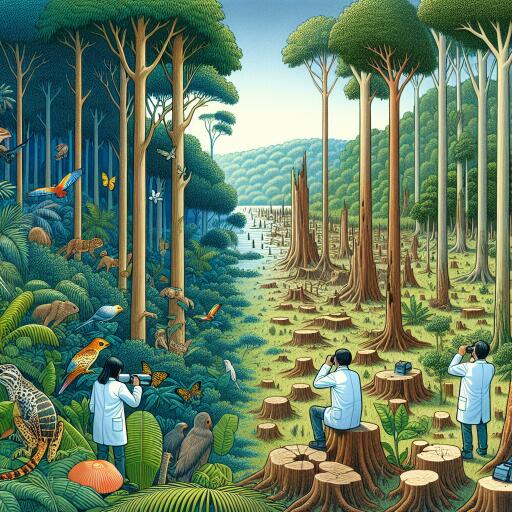
Tropical forest loss eases after record year: researchers
After a devastating 2024, tropical deforestation slowed last year, yet the world remains far off track to halt forest loss by 2030.
The rate of destruction across the humid tropics eased in 2025 but still chewed through the equivalent of roughly 11 football fields every minute, according to new analysis by researchers using high-resolution satellite data. They estimate 4.3 million hectares of tropical primary rainforest were cleared, a 36 percent drop from the previous year’s peak but still an area about the size of Denmark and 46 percent higher than a decade ago.
Progress, with caveats
Researchers from the World Resources Institute and the University of Maryland described the downturn as evidence that swift policy interventions can curb forest loss. At the same time, they cautioned that part of the decline reflects a cooldown after an exceptional fire year. With El Niño conditions expected to re-emerge mid-year—often a prelude to intense heat, drought, and wildfire risk—these gains could be fragile.
Despite the improvement, global forest loss remains about 70 percent above the annual pace consistent with the 2030 pledge to halt and reverse forest decline.
Policy pivots drive major declines
Brazil, custodian of the planet’s largest rainforest, accounted for much of the global slowdown. Excluding areas burned by wildfire, Brazil’s primary forest loss fell 41 percent from 2024 to its lowest level on record, following a renewed clampdown on illegal clearing and tougher penalties for environmental crimes under President Luiz Inacio Lula da Silva. Yet the pressure from agriculture—particularly soy cultivation and cattle ranching—remains intense, and several Amazon states have moved to relax environmental safeguards, creating pockets of vulnerability.
Colombia also made gains, with deforestation dropping 17 percent to the second-lowest level since 2016, aided by government policies and agreements designed to limit clearing. In Indonesia, loss rose by 14 percent but stayed far below the peaks seen a decade ago, reflecting continued oversight and private-sector commitments. Malaysia’s forest loss has largely stabilized amid sustained government attention.
Hotspots persist
In contrast, losses remained stubbornly high in several countries. Bolivia, the Democratic Republic of Congo, Cameroon, and Madagascar all recorded significant forest decline, driven by a mix of agricultural expansion, logging, and fires. These hotspots underscore how uneven progress remains across the tropics.
Fires reshape the map of loss
Total global tree cover loss fell 14 percent last year, but fires continued to play an outsize role, accounting for 42 percent of the area lost worldwide. Over the past three years, blazes have consumed more than twice the tree cover burned two decades ago. In the tropics, most ignitions are linked to human activity, while in northern and temperate regions a warming climate is intensifying natural fire cycles.
Canada illustrates this escalating risk: it endured its second-worst wildfire season on record last year, with roughly 5.3 million hectares of forest burned. Scientists warn that rising temperatures and ongoing land clearing are shortening the fuse on fire seasons, converting what used to be sporadic shocks into a near-constant emergency.
What it will take to stay on track
Experts argue that locking in and expanding last year’s progress will require a multi-pronged approach: vigilant enforcement against illegal clearing; incentives and finance for Indigenous and local forest stewardship; commodity supply-chain reforms that sever links to deforestation; and proactive fire management before the next heat- and drought-driven surge. One good year is not enough—meeting global forest goals will demand steady, compounding reductions across multiple regions, year after year.



Leave a Reply