

Delhi Cloud Seeding Trials Were Purely Experimental, Says Govt Official at Pune Conference – Pune Times Mirror
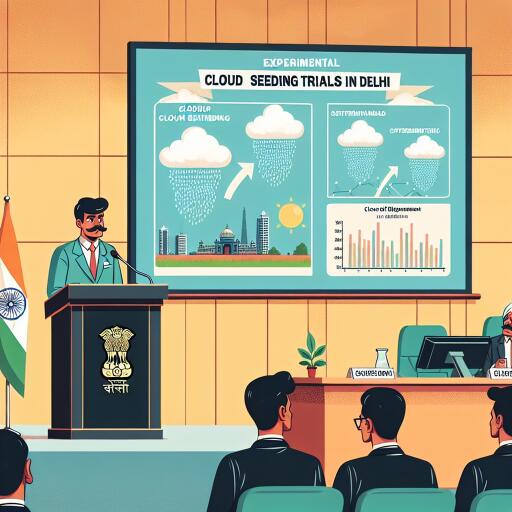
India’s top weather science leadership has underlined that recent cloud seeding over New Delhi was undertaken strictly as a research exercise, not as an operational fix. Addressing a gathering of weather-modification experts in Pune, the senior official emphasized that the trials were designed to test scientific assumptions and measurement strategies before any consideration of wider use.
The Delhi sorties targeted clouds with seeding agents to explore whether rainfall could be nudged in the right meteorological conditions—an approach sometimes floated as a short-term way to tamp down hazardous air pollution. Cloud seeding typically disperses tiny particles, such as silver iodide or hygroscopic salts, to encourage droplet or ice formation inside suitable clouds. Whether that translates into measurable rain at the ground depends on a host of factors: cloud temperature and depth, aerosol load, wind and humidity profiles, and precise timing.
Officials stressed that such experiments can produce mixed outcomes, and that this is precisely why they are conducted: to gather data on what works, what doesn’t, and why. According to the ministry’s position, the only responsible pathway is to build an evidence base through controlled trials, rigorous analysis, and peer-reviewed assessment tailored to India’s unique atmospheric conditions—from winter inversions over the Indo-Gangetic Plain to complex monsoon dynamics.
What the trials sought to learn
The Delhi effort aimed to answer several practical questions. Are there windows of meteorological opportunity—specific cloud types, moisture levels, and temperature profiles—where seeding can reliably enhance precipitation? How do local aerosols and urban heat islands influence cloud microphysics? What magnitude of change, if any, can be detected against natural variability? Instruments onboard aircraft and at ground stations were used to track cloud structure, particle concentrations, and any resulting rainfall signatures.
Air quality context
While cloud seeding has been discussed as a potential tool to temporarily reduce particulate pollution by washing it out of the air, researchers caution that it cannot substitute for sustained emissions reductions. At best, if proven effective under tightly defined conditions, seeding could offer a narrow tactical option during severe smog episodes. Even then, success hinges on the presence of “seedable” clouds—an element that cannot be guaranteed during many pollution spikes.
Science first, operations later
The ministry reiterated that research—not rapid rollout—is the priority. Experiments may succeed or fail, and both outcomes are informative. What matters is building statistical confidence through repeatable methodologies, including randomized or carefully controlled designs where feasible, and ensuring transparency of results. Only after sufficient evidence accumulates would any agency weigh limited operational use, alongside environmental safeguards and clear protocols.
Pune’s role in advancing atmospheric research
The discussion unfolded at a major international convening on weather modification hosted by the Indian Institute of Tropical Meteorology (IITM) in Pune. IITM remains a cornerstone of Indian atmospheric science, with programs spanning monsoon dynamics, aerosol–cloud interactions, and high-resolution weather modeling. By collaborating with partners in India and abroad, the institute is helping evaluate climate and weather interventions with a focus on robustness, reproducibility, and public accountability.
As climate variability intensifies extremes and urban air quality continues to challenge public health, the allure of technological fixes will persist. The clear message from Pune, however, is that rigorous science must guide any such steps. Cloud seeding may, under specific conditions, offer a supplementary tool. Determining those conditions—and their practical limits—requires patience, data, and careful scrutiny long before promises give way to policy.



Leave a Reply