

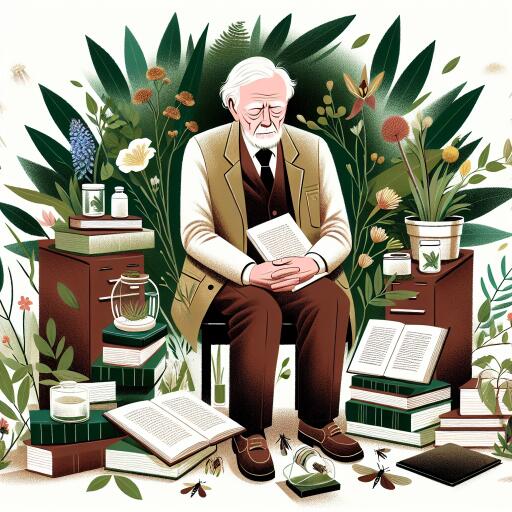
Arturo Gómez-Pompa, biologist who revealed the human history in “virgin” forests, has died, aged 90
Arturo Gómez-Pompa transformed how the world sees tropical forests. He insisted that what many called untouched wilderness was, in truth, a record of human presence—places where Indigenous communities cultivated, managed and renewed life over millennia. His death at 90 closes a pioneering chapter in ecology, but his central idea endures: conservation thrives when it recognizes people as co-authors of biodiversity.
From reluctant medical student to trailblazing field biologist
Born in Mexico City in 1934, Gómez-Pompa initially pursued medicine to satisfy family expectations. A formative visit to a ranch in Tamaulipas—where desert scents mixed with coyote calls and hawks traced the sky—redirected him. He shifted to biology at the National Autonomous University of Mexico (UNAM) and earned his doctorate in 1966. By then, he was already well acquainted with the humid labyrinths of Veracruz and the Yucatán, where he learned plants not just from textbooks but alongside local experts who knew the forest as kin. He catalogued barbasco yams for a state enterprise and made a point of crediting community guides in his scientific work, signaling a career-long commitment to shared knowledge.
Decentralizing science, centering agroecology
In 1975, Gómez-Pompa founded Mexico’s National Institute for Research on Biotic Resources (INIREB) in Xalapa, one of the first major efforts to move biological research beyond the capital. There, he helped legitimize agroecology, demonstrating how traditional farming systems often outperform imported models in resilience and ecological fit. He advanced a then-controversial proposition: that much of the Maya lowland forest had been shaped through centuries of subtle domestication, a mosaic of managed diversity rather than a museum of untouched nature. What was once a provocation is now foundational to tropical conservation science.
Cross-border bridges and a living laboratory
Institutional turbulence never slowed his work. In the 1980s, he joined the University of California, Riverside, where he built programs such as UC MEXUS to connect researchers and communities across borders. He returned frequently to the Yucatán, and when public funding ebbed, he helped establish the privately supported El Edén Ecological Reserve. El Edén became a living laboratory for long-term monitoring, restoration, and community-engaged research—one of the most thoroughly studied stretches of lowland forest in the region.
A public scientist with a global reach
Gómez-Pompa’s influence radiated across science policy and conservation. He advised the U.S. House Committee on Science, Space and Technology and served as chair of UNESCO’s Man and the Biosphere program, roles that placed his ideas squarely in debates on sustainable development. He held positions on the boards of major conservation organizations, including the Nature Conservancy, WWF, and the International Union for Conservation of Nature. His more than 200 publications and a shelf of honors—the Tyler Prize for Environmental Achievement, the Chevron Conservation Medal, the David Fairchild Medal among them—reflect his standing. Yet those who trained under him most often recall a simple principle he repeated: ecological research is incomplete without the people who steward the land.
Writing the forest’s human story
In 2021, he published “Mi vida en las selvas tropicales,” a memoir that revisits seven decades of fieldwork and institution building. He wrote not of pristine jungles frozen in time but of “landscapes of memory,” where species and societies co-evolve. That perspective reshaped conservation by challenging the binary between nature and culture, and by elevating Indigenous and local practices as engines of biodiversity rather than threats to it.
Enduring lessons for conservation and technology
Gómez-Pompa’s legacy speaks directly to the present. As sensor networks, satellite imaging and AI modeling advance ecological monitoring, his work reminds us that data without lived knowledge can mislead. The fine-grained mosaics he described—orchards hidden under canopies, medicinal plants clustered near old settlements, soil fertility built through generations—are patterns best read through collaboration with communities who have tended them.
By recasting the rainforest as a living archive of human care, Gómez-Pompa changed the starting point for conservation. Protecting biodiversity, he argued, means protecting the relationships that create it. That idea—once a challenge to orthodoxy—now anchors many of the most effective strategies in the tropics. It is a fitting tribute that the forests he studied are not just saved, but understood.



Leave a Reply