

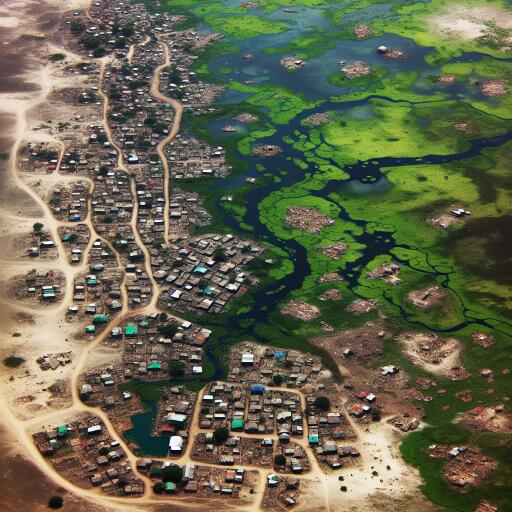
Wetland Fragmentation Linked to Africa’s Growing Populations
A recent study reveals the significant relationship between the fragmentation of wetlands and rising human populations throughout Africa. This in-depth exploration highlights how the spread of human settlements poses a threat to crucial wetland ecosystems that hold vital ecological significance yet are highly vulnerable.
Wetlands are essential to the global environmental framework, providing habitats for an array of plant and animal life, purifying water, and mitigating climate extremes like floods and droughts. Despite their critical roles, these ecosystems face mounting pressures from human activities such as agricultural expansion, urbanization, and infrastructure development.
Africa, marked by swift population growth and vast wetland areas, is at the forefront of this environmental challenge. Using state-of-the-art satellite imagery and detailed population density data, researchers uncovered how wetland fragmentation correlates with densely populated regions. The study assessed various metrics, including patch size reduction and connectivity loss in wetlands across different African biogeographic zones.
One pivotal finding of the study was that regions with higher populations saw significantly increased fragmentation, with wetlands breaking into smaller, isolated patches. This fragmentation disrupts the movement of species and the natural water flow, diminishing crucial ecosystem services and threatening biodiversity by destabilizing water regulation and species endurance.
Notably, intense fragmentation was observed in vital areas like the Okavango Delta, the Nile basin floodplains, and the Niger River wetlands. Historically extensive and contiguous, these regions are now witnessing pronounced wetland loss due to urban development and intensified agriculture, posing new challenges for conservation and sustainable management.
The use of landscape ecology and fragmentation theory proved essential in understanding the spatial patterns, with researchers adapting forest ecology indices to the distinctive hydrological and ecological dynamics of wetlands. This approach provided a nuanced perspective on how human activity reshapes these landscapes beyond mere area reduction.
The link between population density and wetland fragmentation prompts urgent reflections on land-use policies. It underscores the need for integrating wetland conservation into urban and agricultural frameworks to prevent unchecked expansion from compromising environmental sustainability and human health.
The ecological implications of fragmentation are substantial, increasing the vulnerability of wetland-dependent species. Fragmented wetlands suffer from edge effects that degrade habitat quality through altered microclimates and the introduction of invasive species. Additionally, disrupted hydrological connectivity affects nutrient cycles and can result in localized drying, undermining wetland resilience in the face of climate fluctuation.
On a social level, the impact is equally significant. Wetlands provide vital services to millions, offering water for various uses, supporting fisheries, and serving as natural flood barriers. As fragmentation escalates, these services become less dependable, disproportionately affecting rural and marginalized communities who rely on them for sustenance and livelihood security.
The study employs innovative spatial modeling to simulate future fragmentation scenarios based on anticipated population increases. The models forecast that without concerted efforts, wetland fragmentation will worsen by mid-century, intensifying strain on these ecosystems. This projection calls for immediate policies that equally prioritize development and conservation.
Researchers advocate for a multifaceted approach to wetland management, emphasizing protected areas, sustainable agriculture to minimize encroachment, and green infrastructure solutions to maintain hydrological functions in urban areas.
The study also emphasizes community-based conservation efforts, recognizing that local knowledge and active participation are crucial for maintaining wetlands amid rapid demographic changes. Educating and empowering communities through sustainable resource management is key to preserving these ecosystems for future generations.
Technological advancements in environmental monitoring arise from this research, suggesting that blending high-resolution satellite data with machine learning algorithms can enable real-time tracking of wetland fragmentation trends, facilitating swift conservation responses and policy changes.
The study’s implications extend globally, offering significant lessons for wetland conservation worldwide. It demonstrates how the combination of ecological theory, remote sensing technology, and socio-demographic analysis can unravel complex human-environment interactions, guiding more adaptive and effective ecosystem management.
As environmental challenges intensify and land-use changes accelerate, this research provides critical evidence to guide international efforts in preserving wetland ecosystems. The study stresses that wetlands, often overshadowed by forests or coral reefs, require immediate focus due to their disproportionate ecological and social significance.
Ultimately, addressing wetland fragmentation associated with growing populations is not just an environmental necessity but a foundational step towards achieving sustainable development and climate resilience.



Leave a Reply