

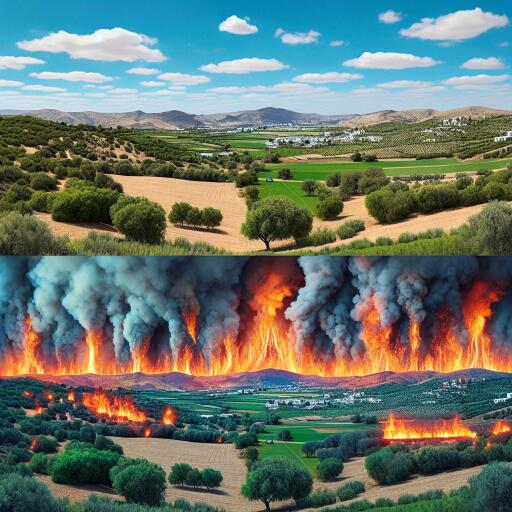
Climate change drove deadly wildfires in Türkiye, Greece and Cyprus 22% more intense
An intense cocktail of heat, drought and wind turned this summer’s wildfires across Türkiye, Greece and Cyprus into fast-moving disasters. A new rapid climate analysis concludes that human-driven warming made the weather that powered these blazes about 22% more intense, helping to explain the lethal speed and scale of the fires. The overlapping outbreaks in June and July forced more than 80,000 people to evacuate and left at least 20 dead across the three countries, including firefighters caught by sudden wind shifts.
How climate change set the stage
Researchers examined the months and days leading up to the worst fire runs. They found a clear fingerprint of climate change in three critical ingredients: drying over winter, searing pre-fire heat, and hot, dry, windy bursts that fanned flames once ignited.
- Winter rainfall across the region has dropped by about 14% compared with the preindustrial era, parching soils and vegetation and priming landscapes to burn earlier and more intensely.
- Just before the fires, a period of highly evaporative heat—air so “thirsty” it rapidly wicks moisture from plants—was about 13 times more likely and roughly 18% more intense because of global warming.
- Three-day episodes combining extreme heat, dryness and wind—conditions that drive explosive fire spread—were about 22% more intense due to climate change.
Put together, fire-conducive weather is now vastly more frequent than it would have been without human-caused warming. Events that once might have been expected roughly once per century are now projected to occur around once every two decades. Across multiple indicators, the likelihood of such conditions has increased by about a factor of ten.
Winds that fanned the flames
Atmospheric patterns that can intensify the region’s summer northerlies—the Etesian winds—also played a role. Analysis indicates stronger high-pressure systems that enhance these winds are becoming more pronounced, consistent with recent studies from the eastern Mediterranean. When those winds arrive atop desiccated fuels and extreme heat, fires can run rapidly, leap firebreaks and overwhelm suppression lines.
A lethal summer in the eastern Mediterranean
The season unfolded in back-to-back days above 40°C, brittle-dry vegetation and gale-force gusts. Türkiye was hit hardest, with 17 fatalities, including 10 firefighters overtaken when flames abruptly changed direction. Cyprus recorded two deaths and Greece one. The synchronized nature of the outbreaks underscored a growing challenge: when large fires ignite in multiple countries at once, they strain shared aerial and ground resources.
By late August, the European Union’s emergency coordination system had already been triggered repeatedly for wildfire support, reflecting a continent-wide escalation. This year has become the worst on record for Europe’s wildfires, with more than a million hectares burned—an area larger than many European regions combined.
Adaptation is lagging the hazard
Many fire agencies have expanded fleets and manpower, and nearly 650 firefighters from 14 countries were pre-deployed to high-risk zones this year. These efforts saved lives and property—but they are being outpaced by the intensity and simultaneity of events. When multiple nations face peak fire weather at the same time, sharing aircraft and crews becomes harder, and response times lengthen.
Experts warn that without deeper emissions cuts, the fire problem will grow harder to manage. With global temperature rise currently around 1.3°C, new extremes are already testing the limits of suppression. If warming tracks toward around 2.6°C under current policies, intense hot-dry-windy spells in the eastern Mediterranean could become another nine times more likely and roughly 25% more intense, expanding the window for catastrophic runs.
Spain likely shows the same signal
Parallel analyses are expected to find a similar climate fingerprint in Spain’s fires this summer. The drivers—winter drying, preconditioning heat and bursts of hot, desiccating winds—align with patterns now common across southern Europe, where fuel aridity and wind-driven fire behavior increasingly coincide.
What must change
While rapid response will always matter, prevention now needs equal billing. Priorities include:
- Strategic fuel management around communities and critical infrastructure, using mechanical thinning, prescribed fire and grazing where appropriate.
- Early warning systems tied to hot-dry-windy forecasts that trigger preparedness, temporary closures and targeted patrols.
- Fire-resilient planning: defensible space, ember-resistant construction, and evacuation routes designed for simultaneous neighborhood movements.
- Community education campaigns on ignition prevention and “ready-set-go” protocols during peak fire weather.
- Cross-border coordination for surge capacity, including shared training standards and interoperable communications.
Ultimately, cutting the root cause—greenhouse gas emissions from fossil fuels—is the only way to stop the steady ratcheting up of fire weather. As summers trend hotter and drier, the choice is stark: double down on both prevention and decarbonization, or face ever more dangerous fires that emergency services cannot reliably outrun.



Leave a Reply