

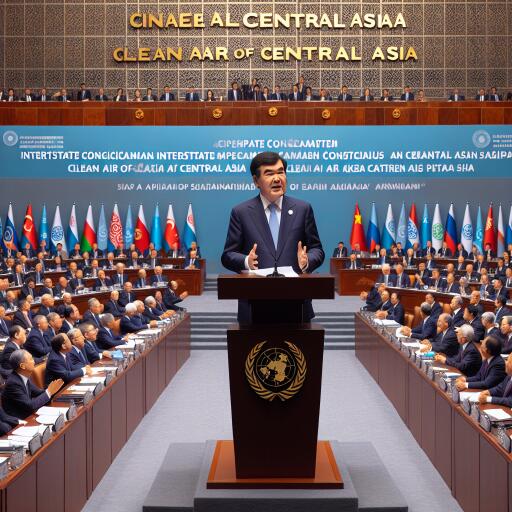
Uzbek president proposes the creation of the interstate consortium “Clean Air of Central Asia” – Asia Plus
At a regional environmental summit in Astana, Uzbekistan’s President Shavkat Mirziyoyev unveiled a far-reaching agenda for climate cooperation, anchored by a proposal to form an interstate consortium called “Clean Air of Central Asia.” The initiative aims to align financing and technology across borders to cut industrial emissions and accelerate cleaner growth—an urgent task in a region warming at roughly twice the global average.
The scale of the challenge is stark. Nearly one-third of Central Asia’s glaciers have already disappeared, precipitation has become more erratic, water scarcity is increasing, and land degradation has spread across about 80 million hectares. Mirziyoyev warned that global environmental solidarity is fraying and argued that countries with the least historical responsibility for warming must gain fair access to climate finance, technologies, and innovation.
He backed a new regional declaration on “Environmental Solidarity of Central Asia” and an action program running to 2030 with United Nations participation, positioning the region to speak with one voice on climate and ecological risks.
Uzbekistan’s domestic climate push
Mirziyoyev outlined measures already underway at home:
- A nationwide “Yashil Makon” (Green Space) campaign has added around one billion trees.
- Over two million hectares of new forest now cover the desiccated bed of the Aral Sea, helping suppress toxic salt-dust and stabilize soils.
- Water-saving initiatives are conserving up to 10 billion cubic meters annually.
- Renewables and other low-carbon sources supply about 30% of electricity, with further increases planned.
- Greenhouse gas emissions have been cut by roughly 35%, surpassing previous national pledges; the goal is a 50% reduction by 2035.
- Waste management projects tied to energy generation are expanding to curb pollution and recover resources.
Seven proposals for regional cooperation
-
Interstate consortium “Clean Air of Central Asia.”
A shared platform to channel “green” financing for industrial modernization and installation of advanced pollution-control systems, ensuring coordinated standards and measurable reductions in hazardous emissions. -
Regional status for the desertification and dust-storm center.
Elevate the existing center at Uzbekistan’s Green University into a regional hub to monitor land degradation, anticipate droughts, and deliver early warnings of sand and dust storms—pooling scientific capacity to build a robust observation and alert network. -
“Green Trade Corridor of Central Asia.”
Streamline customs for eco-certified goods and mutually recognize environmental standards to speed cleaner industrial upgrades and enhance the competitiveness of sustainable products from the region. -
Unified investment portfolio for climate projects.
Assemble a single, bankable pipeline of cross-border projects—energy, water, land restoration, and adaptation—so partners and donors see a coherent strategy rather than fragmented proposals. -
Regional Atlas of Environmental Change.
Build a shared, science-based atlas visualizing shifts in deserts, land quality, and water resources. This tool would guide policy, prioritize investments, and support transparent reporting. -
“Red Book of Central Asia.”
Jointly compile a region-wide list of threatened species and ecosystems to harmonize conservation priorities and accelerate habitat protection, with coordination proposed through the conservation community’s regional office in Tashkent. -
Environmental education and youth leadership.
Expand climate literacy and create platforms for young people to drive solutions, including a proposed World Youth Climate Forum hosted in Uzbekistan in 2027.
Why this matters now
Central Asia’s climate hazards—glacier retreat, volatile rainfall, dust storms, and soil exhaustion—do not respect borders. Shared infrastructure, from river basins to energy grids, magnifies the benefits of acting together and the risks of going it alone. By coupling emission cuts with adaptation and nature restoration, the proposed package seeks to reduce health-damaging air pollution, stabilize agricultural production, and secure water supplies for tens of millions of people.
What’s next
Major gatherings this year are set to advance the agenda. Samarkand will host the eighth Assembly of the Global Environment Facility from May 31 to June 5, and a World Water Conservation Forum is planned for late September. Mirziyoyev urged strong regional participation to convert proposals into financed programs.
Other leaders echoed the urgency. Tajikistan’s President Emomali Rahmon emphasized the pivotal role of mountain ecosystems as Central Asia’s water towers and a foundation for sustainable development. Safeguarding highland glaciers and headwaters is inseparable from protecting lowland farms, cities, and industries downstream.
With scientific indicators flashing red and economic costs mounting, the region’s leaders are betting on coordinated action—cleaner air today, resilient landscapes tomorrow, and a pathway to climate security built on shared evidence, finance, and trust.



Leave a Reply