

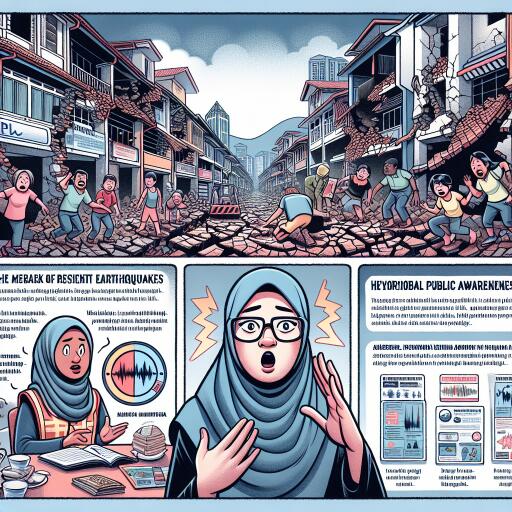
Recent Johor Quakes Expose Low Public Awareness Of Seismic Risks – Disaster Expert
Light tremors felt across parts of Johor in recent days have unsettled residents and exposed a persistent misconception: that Malaysia is somehow insulated from earthquakes. A veteran disaster risk specialist warns that this false sense of security leaves communities and critical infrastructure unprepared for the rare but real threat of seismic shaking.
Malaysia does not sit atop a major plate boundary, but it is close enough to active zones—particularly along Sumatra—to experience tremors from regional earthquakes. In addition, local geological features and soft soils can amplify shaking, as can the design and age of buildings. When quakes are small, the instinct is to treat them as anomalies. Yet a series of minor events clustered in time and space is a timely reminder: seismic risk is low-frequency, not non-existent.
According to a disaster management expert with experience leading large-scale risk reduction projects in conflict and disaster zones, public perception remains narrowly focused on familiar hazards such as floods, haze and landslides. That focus is understandable, but it can crowd out attention to less frequent threats that still carry serious consequences. The specialist, who previously served as a head engineer for disaster risk reduction with a United Nations migration agency, says the recent tremors in Johor revealed just how unprepared many households and businesses are for even light shaking.
Why Johor Felt It
Several factors shape the seismic experience in southern Peninsular Malaysia:
- Regional sources: Large offshore earthquakes west of Sumatra can transmit waves across the region.
- Local conditions: Soft alluvial soils and reclaimed land can amplify motion compared to rockier ground.
- Building stock: Non-structural elements—ceilings, partitions, glass façades—are often the first to fail, even when structural frames remain sound.
Minor tremors may not cause widespread damage, but they can trigger panic and disrupt essential services. They also serve as stress tests for communications, building safety, and institutional readiness.
Preparedness Starts at Home and Work
Simple actions can sharply reduce risk during minor to moderate shaking:
- Know the basics: Drop, cover and hold on until the shaking stops. Stay away from windows and heavy furniture.
- If outdoors: Move to an open area away from buildings, power lines and trees.
- Expect aftershocks: Reassess hazards after the initial tremor and be ready to protect yourself again.
- Secure your space: Anchor tall shelves, water heaters and display cabinets; use latches on cupboards; brace ceiling fixtures.
- Plan and drill: Establish a family or office communication plan and evacuation routes; run brief annual drills.
- Prepare essentials: Keep a small grab-bag with water, medication, copies of important documents, a flashlight and a power bank.
Buildings and Codes Matter
Many structures in Malaysia were not explicitly designed with seismic forces in mind. While most modern high-rises incorporate some level of seismic consideration, older apartments, shop lots and schools may be more vulnerable, especially through non-structural damage that can injure occupants and interrupt operations. Engineers emphasize:
- Adopting and enforcing up-to-date standards that account for regional tremors.
- Prioritizing low-cost retrofits for critical facilities such as hospitals, fire stations and schools.
- Conducting regular inspections to identify hazards like loose cladding, heavy parapets and unbraced equipment.
From Sensors to Smartphones
Strengthening seismic monitoring and public alerting can save seconds to tens of seconds—enough time to duck under a desk, pause surgery, or slow trains. Expanding the network of seismographs, streamlining protocols for public advisories, and integrating alerts into mobile systems and broadcast media can turn confusing tremors into actionable information.
Local governments can also chart microzonation maps that identify neighborhoods where soil conditions may amplify shaking, guiding planners and builders toward better designs and smarter land use. For rapidly growing urban corridors in Johor, these maps help prioritize retrofits and inform emergency planning.
Fixing the Awareness Gap
The core problem is not fear; it’s familiarity. People who have never practiced what to do in an earthquake are more likely to freeze or make risky choices. Public agencies, schools and employers can help by:
- Running short, multilingual awareness campaigns that emphasize practical steps over technical jargon.
- Incorporating earthquake modules into existing disaster drills, alongside flood and fire preparedness.
- Collaborating with resident associations and building managers to spread reliable, consistent guidance.
A Low-Probability, High-Impact Mindset
Malaysia’s risk profile will always be dominated by floods and landslides. But a low-probability, high-impact event like a moderate earthquake can still threaten lives and livelihoods—particularly in dense urban areas. The recent Johor tremors should be treated as a wake-up call, not a passing curiosity. With modest improvements to building safety, monitoring, and public education, communities can turn surprise into readiness and reduce the chance that the next tremor becomes a crisis.



Leave a Reply