

New Research Sheds Light on Canada Lynx-Snowshoe Hare Cycle and Human Impacts
Over recent decades, researchers have been investigating the intricate dynamics of the Canada lynx and snowshoe hare population cycle and how human activities might be affecting this delicate ecosystem. These activities encompass forestry practices, climate change, and increasing wildfire occurrences.
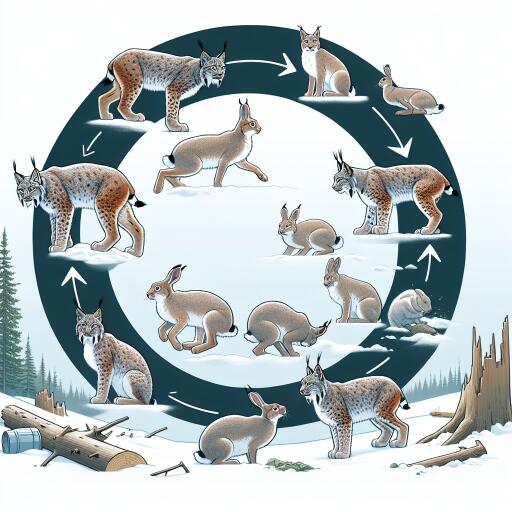
The Canada lynx (Lynx canadensis) is recognized for its thick fur, tufted ears, and large paws adapted for winter snow. Its existence is closely tied to the fluctuations of the snowshoe hare (Lepus americanus), its main food source. The images of lynx chasing hares across snow-covered terrains capture this predator-prey relationship beautifully and draw public intrigue.
The population of snowshoe hares follows a predictable cycle, dramatically swelling and shrinking approximately every eight to ten years. The lynx population generally reflects these changes a year or two later. This cycle has been well-documented through both Indigenous knowledge and historical fur trapping data.
Impacts of Human Activities and Climate Change
Research conducted by Professor Stan Boutin from the University of Alberta shows that over the past two decades, the maximum winter snow depth in Kluane, Yukon, has decreased by a third. While lynx and hares are evolutionarily adapted to walk on deep snow due to their large feet, coyotes—a fellow predator of the snowshoe hare—struggle in deeper snow due to their smaller footpads. When snow is shallow, coyotes become more effective hunters, thus increasing predation pressure on hares.
Additionally, climate change affects the hare’s camouflage capabilities. Hares molt twice yearly, changing from a white winter coat to a brown summer coat. With altered seasonal timings due to climate change, there can be mismatches where hares are poorly camouflaged against a landscape, potentially leading to increased predation. However, research indicates that this mismatch might not heavily impact survival rates as previously thought.
Technological Advancements in Research
The development of biologging technology has revolutionized wildlife research, allowing scientists to gather data in previously unimaginable detail. By equipping lynx with accelerometers and audio recorders, researchers can track movements, hunting effort, and capture success. This approach has identified that snowshoe hares form a significant portion of the lynx’s diet.
One study reveals that lynx rely on a steady diet of these hares, consuming around one hare per day, and the new biologging data has shed light on their predation patterns crucial during the intense winter months.
The Broader Landscape: Dispersal and Habitats
Exploring beyond Yukon, researchers in Alaska have been examining whether lynx and hare populations exhibit synchronized cycles across the region or if peaks in population density travel spatially like waves. The findings indicate a possible dispersal pattern of lynx population cycles moving from east to west. Such movements provide insights into why lynx populations cycle varyingly across North America.
Moreover, human influence through fire suppression and forestry practices significantly alters the boreal forest habitat. In British Columbia, for instance, small-scale logging and fire suppression have disrupted traditionally large forest stands that support both hares and lynx.
Current practices have modified these forests drastically, and researchers suggest adopting forestry methods that mimic natural disturbance patterns—like fires—to maintain the ecosystem balance.
Resilience Amidst Challenges
In places such as Colorado, the combination of climate change-driven factors such as beetle infestations and unrestrained wildfires have reshaped the habitat landscape. While these changes cause concern, they also provide opportunities to learn about adaptation and resilience in lynx populations.
Reintroduction efforts in Colorado have highlighted how lynx respond to environmental transformations, with forest dynamics continually challenging conservation efforts.
Forest fires, particularly, pose a significant threat, potentially eradicating natural habitats within short periods. Any future conservation strategies will need to address these destructive events to ensure the species’ survival.
With the escalating impact of climate change, it’s crucial to continue exploring ways to protect vital habitats from potential threats. Collaboration among various stakeholders could lead to innovative strategies to balance conservation with changing ecological conditions.
As research advances and brings new insights, understanding these complex ecological relationships remains a key focus in maintaining biodiversity and ecological integrity in North American forest regions.



Leave a Reply