

Expert warning issued over UK chocolate supply as global weather brings chaos
Britain’s chocolate habit is colliding with a turbulent planet. A surge of extreme weather, amplified by a powerful El Niño layered on top of long‑term warming, is disrupting harvests in the tropics and straining supply chains that deliver cocoa to UK shelves. With repeated heatwaves at home compounding the challenge, industry watchers warn that shortages and higher prices could become more frequent features of the confectionery aisle.
Through early summer, the UK has endured an unusual run of hot spells, topping previous records for the number of heatwaves by this point in the year. While the immediate headlines focus on uncomfortable nights and wilting parks, the knock-on effects reach from British farms to bakeries, butchers and, crucially, chocolatiers whose craft depends on a fragile tropical crop.
The cocoa belt under pressure
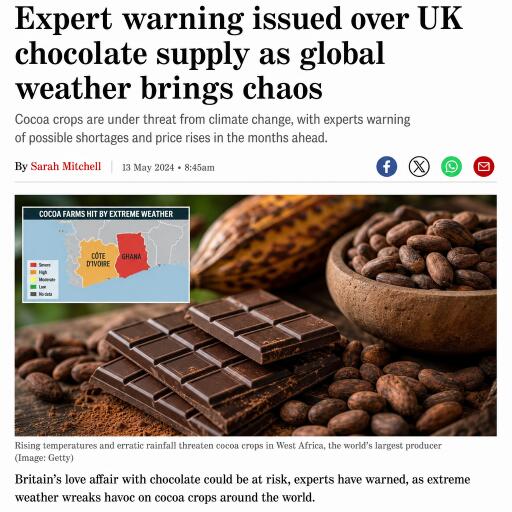
Cocoa thrives in a narrow climate window. Too much heat or too little well-timed rain can stunt pods, fuel pests and diseases, and reduce yields. That’s exactly what growers in West Africa have been battling as weather swings grow more extreme. Côte d’Ivoire and Ghana—together responsible for the majority of the world’s cocoa—sit on the front line, with smallholder farmers bearing the brunt of erratic seasons and escalating risks.
The Energy and Climate Intelligence Unit (ECIU) has highlighted the UK’s exposure to this fragility. Its assessment finds that countries most vulnerable to climate extremes, and least equipped to cope, account for about 13% of UK food imports by value—some £8.9 billion. Narrow that to the top 15 suppliers within this high‑risk group and they still deliver roughly 11% of our imported food, worth £7.4 billion. Cocoa from West Africa is a prominent part of that picture.
From bean to bar: a warming world’s pinch points
For consumers, the warning signs are already familiar: shrinking bar sizes, reformulations, and rising price tags. Behind the scenes, the heat is also testing the resilience of UK makers. Artisanal producers in northern England have temporarily paused production during the most sweltering spells to prevent bloom and texture flaws. In central London, a major high‑street chocolatier shuttered a store on the hottest day of the year to protect stock from melting—an illustration of how climate stress no longer stops at the farm gate.
Chocolate is finicky even in the best of times. Manufacturers aim to store products in the narrow band of roughly 18–20°C to safeguard snap, gloss and flavor. When outdoor temperatures surge and humidity climbs, keeping to that range becomes energy‑intensive and, for smaller businesses, sometimes impossible without costly retrofits.
“Adapt and cut emissions—or face empty shelves”
Experts at ECIU caution that two tracks must run together. First, invest in resilience: shade-grown systems and agroforestry to cool fields, improved irrigation and water harvesting where suitable, and wider adoption of disease‑resistant, heat‑tolerant cocoa varieties. Farmer training, reliable agronomic advice, and fair prices are essential so smallholders can actually implement these changes.
Second, reduce the root cause. Without a sustained push to cut greenhouse gas emissions to net zero, the baseline keeps warming and the extremes keep stacking up. As one ECIU lead put it in essence, adaptation alone can’t keep pace if heat in the fields continues to climb; eventually it undermines both farmer livelihoods and the crops the world depends on.
What this means for the UK
- Supply volatility: Expect more frequent swings in availability of cocoa beans, butter and powder, feeding through to chocolate ranges and seasonal lines.
- Higher costs: Weather‑related shortfalls and pricier risk management can lift wholesale costs, often showing up on tills months later.
- Quality management: More makers will adjust production schedules around hot spells and invest in cooling and humidity control to protect consistency.
- Wider food ripple effects: The same climate risks apply to other imported staples from vulnerable regions, from coffee to certain fruits and spices.
Paths to a steadier future
There are practical steps that can cushion the blow. In producer countries, expanding shade trees and diversified agroforestry can lower on‑farm temperatures and improve soil moisture. Better early‑warning systems and seasonal forecasts help farmers time pruning, fertilizing and harvest. Transparent, traceable supply chains—backed by long‑term contracts—can provide the financial certainty needed to upgrade nurseries, adopt improved varieties and invest in storage.
On the UK side, retailers and brands can spread sourcing risk across regions, build strategic reserves of cocoa butter and powder, and support climate‑smart projects in their supply bases. Financial institutions and insurers have a role too, offering products that reward resilient practices. For households, reducing waste and being flexible about product formats can also soften demand spikes when supplies tighten.
The signal in the sweetness
Chocolate is more than a treat; it’s a barometer for a warming world. When cocoa farms falter, it reflects a broader story of climate stress radiating through global food systems. This summer’s heat has made that story harder to ignore. Whether chocolate remains abundant and affordable in the years ahead will depend on how quickly we help growers adapt—and how decisively we cut the emissions turning today’s extremes into tomorrow’s norm.



Leave a Reply