

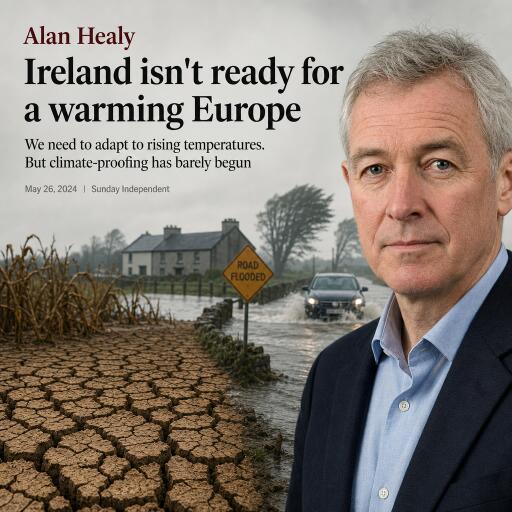
Alan Healy: Ireland isn’t ready for a warming Europe
Across Europe, the weather is breaking old patterns: heavier downpours, fiercer storms, punishing heatwaves, parched soils and fire-prone landscapes. Some analyses have floated the idea that northern countries might gain from a less frigid climate—lower winter heating bills, a slight productivity lift, and a potential tourism uptick as the Mediterranean becomes sweltering. But the past summer has offered a sharp rejoinder: any small wins are quickly eclipsed by the costs of volatility.
The shaky promise of being a “climate winner”
Economic models often hinge on a critical heat threshold near 30 degrees Celsius. Below it, productivity can hold steady or even improve; above it, output tumbles and energy use soars. That line is crossed more frequently in southern and central Europe, where severe heat is draining economies by several percentage points of GDP in bad years. Tourism studies have likewise projected that milder northern regions could attract more visitors as southern beaches bake. Yet the framing is misleading. A tourist shift is not a free dividend—it comes with congestion, coastal risks, water stress and safety demands. And it ignores the lived experience of sectors grappling with erratic seasons, including right here in Ireland.
A summer that laid bare our weak spots
For agriculture, 2024 began with promise. Abundant June rainfall pushed rapid grass growth, silage clamps filled, and winter feed looked secure. Then the tap turned off. July and August brought parched fields and dwindling regrowth. Many herds are already dipping into winter stores, reviving memories of the 2018 fodder crisis. Advisory bodies have warned that Irish farmers should plan for stronger winter growth and far more variable summers—meaning flexible grazing, resilient swards, on-farm water storage and better drought planning will be essential, not optional.
Water: plenty in the sky, not enough in the pipes
Despite bursts of intense rain, supply strains are growing. Hosepipe restrictions have been imposed, and the underlying leak problem persists—more than a third of treated water is still lost before reaching homes and businesses. Climate change magnifies this contradiction: heavier downpours that run off too fast, longer dry spells that expose the inefficiency of our networks, and summer demand that spikes just as reservoirs dip. The fix requires accelerated leak repairs, smarter metering and storage, and planning that treats drought as a recurring feature rather than a rare emergency.
Power and cooling on an already stretched grid
Ireland’s electricity system has been operating near its limits. As summers warm, cooling demand will rise—from hospitals and data centres to shops and homes—while electrification of heat and transport pushes consumption higher year-round. Solar development is accelerating and delivering real generation at peak-sun hours, but grid constraints and connection queues risk choking progress. Reinforcement, storage, demand flexibility and market reforms must move in sync with renewables, or the bottlenecks will keep returning.
Working in the heat, without basic protections
Unlike several European neighbours that set temperature thresholds or heat-stress protocols, Ireland has no heat-specific workplace protections. Outdoor crews, warehouse staff, hospitality workers and delivery drivers increasingly face unsafe conditions on hot days. Heat plans—covering hydration, rest breaks, shaded areas, adjusted hours and clear stop-work triggers—need to be made law, enforced and supported with guidance for small employers.
Homes built for cold now risk overheating
Over the past decade, Ireland has rightly poured resources into making homes warmer and cheaper to heat: insulation upgrades, airtightness, heat pumps and better windows. Those gains remain essential. But a retrofit that only traps winter warmth can lock in summer discomfort. Without shading, cross-ventilation, reflective surfaces and smart controls, super-insulated homes can become stifling in July. The once-unthinkable topic of domestic air conditioning has arrived; if it grows, it must be efficient, targeted and paired with measures that cut the need for cooling in the first place—trees, blinds, awnings, external shutters and design that keeps the sun out and night breezes flowing in.
Tourism’s northern drift brings new responsibilities
If warmer summers do nudge visitors further north, that will test coastal safety, water supplies, transport, healthcare capacity and wildfire readiness. The goal should be climate-resilient tourism: clear heat and water-use messaging, lifeguard and rescue coverage aligned with changing beach use, and shade and cooling in public spaces. Any growth must be planned with local communities and ecosystems in mind.
From reaction to readiness: a practical agenda
- Water security: slash leakage, expand smart metering, diversify supplies and invest in storage to smooth dry spells.
- Grid for a hotter, cleaner decade: accelerate transmission and distribution upgrades, streamline connections, expand storage and demand-response so renewables don’t stall at the substation.
- Heat-safe work: adopt legally binding heat-stress standards, protect outdoor and indoor workers, and enforce rest, shade and hydration rules during heat alerts.
- Overheating-proof buildings: update building regs and retrofit grants to require shading, ventilation strategies, reflective materials and summer comfort assessments.
- Climate-smart farming: support drought-resilient grasses and crops, on-farm water infrastructure, soil moisture conservation and advisory services tuned to weather swings.
- Early warning and data: improve hyperlocal forecasting, heat-health alerts and drought indices so councils, hospitals, farmers and businesses can act before thresholds are crossed.
- Public spaces that cool: trees, canopies, fountains and cool roofs in towns and cities to blunt urban heat.
Europe’s climate is changing faster than our systems. Ireland cannot rely on latitude or luck. Resilience—designed into pipes, wires, workplaces, homes and farms—must become the national project. The choice is stark: scramble from one “once-in-a-decade” event to the next, or build for the summer we know is coming.



Leave a Reply