

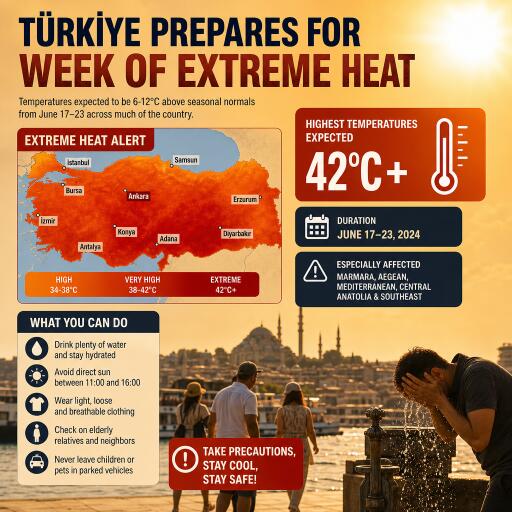
Türkiye prepares for week of extreme heat
Türkiye is bracing for a pulse of oppressive heat moving in from western Europe, with forecasters warning that the combination of high temperatures and heavy humidity—especially along the Aegean and Mediterranean coasts—will make conditions feel markedly hotter than the thermometers suggest.
Much of Europe has spent the past several days sweltering under an intense early-summer heat episode, with parts of Spain, France, Germany and the United Kingdom enduring temperatures that have surged well into the mid-30s Celsius and beyond. France, in particular, has seen record-breaking June heat, underscoring how unusual and widespread this event has become.
What to expect in Türkiye
Meteorologists anticipate a noticeable rise in temperatures across western and interior Türkiye through the coming week. While the country may not experience the extreme peaks registered in parts of western Europe, values are projected to climb several degrees above long-term seasonal averages. The heat will be most punishing in coastal regions, where moisture-laden air will push the “feels-like” temperature far higher than the actual reading.
Forecasters say the pattern steering this heat—a persistent, high-pressure system that acts like a lid on the atmosphere—stretches from North Africa toward northwestern Europe, creating a classic “blocking” setup that stalls weather systems. As that dome of hot air edges east, western, southern, and central Türkiye are likely to see sustained warmth. Current guidance suggests temperatures could remain elevated for at least a week, potentially longer, as warm, dry air from the Sahara continues to influence the broader Mediterranean basin.
Health and safety guidance
Public health officials urge residents to take heat stress seriously, especially during peak sunlight hours from midday to late afternoon. Those most at risk include older adults, infants and young children, people with chronic conditions, and outdoor workers. Even short exposures can be hazardous when humidity is high, as sweat evaporates more slowly and the body struggles to cool itself.
- Limit strenuous activity during the hottest hours and seek shaded or air-conditioned spaces when possible.
- Hydrate frequently; avoid excessive alcohol and very sugary drinks, which can worsen dehydration.
- Use light, breathable clothing, wide-brimmed hats, and sunscreen; carry water when commuting or working outdoors.
- Check on neighbors, family members, and outdoor laborers, and never leave children or pets in parked vehicles.
Along the coasts, humidity will amplify thermal stress. Even if air temperatures only modestly exceed seasonal norms, the apparent temperature—the perceived heat by the human body—can be dramatically higher. Simple measures such as pacing activities, taking frequent cooling breaks, and using shade or umbrellas can reduce risk.
Wildfire risk on the rise
As the atmosphere warms, vegetation dries. Combined with periods of low humidity and gusty winds, this raises the likelihood of fast-spreading wildfires. Authorities are cautioning against any activity that could spark a blaze—open flames, careless disposal of cigarettes, or unsanctioned agricultural burning—particularly in and around forested and scrubland areas.
Parts of the Aegean region are expected to experience stronger, drier winds that can quickly fan small ignitions into dangerous fronts. Residents and visitors should follow local advisories, respect access restrictions in high-risk zones, and report smoke or fire immediately.
Why this is happening more often
Heat waves are growing more frequent, prolonged, and intense across the Mediterranean as the climate warms. High-pressure “heat domes” are more likely to lock into place, reducing cloud cover and rainfall while intensifying sunshine. Urban areas compound the problem: dark surfaces and limited green space trap heat overnight, elevating nighttime temperatures and limiting relief for vulnerable populations.
These conditions affect more than human comfort. Prolonged heat stresses crops and livestock, drives up energy demand, and can exacerbate air pollution. Warmer seas can also fuel marine heatwaves, stressing coastal ecosystems and fisheries. The coming week offers another reminder that adaptation measures—expanding urban shade, improving building efficiency, safeguarding water supplies, and strengthening early warning systems—are increasingly essential.
Looking ahead
While day-to-day fluctuations are expected, current projections indicate that temperatures will stay above average across a broad swath of Türkiye into next week. Communities should prepare for continued heat advisories, elevated fire danger, and increased strain on health and emergency services. Simple, preventive steps taken now—staying informed, adjusting schedules, and looking out for one another—can significantly reduce the toll of this early-summer heat.



Leave a Reply