

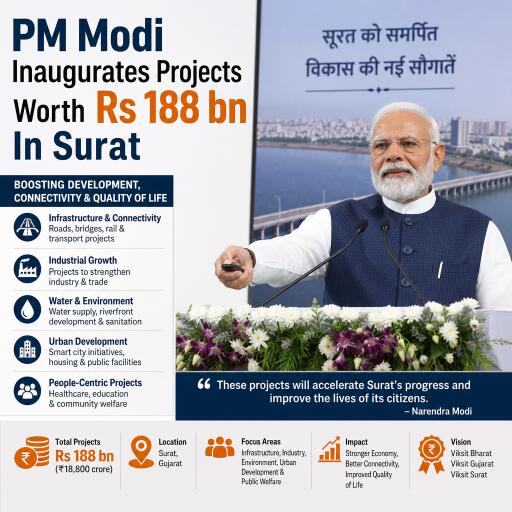
PM Modi Inaugurates Projects Worth Rs 188 bn In Surat
Marking World Environment Day, the Prime Minister used a visit to Surat to spotlight how large-scale development can align with climate action and urban resilience. He praised the city’s journey from a public health crisis in the 1990s to an exemplar of urban cleanliness today, crediting long-term coordination between residents, municipal staff and elected leaders. He also tied the latest projects to a broader push for low-carbon growth, resource recovery and smarter water use.
From crisis to cleanliness leader
Surat’s reputation as one of India’s cleanest cities didn’t emerge overnight. The transformation followed years of steady systems-building: door-to-door waste collection, disciplined segregation, and a pragmatic “waste-to-wealth” approach that has been evolving for more than a decade. The Prime Minister underlined how this ethos—turning refuse into resources—has improved both hygiene and municipal finances.
A key strand of this shift is the circular water economy now taking root across the city. Instead of discharging wastewater, Surat is increasingly treating and channeling it into industrial processes. The approach conserves freshwater for households, reduces pollution loads on rivers and canals, and gives factories a more reliable supply—an example of climate adaptation embedded in everyday infrastructure.
Early bets that shaped a green trajectory
Gujarat staked out an early position on climate governance with the creation of a dedicated Climate Change Department in 2009. That institutional choice, paired with large-scale renewables like the Charanka Solar Park, helped normalize clean energy in the state’s development playbook.
Surat, in particular, is leaning into cleaner mobility and mass transit as its economy grows. Expanding electric vehicle uptake and the ongoing build-out of metro infrastructure are intended to curb congestion and tailpipe emissions while improving access to jobs and services. The message from the stage: prosperity and ecological stewardship can advance together when policy, finance and public participation line up.
Water security and greener industry
To bolster the city’s resilience, the Tapi Barrage Project has been approved with the twin goals of stabilizing drinking water supplies and improving stormwater management. With climate variability intensifying both droughts and deluges, creating buffers in the urban water system is becoming non-negotiable.
On the industrial front, the Hazira belt is being positioned for a pivot toward low-carbon metallurgy. Plans to produce “green steel” using renewable energy point to a broader decarbonization of heavy industry—one of the toughest sectors to clean up. If realized at scale, such moves could cut emissions while keeping Gujarat’s manufacturing base competitive in a world increasingly pricing carbon into supply chains.
National momentum, state leadership
Placing these efforts in a wider frame, the Prime Minister credited the determination of 1.4 billion Indians in navigating recent global disruptions. He highlighted how cumulative investments in energy and infrastructure over the past dozen years have expanded economic opportunity while enabling faster adoption of clean technologies.
Gujarat’s contribution is notable: about 50 GW of renewable capacity—roughly a fifth of the national total of 250 GW—already feeds into the grid. The state is also gearing up to lead in emerging fuels such as green hydrogen and green ammonia, which could decarbonize shipping, fertilizers and select industrial processes if supported by the right policy and market signals.
Health systems for a just transition
Development that cuts emissions must also protect workers. The inauguration of a modern ESIC hospital in Surat was framed as part of that social infrastructure—ensuring industrial labor has access to reliable care. Strong health systems, he argued, are essential for a fair transition that shares the gains of growth while cushioning risks.
From cleaner streets to circular water loops, from solar parks to low-carbon steel, Surat’s arc shows how climate-aligned development can move from slogan to scaffolding. The projects launched in the city are intended to deepen that shift—translating environmental ambition into everyday assets that make urban life healthier, more equitable and more resilient.



Leave a Reply