

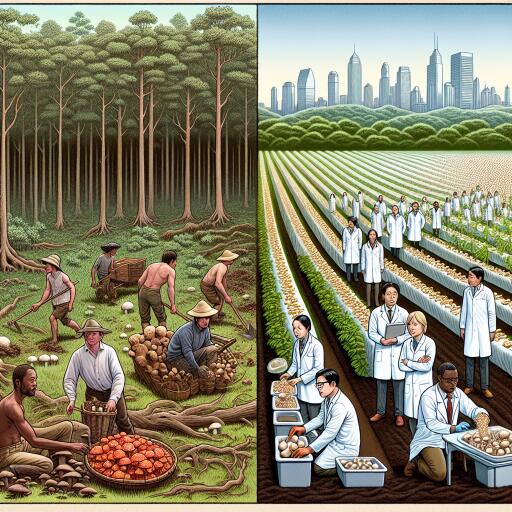
From wild harvest to scientific farming: SKUAST cracks Gucchi cultivation code – The Tribune
In a milestone for Himalayan agriculture and conservation, Sher-e-Kashmir University of Agricultural Sciences and Technology of Kashmir (SKUAST-K) has announced that it has standardised a cultivation protocol for Morchella—locally called Gucchi—ending decades of dependence on uncertain wild harvests and advancing a crop long considered impossible to farm at scale.
Turning a forest delicacy into a farmable crop
Gucchi sits at the apex of gourmet fungi: prized for its honeycombed caps, distinctive aroma, and reputed medicinal benefits. For generations, communities in Jammu and Kashmir have foraged the mushroom from select forest patches over a brief spring window, with yields fluctuating wildly from year to year. The mushroom’s exacting ecological needs and complex life cycle kept it beyond the reach of conventional cultivation, frustrating attempts by researchers across the world.
SKUAST-K reports that two independent teams within the university have now converged on a workable, replicable production system. By decoding the environmental and substrate parameters needed to initiate and sustain growth, the researchers have shifted Gucchi from a forest-dependent resource to a candidate for controlled cultivation—marking a rare scientific and agricultural leap for the region.
Economic promise and ecological relief
Because of its scarcity and culinary cachet, Gucchi commands premium prices in domestic and international markets, making it one of the most valuable non-timber forest products. A reliable cultivation pathway could translate this niche delicacy into a high-value farm enterprise, with dividends for growers, rural youth, and forest-dependent households.
Leaders in the region hailed the development as a step that blends scientific progress with social impact. The breakthrough is being framed not only as a boost to the agri-economy but also as a way to ease pressure on fragile Himalayan forests, where intensive foraging has long raised ecological concerns. Moving production from forest floors to managed systems could help conserve habitats while sustaining incomes traditionally tied to seasonal wild collection.
From foraging risk to scalable production
University leadership characterised the advance as a pivot from chance to certainty. Instead of relying on narrow climatic windows and specific forest microhabitats, farmers could soon operate within a standardized protocol—controlling key variables to stabilize output, improve quality, and meet market demand more predictably. Such a shift mirrors broader transitions seen in specialty crops once thought unfarmable, where precise environmental management unlocked new value chains.
As with most high-value specialty fungi, the path from lab success to field-level reliability will require careful scaling. Maintaining quality, preventing contamination, fine-tuning local strains or substrates, and mapping regional suitability will be essential to ensure that yields remain viable and that production stays cost-effective. Still, the groundwork laid by the two SKUAST-K teams sets the stage for structured expansion.
Roadmap for adoption
To bring the innovation to market, the university is preparing a rollout plan centered on:
- Pilot demonstrations to validate performance under diverse conditions
- Farmer training and hands-on extension support to build skills and confidence
- Technology transfer mechanisms to ensure timely access to protocols and inputs
- Enterprise development pathways for producer groups and startups
Such a phased approach aims to align scientific rigor with practical realities, enabling early adopters to learn, adapt, and de-risk investments. Successful pilots could catalyze clusters of production, attract ancillary services—from spawn supply to post-harvest handling—and strengthen traceability and branding around cultivated Gucchi.
Why this matters now
The intersection of climate variability, biodiversity pressures, and rural livelihoods makes this advance particularly timely. As weather patterns shift and foraging windows become less predictable, a domesticated production system offers stability. It also aligns with conservation goals: by reducing extraction from sensitive habitats, cultivated supply can help protect ecosystems while preserving the cultural and culinary heritage associated with the mushroom.
For consumers and chefs, standardized cultivation could mean more consistent quality and availability, without severing the mushroom’s regional identity. For policymakers and development agencies, it opens a channel to support high-margin agriculture that leverages local expertise and scientific innovation.
What comes next
The coming months will likely focus on translating laboratory precision into farmer-friendly practice, refining protocols for cost and consistency, and building market linkages that reward quality. If executed well, Gucchi’s journey from wild rarity to scientific farming could become a model for how ecological insight and technology can unlock value while safeguarding nature—an outcome as flavorful as the mushroom itself.



Leave a Reply