

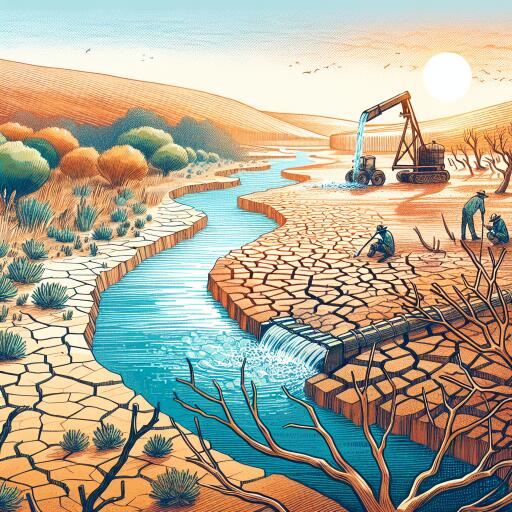
The looming water crisis: How South Africa can avoid water bankruptcy | African News Agency
Remember Cape Town’s near-miss in 2018? That brush with “Day Zero” wasn’t a once-off anomaly. New analyses warn that the world is sliding into water “bankruptcy,” with Southern Africa among the most exposed regions. The message is stark: we’re drawing down nature’s water account faster than it can be replenished—and the overdraft fees are arriving as longer, harsher, more frequent droughts.
What water “bankruptcy” really means
Think of water like a household budget. When withdrawals exceed deposits, you hit insolvency. Hydrologically, that happens when demand overwhelms what rains, rivers, soils, wetlands and aquifers can sustainably provide. In the past, dry spells were treated as rare shocks from which systems would bounce back. Today, many catchments are losing their ability to recover, turning shortages from episodic crises into a chronic condition.
Experts argue this requires a pivot to “bankruptcy management” for water: rigorous accounting, enforceable use limits, and protecting the natural systems that store and filter water—rather than just building bigger pipes and hoping for the best.
From drought to “Day Zero”: a new type of extreme
Researchers now distinguish an especially dangerous kind of crisis—often dubbed a “Day Zero drought”—as a compound event where three pressures collide:
- Prolonged rainfall deficits over several seasons or years;
- Severely diminished river flows and depleted storage;
- Persistently high demand from cities, industry and agriculture.
Southern Africa, alongside parts of the Mediterranean and North America, stands out as a hotspot for these cascading failures.
Why South Africa should worry
- The recovery window is shrinking. In many basins, the gap between major droughts is now shorter than the droughts themselves. That means dams and aquifers may not refill before the next shock arrives.
- The reservoir paradox. Large dams can mask growing risk by providing a sense of security. When a multi-year dry spell finally bites, consumption habits and planning assumptions collide with reality, making the crash steeper.
- Cities are on the front line. Urban hubs—Johannesburg, Durban, Cape Town and others—face mounting exposure, alongside farming communities. Globally, hundreds of millions could be at risk of Day Zero-type conditions if demand trends continue.
Crucially, this isn’t just about fickle weather. Human-driven warming is altering rainfall patterns and evaporative demand, while rising withdrawals, land degradation and pollution turn ordinary droughts into system-wide failures.
How South Africa can balance the books
Averting water bankruptcy demands action on both the supply and demand sides, anchored by strong governance and social equity. Priorities include:
- Hard limits and honest accounting. Set legally enforceable abstraction caps that match hydrological reality. Track withdrawals and losses across sectors, publish transparent dashboards, and tie budgets to seasonal outlooks.
- Fix leaks and tame demand. Reduce non-revenue water through pressure management and rapid leak repair; roll out smart meters; adopt tiered tariffs that protect basic needs but discourage waste; incentivise water-efficient appliances and industrial retrofits.
- Make every drop go further in agriculture. Shift to water-efficient crops; expand drip and precision irrigation; use soil-moisture monitoring and weather-based scheduling; build soil organic matter with mulching and conservation tillage to retain rainfall; reuse treated wastewater where safe.
- Restore nature’s storage. Rehabilitate wetlands and riparian buffers, remove thirsty invasive plants, safeguard recharge zones, and invest in managed aquifer recharge (capturing stormwater and treated effluent to bank underground).
- Diversify supplies wisely. Accelerate fit-for-purpose reuse (particularly for industry and irrigation), harvest stormwater, and consider modular desalination as a drought-contingency tool where energy and brine impacts are responsibly managed. Integrate surface and groundwater planning to smooth volatility.
- Build resilience in townships and informal settlements. Guarantee reliable basic supply, expand communal taps and storage where needed, protect clinics and schools with on-site backup, and ensure emergency tankering plans are ready before shortages bite.
- Strengthen institutions. Empower catchment agencies, enforce permits, and align municipal, provincial and national planning. Coordinate across borders in shared basins to manage flows and drought contingencies.
- Data, early warning and transparency. Modernise monitoring of streamflows, groundwater and evapotranspiration; use seasonal forecasts to trigger pre-agreed demand cuts; encourage citizen reporting of leaks and illegal abstractions.
- Shift culture, not just infrastructure. Normalise water-wise landscaping, rainwater harvesting and greywater systems; recognise that small daily savings at scale often outperform megaprojects during droughts.
A narrow window, a clear choice
South Africa’s 2018 scare was not an outlier; it was a preview. The interval between shocks is shortening, and the margin for error is shrinking. Treating water like a finite budget—audited, capped and actively replenished—can prevent a slide into permanent scarcity. The tools are available: smarter demand, restored ecosystems, diversified supplies and fair, enforceable rules. The sooner we act, the better our odds of keeping taps flowing through the next long dry spell—and the one after that.



Leave a Reply