

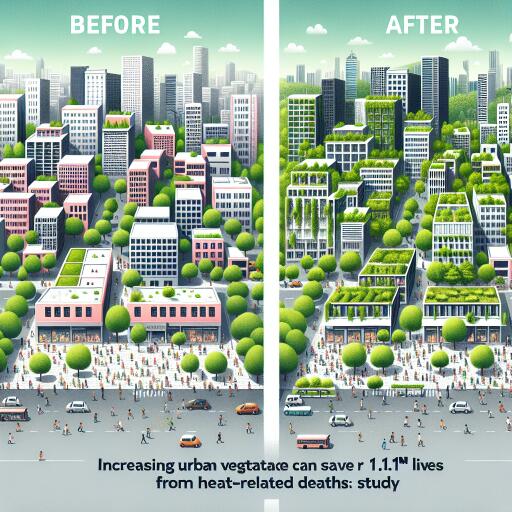
Increasing Urban Vegetation as a Lifesaving Strategy Against Heat-Related Deaths
In light of rising global temperatures and the surge in heat-associated mortalities across the globe, a new study has highlighted the potentially lifesaving benefits of increasing urban greenery. By expanding vegetation in cities by 30%, it could be possible to avert over one-third of all heat-induced fatalities worldwide, potentially saving as many as 1.16 million lives annually.
A research team from Australia found that augmenting greenery levels in urban environments can effectively bring down warm-season temperatures across the globe. Their study revealed that increasing urban vegetation by 10%, 20%, and 30% could result in a decrease in the global population-weighted warm-season temperature by 0.08°C, 0.14°C, and 0.19°C, respectively. Such reductions in temperature could prevent approximately 0.86, 1.02, and 1.16 million heat-related deaths correspondingly.
This comprehensive analysis, conducted over a 20-year period from 2000 to 2019, involved modeling the effects of increased greenery in over 11,000 cities worldwide. The greatest impacts of heat reduction were observed in urban locales across Southern Asia, Eastern Europe, and Eastern Asia.
The study’s findings underscore the importance of fostering urban greenery as a viable strategy to counteract the dangers posed by rising temperatures. Urban heat exposure has become a significant public health threat, one exacerbated by the ongoing climate crisis. Over the period studied, heat exposure was associated with half a million deaths annually, accounting for 0.91% of global mortality.
Projections suggest that under severe global warming scenarios, heat-related deaths could amount to between 2.5% in Northern Europe and a staggering 16.7% in Southeast Asia during the final decade of this century.
Experts attribute the cooling effects of urban greenness to a variety of processes, including shading surfaces, deflecting solar radiation, and promoting evapotranspiration — the process of water evaporation from the ground and plant surfaces that enhances air circulation. These factors collectively help to cool the surrounding environment, diminishing the extent of heat exposure experienced by urban populations and thus reducing the burden of heat-related health adversities.
Aside from lowering temperatures, increased urban greenery offers added health advantages by modifying factors such as mental health, social connectivity, physical activity levels, and air quality. These amplifying effects serve to bolster the overarching health and well-being of communities living in urban areas.
The findings indicate a clear benefit to preserving existing green spaces and strategically expanding vegetative areas within cities. Such efforts not only offer a tangible method for combating heat-related illness and mortality but also promote healthier and more resilient urban ecosystems.



Leave a Reply