

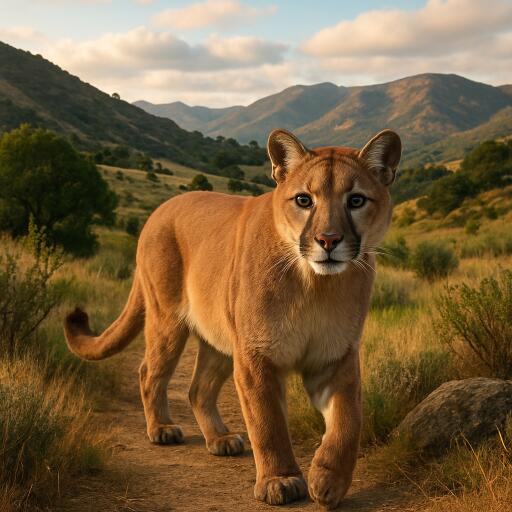
Mountain lions changed everything in this tiny California preserve
In a small protected landscape near the San Francisco Peninsula, an elusive predator appears to be quietly reorganizing the natural world. A multi-year scientific study found that even occasional visits from mountain lions can trigger sweeping changes across a compact preserve, influencing not only other animals but also the plants growing on the ground.
The research focused on a suburban reserve connected to the broader Santa Cruz Mountains. Though modest in size, the site offered a revealing look at how top predators can shape ecosystems far beyond the remote wilderness areas where such effects are usually documented.
A big predator, a small preserve, and outsized effects
Between 2015 and 2020, motion-triggered cameras recorded mountain lions more often than in earlier years. As puma activity rose, deer were detected less frequently. That shift mattered because deer are among the most influential plant-eaters in California landscapes, especially where young trees and shrubs are concerned.
Field surveys showed that woody vegetation long browsed or damaged by deer began to rebound. Young oaks and other plants had a better chance to grow, suggesting that the mere return of a top predator can ease pressure on vegetation.
This pattern is known as a trophic cascade: when changes at the top of the food chain ripple downward through herbivores and ultimately affect plant life. It is a concept often associated with vast national parks, but this case shows the same process can unfold in a much smaller patch of land near urban development.
The “ecology of fear” at work
The study points not only to predation, but also to behavior. Ecologists use the phrase ecology of fear to describe what happens when animals alter their movements, feeding habits, or schedules simply because a dangerous predator is nearby.
In this preserve, deer were not the only species responding. Cameras also showed changes among mid-sized carnivores. As mountain lions appeared more frequently, coyotes and bobcats were seen less often. Researchers believe these animals may have reduced their use of the area or shifted their routines to avoid encounters with a larger, dominant hunter.
That reduction may have opened opportunities for foxes, which were recorded more often during the same period. If foxes became more active, it could help explain why rabbits seemed less active as well. In other words, the mountain lion’s presence may have sent a chain reaction through several layers of the food web.
Some of those lower-level changes are less certain than the deer response. Weather patterns, fog, and temperature shifts may also have influenced plants and smaller animals. Even so, the evidence was strongest for mountain lions affecting the behavior of deer, coyotes, and bobcats.
Why this matters for conservation
The findings carry an important message for conservation planning in fragmented, human-dominated regions. Small reserves are often treated as biologically limited, especially when surrounded by suburbs, roads, and other infrastructure. But this study suggests that when such places remain connected to larger wildlands, they can still support surprisingly complex ecological dynamics.
That is especially relevant in the United States, where many protected areas are quite small. As cities expand, these pockets of habitat may become increasingly valuable—not just as refuges for wildlife, but as functioning ecosystems where predators, prey, and vegetation continue to interact in meaningful ways.
Top predators are particularly important because they are often the first to disappear when landscapes are broken apart. They require larger territories and are more vulnerable to roads, disturbance, and conflict with people. Yet when they remain part of the system, even as occasional visitors, their influence can restore balance in ways that are easy to overlook.
Why are mountain lions showing up more often?
Scientists do not yet know exactly why mountain lions began using the preserve more frequently. One possibility is that some females may see it as a relatively safe corridor or temporary shelter for raising young. During the study period, cameras captured a female with kittens, hinting that the reserve may serve as more than a simple passageway.
Still, the preserve is far too small to support a permanent mountain lion population on its own. These cats typically range across much larger territories, so their presence likely depends on access to the surrounding mountain network. That makes landscape connectivity crucial: without links to larger habitats, small preserves cannot host the full cast of species needed for these ecological relationships to persist.
Mountain lions and people
Although sightings in suburban California often generate alarm, mountain lions generally avoid humans. They are mostly active at night and rely on stealth and distance to stay away from people. In fact, humans pose the greater threat. Vehicle collisions, habitat fragmentation, and direct killing remain major causes of mountain lion mortality.
That imbalance highlights a striking irony. While mountain lions can create an “ecology of fear” for deer and other wildlife, humans impose an even stronger one on mountain lions themselves. Our roads, noise, and expanding neighborhoods shape where these cats can move, hunt, and survive.
A lesson from a small patch of wild land
The most compelling takeaway from this research is not just that mountain lions matter, but that scale can be deceptive. A preserve that seems too small to make a difference may still host powerful ecological processes if it is tied to a larger living landscape.
In this case, a few visits from a top predator were enough to alter the behavior of herbivores and competing carnivores, with possible benefits for vegetation. It is a reminder that biodiversity is not only about which species are present, but about the web of relationships among them. Protect those relationships, and even a small reserve can punch far above its size.



Leave a Reply