

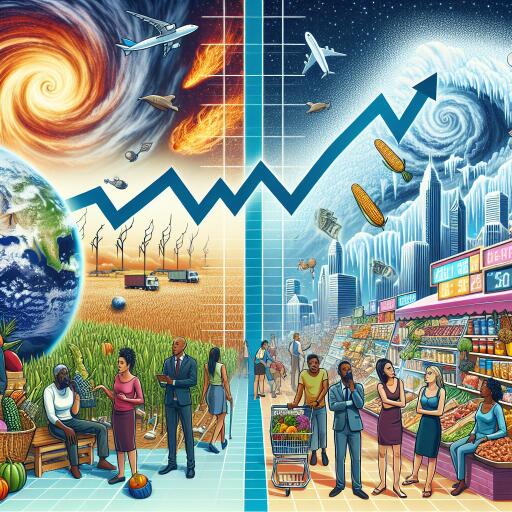
Extreme weather, exacerbated by climate change, is significantly impacting the global cost of essential food commodities, a recent study has revealed. From the vegetable markets of California to coffee plantations in Brazil, these volatile weather patterns have triggered alarming price surges across numerous regions in recent years.
Food costs have been subjected to steep hikes between 2022 and 2024 due to severe weather events worldwide. This trend underscores the integrative risks that communities across the globe are contending with. Rising temperatures, droughts, and sudden climatic shifts have not only highlighted the vulnerability of food supply chains but have also amplified the effects on socio-economic levels.
In South Korea, the price of cabbages surged by 70% last September, a direct consequence of a prior heatwave in August. Such price hikes are not isolated instances but part of a broader pattern indicating that climatic disruptions could lead to inflationary pressures, further igniting political unrest and social instability.
Extreme weather conditions have consistently undermined agricultural productivity, causing adverse effects on both small and large-scale farmers. This spells trouble not just for local economies but also for global trade, as everything from individual livelihoods to national economic frameworks becomes intertwined in this climate conundrum.
Recent observations demonstrate that people around the world acknowledge these rising food prices as the second most significant impact of climate changes in their daily lives, just after experiencing relentless heat waves. As the climate crisis deepens, the repercussions are expected to intensify unless proactive adaptation and mitigation measures are instituted widely.
Understanding the pervasive effects of climate change is crucial to devising policies that ensure food security. The study emphasizes the need for enhancing global efforts to curb emissions and transition towards more sustainable agricultural practices. Improving the resilience of food systems is essential in shielding the world’s population from future climate-induced economic shocks.
As governments and organizations grapple with these emerging challenges, addressing this issue demands an immediate, holistic, and collaborative approach. Protecting food supply chains against the destabilizing impacts of climate change might well be one of the most critical endeavors of our lifetime.



Leave a Reply