

Hindustan Zinc unveils 250-hectare restoration plan
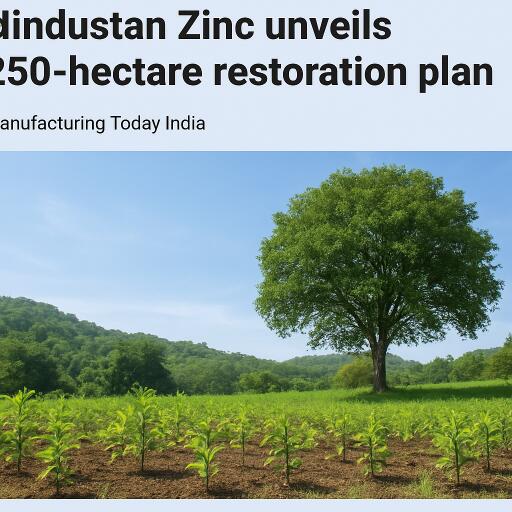
Hindustan Zinc has announced a large-scale ecological restoration programme at its Chanderiya Lead Zinc Smelter Complex in Rajasthan, partnering with TERI to convert 250 hectares of industrial land into a biodiversity-rich landscape. The project is designed to build one of the most extensive green zones developed within an operating industrial site in the country.
Set in the Chittorgarh region, the initiative is intended to reshape altered land into a resilient natural habitat that can support native species, strengthen ecological balance and improve the site’s climate adaptability. The effort sits within the company’s longer-term sustainability roadmap, which includes stronger action on biodiversity protection and nature-focused industrial management.
A science-led restoration strategy
The restoration plan will use an ecosystem design tailored to local conditions, with multiple vegetation layers that include indigenous trees, shrubs, grasses and other plant life. By prioritising species suited to the regional environment, the project aims to create a landscape that can gradually sustain itself with less intervention over time.
The programme will also address the control of invasive species, the conservation of existing water bodies and the improvement of aquatic habitats within the site. Long-term protection and upkeep measures are expected to be part of the rollout so that the restored area can remain ecologically stable beyond the initial plantation phase.
TERI will support the project with technical expertise across planning, site design and implementation. Its role will include helping identify native and climate-appropriate species and bringing in ecological specialists to guide the restoration model.
Expanding earlier work at Chanderiya
The new 250-hectare plan builds on previous restoration work already undertaken at the same industrial complex. Hindustan Zinc and TERI have earlier collaborated on land rehabilitation at the Jarofix Yard, an area used for the secure handling and storage of zinc smelting residues.
That earlier programme covered 22.25 hectares in two stages. Through the use of mycorrhiza-based techniques, nearly 56,400 native trees were planted, helping convert previously stressed land into functioning green cover. Alongside this, a six-hectare biodiversity park is also being developed over a secured landfill zone within the complex.
Part of a wider sustainability push
The restoration project is one element of a broader environmental strategy being pursued across the company’s operations. In addition to land recovery and biodiversity enhancement, the wider agenda includes water stewardship, lower-carbon operations and more responsible use of resources.
Among its recent measures, the company has moved ahead with a 530 MW round-the-clock renewable energy arrangement expected to supply more than 70 per cent of its electricity demand. It has also raised its water recycling rate to 49 per cent and expanded its greener vehicle fleet to 232 units, including electric and LNG-based vehicles.
Industry and ecology moving closer together
The latest announcement reflects a broader shift in Indian industry, where environmental planning is increasingly becoming part of operational decision-making rather than a separate compliance exercise. By restoring large tracts of industrial land with ecological intent, companies are beginning to show how production zones can also contribute to habitat creation, climate resilience and long-term land stewardship.
If executed effectively, the Chanderiya project could stand as a notable example of how industrial infrastructure and ecosystem recovery can be developed side by side, with benefits that extend beyond the boundary of the plant itself.



Leave a Reply