

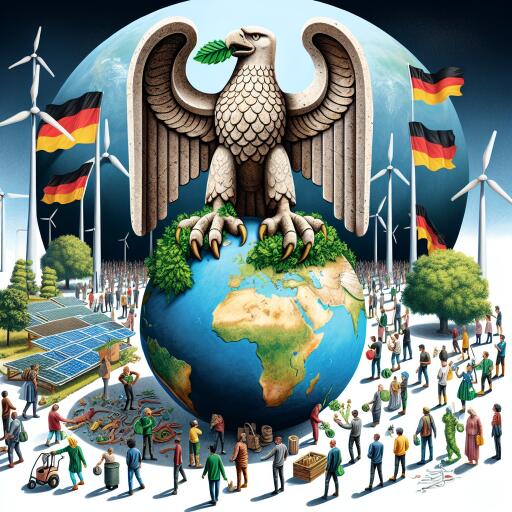
Germany leading the way for climate justice
Across the world’s deltas, coastlines, and small islands, communities with the smallest historical carbon footprints are bearing the brunt of a crisis they did not create. Storms intensify, seas encroach, and once-reliable seasons fray. Against this backdrop, Germany’s 2024 climate finance announcement stands out as a meaningful signal of responsibility in action.
A record that raises the bar
Germany’s pledge of €11.8 billion in climate finance this year marks a new high-water mark, and the composition of that support matters. With €6.1 billion coming directly from the federal budget, Berlin is acknowledging the scale and urgency of the challenge—especially for nations on the front lines of sea-level rise, erratic rainfall, and crop-destroying extremes. Nearly €1.5 billion set aside for conserving forests and oceans further recognizes the role of healthy ecosystems as carbon sinks, storm buffers, and biodiversity lifelines.
From burden to fairness
For climate-vulnerable countries, this funding is not about benevolence. It is about fairness. Industrialized economies built wealth by burning fossil fuels, loading the atmosphere with greenhouse gases whose impacts are now global and deeply uneven. Those who contributed least are facing riverbank erosion, saltwater creeping into fields and drinking water, and the devastation of floods and cyclones. Climate finance is a form of redress—support to cope with harms already unfolding and to prevent those harms from getting worse.
Leadership that others must match
Germany’s move points toward the kind of leadership the moment demands: predictable public finance, scaled to need, and aligned with both adaptation and nature protection. But no single contributor can bridge the gap. This should be the floor, not the ceiling, for other high-emitting countries. The principle is simple: those most responsible for cumulative emissions should shoulder the greatest share of the costs to adapt, rebuild, and safeguard the future.
What meaningful climate finance looks like
- Speed and scale: Funds must arrive on timelines that match climate realities, not bureaucratic cycles. Every season of delay compounds losses.
- Grants over debt: Support should avoid adding financial burdens to countries already paying for disasters they did not cause.
- Adaptation at the core: Investments in resilient infrastructure, early warning systems, climate-smart agriculture, and freshwater security reduce risk before catastrophe strikes.
- Nature as protection: Forests, mangroves, peatlands, and healthy oceans are cost-effective shields and long-term carbon stores, deserving sustained backing.
- Local access: Finance must reach frontline communities, empowering those who know best how to protect homes, livelihoods, and ecosystems.
Justice, not charity
Calling this support “aid” risks erasing the reality of climate responsibility. The concept of climate justice rests on acknowledging the debt accrued through decades of high emissions. Financial commitments are part of repaying that debt—still only a portion of what is required to safeguard lives, cultures, and economies in the Global South. Recognizing this is not about blame; it is about honesty and shared survival.
A turning point within reach
Germany’s 2024 contribution is a step toward a fairer climate future and a reminder that leadership is measured by action, not aspiration. If other developed nations follow suit—scaling up public finance, prioritizing adaptation, and investing in ecosystems—we can begin to push back against the tide of loss and damage now hitting the most vulnerable.
For countries living with rising waters and shifting skies, climate finance is not optional. It is the bridge between a narrowing present and a livable future. Germany has shown what responsible stewardship can look like. The rest of the developed world should not wait to follow.



Leave a Reply