

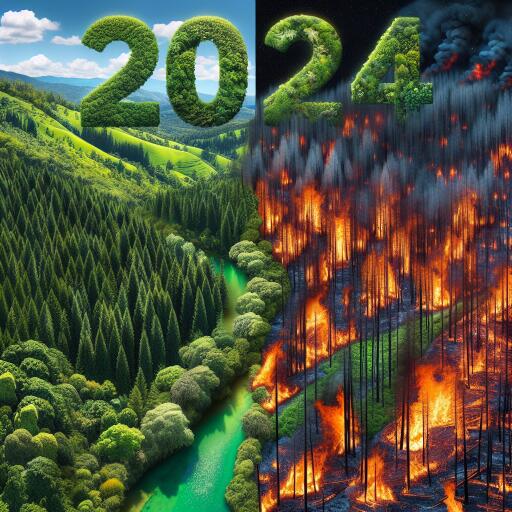
Global Forest Loss Hit a Record in 2024 as Fires Raged
In 2024, the planet witnessed an unprecedented loss of forested areas, primarily driven by rampant fires that swept across regions worldwide. Data indicates that the loss of untouched rainforests alone expanded to an alarming 6.7 million hectares (16.5 million acres), nearly double that compared to 2023. This annual insight into global forest conditions was provided by researchers utilizing satellite imagery to track these crucial environmental changes.
The scale of deforestation equated to the destruction of approximately 18 soccer fields of forest every minute. For the first time since systematic records began, fires surpassed agriculture as the leading cause behind rainforest destruction, responsible for nearly half of the total forest area lost. These fires discharged 4.1 gigatons of greenhouse gases into the atmosphere, a figure substantially exceeding emissions from air travel the previous year.
Agricultural expansion, cattle ranching, and other land-clearing activities, although secondary to fires, escalated by 14%, marking the steepest rise in nearly ten years. If this trend persists, it could irrevocably alter vital ecosystems, significantly worsening climate change and triggering more severe fire incidents.
Forests play a vital role in capturing carbon dioxide from the atmosphere, a major contributor to climate change. Globally, forests sequester more than a quarter of carbon emissions resulting from human activities each year. Intact tropical forests exhibit exceptional efficiency in carbon storage.
Brazil, home to the most extensive tropical forested area, recorded 42% of all tropical primary forest loss in 2024. Fires exacerbated by record-breaking drought conditions accounted for a staggering 66% of Brazil’s forest loss, a more than sixfold increase from the previous year. Similarly, Bolivia experienced nearly triple its usual forest loss, with agricultural fires spiraling into vast wildfires due to severe droughts.
Other regions, such as Congo and the Republic of Congo, also reported unprecedented levels of forest loss, driven by unusually hot and parched conditions. The Congo Basin, like the Amazon rainforest, plays an essential role in global carbon sequestration efforts.
Land clearing in regions like Congo stems from socio-economic factors, including poverty and dependency on forests for sustenance and energy, compounded by ongoing conflicts and instability.
Despite these worrying trends, some areas showed improvement. In Indonesia, primary forest loss decreased by 11%, reversing the upward trajectory observed between 2021 and 2023. Similarly, Malaysia recorded a 13% reduction in forest loss. Restoration initiatives, such as tree thinning and controlled burns, helped mitigate wildfires even amidst widespread drought conditions.
The grave situation highlighted by last year’s data underscores the urgency of addressing forest conservation pledges. The world’s wealthier nations, in particular, have been criticized for not fulfilling commitments to financially support tropical forest conservation. The survival of all depends on robust and immediate actions to curb further deforestation.



Leave a Reply