

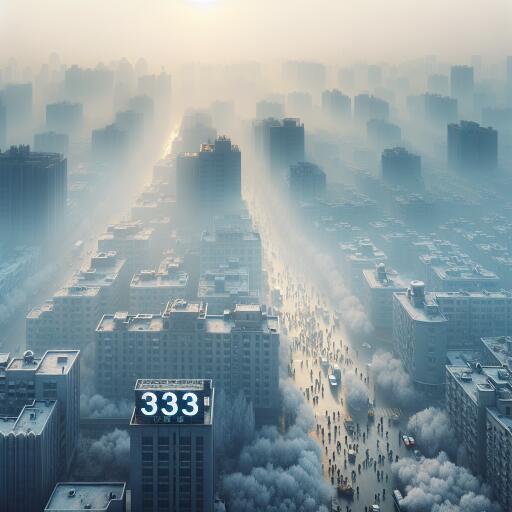
Smog chokes Delhi as AQI climbs to 333; city shivers through coldest morning of season
A dense winter haze smothered Delhi on Saturday, pushing the city’s Air Quality Index to 333—firmly in the “very poor” band—while residents woke to the coldest morning of the season at 5.6°C. The murky skies and biting air laid bare a familiar winter dilemma: stagnant weather trapping toxic pollutants near the surface just as temperatures plunge.
Air quality snapshot
By early morning, pollution monitors across the capital painted a bleak picture. Mundka topped the charts with an AQI of 381. Other hotspots included Bawana (375), Rohini (374), Anand Vihar (366), and RK Puram (364). Wazirpur and Chandni Chowk were also deep in the “very poor” zone.
A handful of locations fared slightly better, though still far from healthy: NSIT Dwarka hovered around 260, IGI Airport near 263, Mandir Marg at 256, and Aya Nagar at 289—each in the “poor” category.
For context, the national AQI scale classifies 0–50 as “good,” 51–100 “satisfactory,” 101–200 “moderate,” 201–300 “poor,” 301–400 “very poor,” and values above 400 as “severe.”
What’s driving the haze
Delhi’s Decision Support System attributes the single largest local share of today’s pollution to vehicles (about 15.3%). Industry within and around the capital contributes roughly 7.6%, with residential emissions (3.7%), construction dust (2.1%), and waste burning (1.3%) adding to the load.
Pollution doesn’t respect borders: nearby districts in the National Capital Region also feed the smog envelope. Jhajjar alone adds an estimated 14.3%, followed by Rohtak (5%), Sonepat (3.8%), Bhiwani (2.5%), and Gurugram (1.5%).
A week of “very poor” air
The city has seesawed within unhealthy ranges throughout the week. The AQI began around 279 on Sunday, nudged above 300 on Monday, surged to 372 on Tuesday, eased to 342 on Wednesday, dipped to 304 on Thursday, and stood at 327 on Friday before this morning’s climb to 333. With farm-fire incidents waning, the urban mix—traffic, household fuels, and construction dust—has taken center stage.
Curbs in force
Stage II of the revised Graded Response Action Plan remains operational. The measures prioritize dust control at construction and demolition sites, curtail the entry of older, more polluting vehicles below BS-IV norms, and encourage staggered work hours to reduce traffic peaks.
Weather and dispersion
The meteorological set-up is primed for poor dispersal. The forecast points to shallow fog with temperatures oscillating between 8°C and 23°C on Saturday. On Friday, Delhi registered a maximum of 23.5°C, while the minimum plunged to 5.6°C—around four degrees below normal and the lowest this winter so far. Morning humidity spiked to 100% before easing to 68% by late afternoon. For perspective, last December’s chilliest morning was on the 12th, when the minimum touched 4.5°C.
Cold, calm mornings often intensify temperature inversions, capping pollutants close to the surface. Without stronger winds or meaningful mixing, particulate concentrations tend to build through the night and linger into the morning rush.
What residents can do today
- Limit strenuous outdoor activity, especially for children, seniors, and those with heart or lung conditions; use well-fitted N95/FFP2 masks if you must be outside.
- Keep windows closed during peak pollution hours (early morning and late evening); ventilate homes in the early afternoon when dispersion marginally improves.
- Use public transport, carpool, or postpone non-essential trips; avoid idling engines.
- Minimize indoor emissions: avoid incense and candles, ensure kitchen ventilation, and use induction or clean fuels where possible.
- Support local dust control by reporting uncovered construction and debris dumping to civic agencies.
The bigger picture
Delhi’s winter smog is a composite problem—weather acts as a lid while emissions fill the pot. The immediate priority is strict enforcement of GRAP norms and on-ground dust management. Longer-term relief hinges on cleaner transport and fuels, accelerated electrification of fleets, tighter industrial standards, and robust regional coordination—because the air does not stop at the city’s edge.



Leave a Reply