

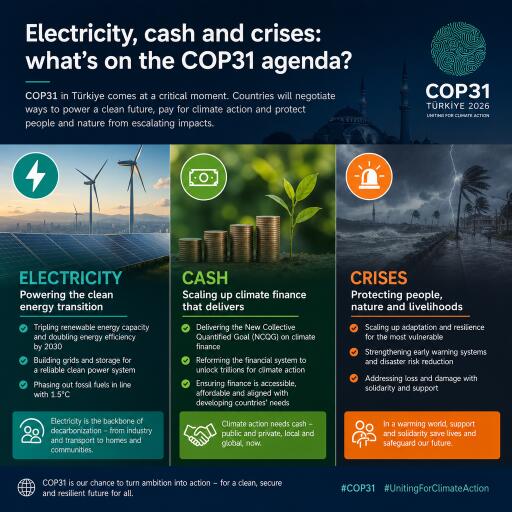
Electricity, cash and crises: what’s on the COP31 agenda?
When climate negotiators converge on Antalya on November 9, they do so against a backdrop of record heat, costly disasters and jittery energy markets. Turkey is the official host of this year’s summit, but Australia holds the reins on key programming — a rare co-management model born from dueling bids to stage the talks. The formal agenda is comparatively thin; instead, voluntary commitments are expected to dominate, with a headline push to electrify economies and curb dependence on fossil fuels.
Fossil fuels: the unresolved fault line
The most combustible debate in climate diplomacy — how fast to move away from coal, oil and gas — will largely play out in the corridors rather than the negotiating text. A binding decision to phase down or phase out fossil fuels isn’t on the official docket, reflecting years of stalemate. In that vacuum, Brazil is poised to unveil a voluntary transition “roadmap” after countries failed last year to agree on a formal process. Whether that voluntary path can provide momentum remains to be seen.
Pressure will be palpable. Roughly 60 nations calling for swifter fossil fuel action convened their own gathering this year outside the UN process. How their ambitions are channeled in Antalya is uncertain, but organizers from Turkey and Australia have promised a steady, drama-free summit that avoids late-night surprises.
The big bet: electrify everything
Rather than re-litigating fossil fuel language, the co-leads want delegates to rally around rapid electrification — swapping combustion-based technologies like diesel vehicles, gas boilers and some industrial burners for electric alternatives. Their flagship ask: lift electricity’s share of final energy use from about 20 percent today to 35 percent by 2035 through voluntary national pledges.
Proponents argue this shift can slash planet-warming pollution while insulating economies from volatile fuel imports — a vulnerability laid bare by recent geopolitical shocks. Yet credibility hinges on how that new electricity is generated. With roughly a third of global power still coming from coal, electrification without a parallel surge in clean power, storage and grid upgrades risks moving emissions around rather than cutting them. The measure’s success will be judged on deployment speed in key sectors: zero-emission transport, heat pumps, clean industrial heat and smarter, more flexible power systems.
Action agenda: voluntary, visible — and separate
Beyond electrification, the hosts will showcase a suite of non-binding initiatives. Themes expected to feature include methane abatement, waste reduction, climate-resilient urban planning and the use of artificial intelligence to accelerate implementation. These live under an “action agenda” that runs parallel to the formal negotiating track, where every line requires consensus and progress is often incremental.
Inside the official talks, technical carry-overs from past conferences will dominate. Few blockbuster decisions are anticipated, raising the stakes for voluntary coalitions to demonstrate near-term traction.
Finance: minding the gap
Money remains the pressure point. The adequacy and accessibility of climate finance for vulnerable nations will face fresh scrutiny after destructive floods in Nepal intensified calls for support. Developing countries want more predictable funding to deploy renewables, bolster defenses against intensifying storms and heat, and recover when losses mount.
Turkey has presented itself as a bridge between wealthier donors and nations on the front lines, and incoming COP31 president Murat Kurum has put closing the finance gap at the top of his to-do list. That conversation spans grants, concessional lending and mechanisms for addressing climate-driven losses — all in a fiscal environment where many governments are wrestling with debt and competing priorities. Expect hard questions about how fast promised funds are actually flowing and whether private capital can be mobilized at the scale required.
Signals to watch in Antalya
- How many countries sign up to the 35 percent electrification goal — and whether they pair it with commitments on renewables, grids and storage.
- Whether Brazil’s voluntary fossil fuel transition roadmap attracts broad endorsement or exposes rifts.
- Any bridging proposals to de-escalate the standoff over fossil fuel phaseout language, even if kept off the formal agenda.
- Tangible progress on methane and waste initiatives, where near-term cuts can deliver rapid climate benefits.
- Fresh finance pledges or mechanisms that improve access and speed for vulnerable countries.
Looking ahead: the COP33 question
Beyond Antalya, delegates are eyeing COP33 in 2028, slated to include a sweeping assessment of global progress under the Paris Agreement. The host remains undecided after India stepped back from consideration. China is weighing a bid, a move that would amplify geopolitical overtones and could reshape expectations for ambition and cooperation. A decision isn’t required this year, but the prospect of a Beijing-led conference is sure to animate conversations in the halls.
With climate damages rising and time short to halve emissions this decade, COP31 is unlikely to deliver a single breakthrough. Instead, its measure of success will be whether voluntary initiatives gain real-world traction, finance starts to move at scale, and negotiators lower the temperature on the debates that have long blocked collective progress. In a year of heat and hardship, predictability may be welcome — but results will matter more.



Leave a Reply