

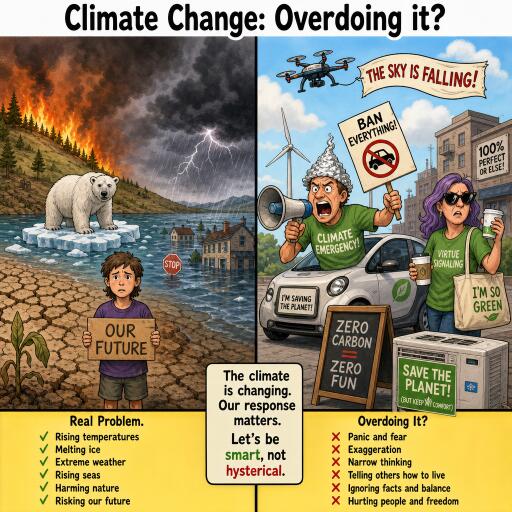
Climate Change: Overdoing it?
Relentless downpours, record-breaking floods, and a drumbeat of emergency declarations have turned extreme weather from anomaly to routine across Aotearoa New Zealand. In April, parts of Wellington were inundated, leaving dozens of homes unlivable and one person dead. Auckland suffered catastrophic flooding the year before. The opening weeks of 2026 brought more weather-related states of emergency than the entirety of 2025. Severe weather alerts now land with a rhythm you can set your calendar by—about every fortnight.
Against this backdrop, the Minister responsible for climate change and local government has urged councils to pull back. In a letter sent to mayors, regional chairs, and chief executives, the minister warned against “gold-plating” climate initiatives and planning for worst-case scenarios at the expense of ratepayers. The timing—so soon after communities were hauling sodden carpets to the curb and tallying losses—has sparked anger among local leaders who say it ignores what residents are experiencing on the ground.
When risk maps become political
The minister’s office pointed to a regional flood hazard assessment in Wellington as an example of overreach. The assessment produced a map showing areas with elevated flood risk—information later borne out by the April deluge in places like Emerson Street in Berhampore. This is precisely what hazard maps are meant to do: identify where people, homes, and infrastructure are most exposed so councils can direct investment, guide development, and plan evacuations before disasters strike.
Why, then, the backlash against mapping? Transparency has consequences. When a map shows a home sits squarely in a floodplain, buyers may balk, insurers may raise premiums or retreat, and developers may shelve projects. In the short term, that can depress property values. In the long term, it can save lives and public money. Attempts to discourage or dilute such assessments may shield asset values today, but they also shift mounting risks onto households, emergency responders, and ratepayers who ultimately fund clean-ups and rebuilds.
“Worst case” is becoming business as usual
Warmer air holds more moisture—roughly 7% more for every degree Celsius of warming—priming the atmosphere for heavier, more frequent downpours. Combine that with rising seas, sodden catchments, and aging stormwater systems, and yesterday’s “outlier” storms become today’s baseline. Calling this “overdoing it” mistakes a new climate reality for an optional extra in council planning.
In practice, building and infrastructure designed for yesterday’s climate won’t keep pace. Planning for higher rainfall intensities, updated flood extents, and compound hazards is not gold-plating; it is the least-cost path when measured over the life of roads, pipes, and homes. Each rebuild to outdated standards simply sets the stage for the next avoidable loss.
What communities need from government
Local authorities are on the front line of climate impacts, yet they cannot carry the burden alone. Rather than discouraging preparedness, central government should support it by:
- Upholding transparent hazard disclosure so residents and buyers understand flood and erosion risk.
- Setting clear national standards for climate-resilient infrastructure and building codes aligned with current and projected extremes.
- Funding risk assessments, stormwater upgrades, and nature-based solutions that slow and absorb floodwaters.
- Creating fair, well-signalled mechanisms for managed retreat where risk cannot be feasibly reduced.
- Working with insurers to ensure risk pricing encourages safer building locations, not repeated rebuilding in harm’s way.
The cost of looking away
Suppressing or sidelining risk information does not make the hazard disappear; it amplifies it. Each time hazard mapping is softened, zoning decisions get foggier, emergency planning grows harder, and future households inherit the fallout. The economic calculus is straightforward: pay now to adapt, or pay far more later in disaster recovery, higher insurance costs, and disrupted livelihoods.
There is also a trust dividend. People deserve to know if their street is likely to flood, whether a proposed subdivision sits on a floodplain, or if stormwater systems cannot cope with projected rainfall. Hiding or downplaying risk to soften immediate political blowback erodes public confidence and leaves communities less safe when storms arrive.
Leadership in the age of extremes
New Zealanders have seen enough flooded living rooms and landslide-scarred hillsides to know the climate has changed. Communities expect leaders to deal squarely with risk, not to rebuke councils for planning to the realities outside their windows. It is not “alarmist” to design for plausible extremes when those extremes are already arriving with unsettling frequency.
The fork in the road is clear. One path invests in honest risk assessments, resilient infrastructure, and difficult decisions about where and how we live. The other offers short-term comfort—keeping uncomfortable maps in a drawer and pretending business as usual can continue—at the price of greater harm later.
Climate change is not a future debate topic; it is a daily stress test for our homes, budgets, and institutions. This moment calls for courage: to face the data, to plan for the floods we know are coming, and to protect people ahead of property values. If we get that order right, lives and livelihoods will be safer—whatever the weather throws at us next.



Leave a Reply