

Whale Hunting in South America Began 5,000 Years Ago, Study Finds – thetimes.gr
Archaeology from Brazil’s southern coast pushes back the origins of organized whaling and reshapes our understanding of early maritime societies and their ecological reach.
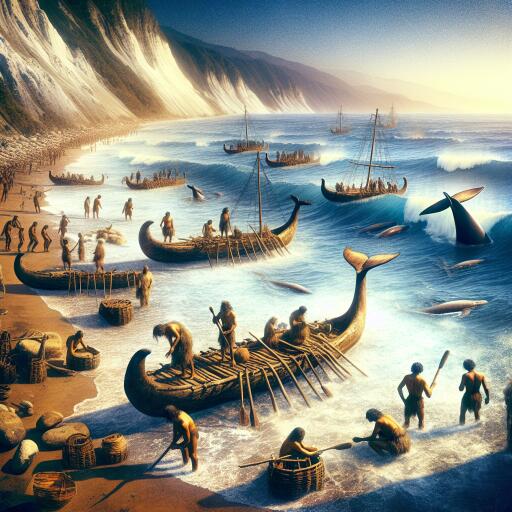
New archaeological evidence from the coast of southern Brazil suggests that Indigenous communities were deliberately hunting large whales at least 5,000 years ago—centuries before comparable practices are documented in the Arctic and North Pacific. The findings redraw the timeline of whaling’s origins and point to sophisticated maritime cultures thriving along South America’s Atlantic shores during the mid-Holocene.
Shell mounds that speak of seafaring skill
The research centers on the sambaquis—monumental shell mounds dotting Brazil’s coastline—that long served as the backbone of coastal life. Once dismissed as mere refuse heaps, these structures are increasingly recognized as engineered landscapes tied to ceremony, settlement, and food processing. In Babitonga Bay, Santa Catarina, sambaquis preserve a dense record of marine exploitation that includes hundreds of cetacean bones and tools.
Much of the original archaeological landscape has been erased by urban growth, making curated collections vital. Materials housed at the Museu Arqueológico de Sambaqui de Joinville, including the renowned Guilherme Tibúrtius Collection, now function as a rare archive of early coastal lifeways and technologies.
High-tech analysis of ancient hunts
To determine species and hunting practices, researchers combined classic zooarchaeology and tool typology with peptide fingerprinting (ZooMS), a molecular method that can identify animal taxa from fragmented bone. The assemblages revealed a roster of large cetaceans—southern right, humpback, blue, sei, and sperm whales—alongside dolphins, signaling a broad exploitation of nearshore and migratory species.
Cut marks on many bones show repeated, targeted butchering rather than opportunistic scavenging. Paired with this, the discovery of massive harpoons carved from whale bone—among the largest known in South America—and their association with dense whale remains and some funerary contexts, points to organized, cooperative whaling expeditions. The prevalence of inshore species further supports a strategy tuned to local whale behavior and seasonality.
Rethinking range and recovery
The abundance of humpback remains in these southern latitudes implies that populations historically ranged farther south than the species’ primary breeding grounds today in warmer Brazilian waters. That deep-time perspective matters: understanding where whales thrived before industrial exploitation helps interpret contemporary recovery patterns and informs where protections or habitat restoration might be most effective.
Observed increases in whale sightings off southern Brazil in recent years may reflect a gradual return to ancestral habitats. By anchoring modern data to pre-industrial baselines, the archaeological record becomes a tool for conservation planning—context that is often missing when recovery targets are set using only recent centuries as reference points.
Economies built on the sea
These results challenge the long-held portrayal of sambaqui societies as primarily shellfish collectors and fishers. Instead, they reveal communities with advanced maritime organization capable of provisioning large settlements with high-calorie resources from massive marine mammals. Whale products—meat, oil, bone—would have supported not just diets but technologies, crafts, and ritual life, reinforcing social networks and possibly regional trade.
The presence of whale-bone harpoons and other tools indicates iterative design and knowledge transfer across generations. Such technologies suggest command of materials science, mechanics, and seafaring logistics, including vessel design, coordination, and risk management—an integrated technological system rather than ad hoc exploitation.
Museums as time capsules
Because many sambaqui sites were destroyed or altered over centuries of development, museum collections now carry an outsized responsibility for preserving this past. Curated archives from Babitonga Bay provide the continuity needed to reconstruct lifeways that would otherwise be lost. They also highlight the urgency of protecting remaining coastal sites, which continue to reveal insights into human–ocean relationships spanning millennia.
A broader story of maritime ingenuity
Taken together, the evidence positions South America firmly within a global narrative of early whaling, demonstrating that complex maritime traditions arose in multiple regions earlier than once assumed. The combination of molecular analysis, careful excavation records, and tool studies brings into focus a picture of Indigenous innovation—societies that read the sea, engineered specialized gear, and coordinated labor to harvest one of the ocean’s most formidable resources.
This deep history reverberates today. As whales rebound from industrial-era declines and climate change reshapes marine ecosystems, understanding how past communities aligned culture, technology, and ecology offers a powerful guide. It reminds us that sustainable futures at sea depend not only on modern science and policy but also on the long memory of the coast itself.



Leave a Reply