

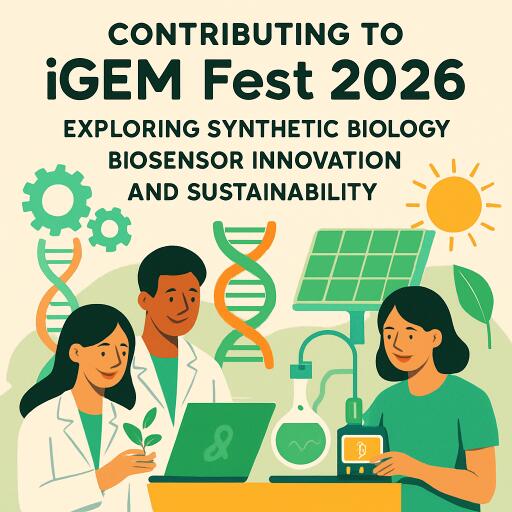
Contributing to iGEM Fest 2026: Exploring Synthetic Biology, Biosensor Innovation and Sustainability
Held in Athens on 3 and 4 October 2026, iGEM Fest 2026 gathered students, early-career scientists and researchers for two days of discussion on synthetic biology, biotechnology and the environmental and social questions linked to these fast-evolving fields.
The meeting reflected the spirit of the wider iGEM community, an international student-driven initiative that challenges multidisciplinary teams to design biological tools and systems for real-world needs. Over the years, the programme has become a major training ground for young innovators working at the crossroads of biology, engineering, health and sustainability.
Among the contributions to the festival’s scientific programme were presentations focused on biosensors, cell technology and more inclusive biomedical research. These talks illustrated how synthetic biology is increasingly moving beyond the laboratory bench, with possible applications in environmental monitoring, diagnostics and sustainable production systems.
One presentation examined the role of living cells as active sensing components in biosensor platforms. Rather than treating cells simply as objects of study, this approach uses their natural biological responses to detect changes in surrounding conditions. Such systems could open new paths for monitoring pollutants, tracking biological activity or supporting industrial processes designed around lower waste and more efficient resource use.
The talk also addressed a broader issue often overshadowed by technological enthusiasm: responsibility. As synthetic biology develops new tools with growing power and precision, questions around ethics, safety and public trust become inseparable from scientific progress. Linking innovation with sustainability requires not only technical success, but also careful reflection on how these technologies are deployed and who benefits from them.
A second presentation turned to the development of biomarkers for colorectal cancer and highlighted the importance of considering sex- and gender-related differences in biomedical research. In the context of biosensor design, this perspective matters because diagnostic tools are only as good as the biological signals they are built to detect. A more nuanced understanding of variation between patient groups can help produce diagnostic systems that are more accurate, more inclusive and better suited to personalized medicine.
Together, these themes showed the breadth of modern biosensor research. On one side lies the engineering challenge of building reliable, responsive biological devices. On the other lies the need to ensure that these devices reflect biological diversity and are developed in ways that serve society fairly. For a field such as synthetic biology, this combination of technical innovation and social awareness is increasingly essential.
The festival also showcased the collaborative structure behind the Athens iGEM effort. Students and graduates from multiple academic institutions worked together in an interdisciplinary framework, combining expertise from biotechnology, engineering and life sciences. This model mirrors the wider evolution of biodiversity and health research, where complex problems rarely fit within a single discipline.
A major focus of the team’s 2026 competition entry is honeybee health. Their project, titled “ApiconIASIS”, is aimed at creating a sustainable biological approach to tackle European Foulbrood, a bacterial disease that harms bee larvae and can weaken colonies. The choice of topic is particularly significant from an ecological perspective. Honeybees and other pollinators play an indispensable role in both natural ecosystems and food production, yet they continue to face pressure from disease, habitat degradation, chemical exposure and climate-related stress.
Efforts to protect pollinators are therefore about far more than apiculture alone. Pollination underpins the reproduction of many wild plants and supports agricultural yields across a wide range of crops. When bee health declines, the effects can ripple through ecosystems and farming systems alike. A bio-based treatment strategy that reduces reliance on less sustainable interventions could offer benefits not only for beekeepers, but also for biodiversity conservation and the resilience of agroecosystems.
The project’s emphasis on sustainability is notable in the current context of environmental change. Synthetic biology is often discussed in terms of breakthrough science, but its relevance increasingly depends on whether it can help reduce ecological pressures rather than intensify them. Applications that support pollinator health, limit disease impacts and align with more sustainable agricultural practices represent one of the field’s most promising directions.
Overall, iGEM Fest 2026 underscored the value of student-led research, cross-disciplinary collaboration and open scientific exchange. From cell-based biosensors to more inclusive approaches in medical diagnostics and novel responses to threats facing pollinators, the event highlighted how emerging biotechnologies can be linked to some of today’s most pressing sustainability challenges.
As the global synthetic biology community continues to expand, gatherings like this one offer a glimpse of the next generation of research: ambitious, applied and increasingly attentive to the connections between innovation, health and the living world.



Leave a Reply