

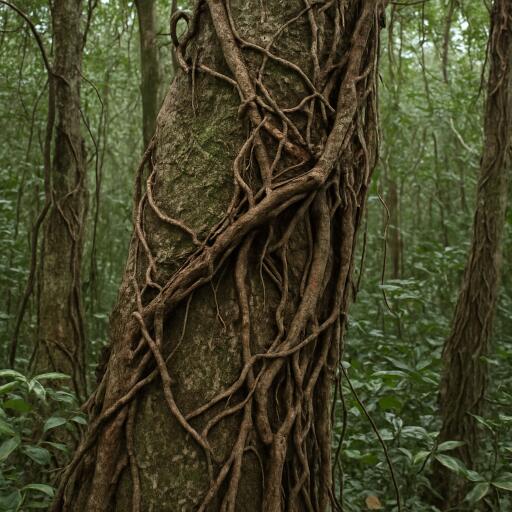
Silent killer in Sundarbans: Parasitic plants eating away at Sundari trees
A new ecological emergency is unfolding in the Sundarbans, where parasitic plants are spreading across the iconic Sundari tree and deepening fears for the future of the world’s largest mangrove forest. What was once seen mainly at the ends of branches is now appearing on trunks, where the parasite siphons off moisture and nutrients, leaving trees weakened, discolored, and in many cases dead.
The timing could hardly be worse. Sundari trees have long been under pressure from rising salinity and a condition widely known as top-dying. Now, field observations and official estimates suggest the parasite is becoming another major driver of decline. Scientists and forest officials warn that if the spread continues without an effective response, the tree that gave the Sundarbans its name could face a dramatic collapse within the coming decades.
A cornerstone species in a fragile defense system
The Sundarbans spans roughly 10,000 square kilometers across Bangladesh and India, with a large share lying in Bangladesh’s southwest. This vast estuarine forest is one of the planet’s most important natural buffers against cyclones, tidal surges, shoreline erosion, and saltwater intrusion.
Within this landscape, the Sundari tree plays an outsized role. Its root systems help stabilize muddy coastlines, while its canopy supports the humid, shaded conditions needed by countless plants and animals. Fallen leaves and submerged roots also create feeding and nursery habitat for fish, shrimp, and other aquatic life that sustain both wildlife and local communities.
When Sundari trees decline, the loss is not limited to a single species. It sends shockwaves through the mangrove food web, affecting insect activity, fish breeding, forest structure, and ultimately the prey base of larger animals across the ecosystem.
Climate stress is amplifying the damage
The spread of parasites is taking place in a forest already strained by climate-driven change. Sea-level rise, more intense storms, and higher salinity are altering the Sundarbans from the ground up. Repeated storm surges deposit saline sediment across the forest floor, changing soil and water conditions in ways that appear to favor opportunistic growths such as parasitic plants, creepers, and fungi.
The problem is especially severe in parts of the eastern Sundarbans, where reduced freshwater flow is compounding ecological stress. One major example is the Bhola River, sections of which have narrowed and silted up so heavily that local people now describe stretches of it as essentially dead. As channels clog, internal waterways also deteriorate, reducing circulation and cutting off freshwater inputs that once helped moderate salinity.
That hydrological breakdown has consequences far beyond navigation. It creates harsher conditions for mangroves, accelerates disease, and appears to be helping parasites gain ground on already vulnerable Sundari trees.
Forest livelihoods are beginning to shrink
The Sundarbans is not only a biodiversity stronghold; it is also a working landscape that supports the livelihoods of more than a million people. Families depend on fishing, crab collection, honey gathering, wax harvesting, nipa palm products, thatching materials, and forest-linked tourism. As the condition of the forest changes, those income streams are becoming less reliable.
Honey collectors say areas that were once dense with healthy trees now contain more open patches and dead wood. Bees avoid dead or badly damaged trees, making it harder to locate hives during harvest season. Fishers report that species once common in shaded canals are becoming scarcer as waterways silt up and tree cover declines.
The damage also reaches newer rural businesses. Small traders who market forest honey, fish, molasses, pickles, and tourism services increasingly see the health of the Sundarbans as tied directly to the survival of the regional economy. If Sundari loss accelerates, the impact will be felt not only by traditional harvesters but also by local supply chains and digital microenterprises built around forest products.
Scientists warn of a cascading ecological loss
Researchers say the crisis cannot be understood as an isolated pest event. The parasite is moving through an ecosystem already destabilized by salinity, habitat degradation, and disrupted water flow. Because the Sundarbans is a highly specialized natural mangrove system, replacing lost trees through conventional plantation methods is not a simple solution.
Specialists also caution that the decline of Sundari trees could reduce breeding and shelter space for commercially important fish and crustaceans. As roots decay and leaf litter thins out, aquatic habitats become less productive. Combined with overfishing, pollution, and destructive harvesting practices, this could deepen economic hardship for coastal fishing communities.
Current estimates from forest authorities indicate that roughly a quarter to nearly a third of Sundari trees in some affected ranges show signs of parasitic infestation. That level is high enough to make the issue a major conservation concern rather than a localized anomaly.
What happens next
Officials say scientific investigation is now urgent. A durable response will likely require close study of how salinity, sedimentation, waterlogging, and parasite spread interact across different parts of the forest. Without that evidence, attempts to control the outbreak risk being too slow or poorly targeted.
Restoring water flow is also emerging as a central priority. Efforts to reopen silted sections of the Bhola River have begun in limited form before, but a more complete restoration could help bring freshwater back into stressed areas of the forest. If successful, that may improve conditions for mangroves and reduce some of the pressures driving decline.
The Sundarbans has survived cyclones, tides, and centuries of change, but the current convergence of climate stress, disease, and parasitic invasion is testing its resilience in new ways. The Sundari tree is more than a species in trouble; it is one of the structural pillars of the mangrove itself. If that pillar fails, the consequences will extend from forest wildlife to fisheries, storm protection, and the economies of Bangladesh’s southwest coast.
For now, the warning signs are no longer subtle. They are visible in yellowing crowns, dying trunks, silent canals, and shrinking harvests. Saving the Sundari may determine how much of the Sundarbans can be saved with it.



Leave a Reply