

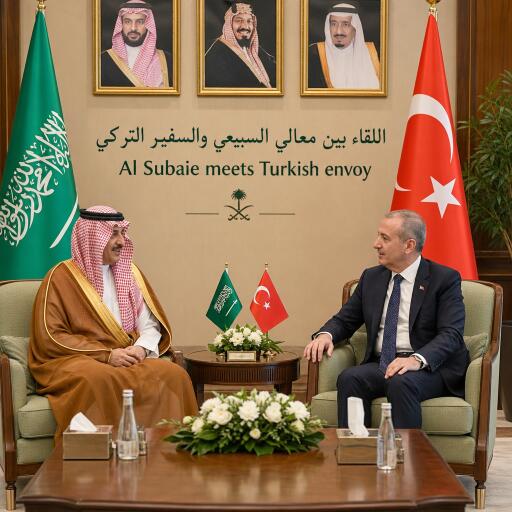
Al Subaie meets Turkish envoy
Doha — In a courtesy meeting marking the close of a diplomatic posting, Dr. Abdullah bin Abdulaziz bin Turki Al Subaie, Qatar’s Minister of Environment and Climate Change, received Türkiye’s Ambassador to Qatar, Dr. Mehmet Mustafa Göksu. The minister conveyed his appreciation for the ambassador’s efforts to deepen cooperation between the two countries and wished him success in his future roles.
While primarily a farewell, the encounter underscored how environmental and climate priorities have become central to regional diplomacy. Qatar and Türkiye have, in recent years, broadened their dialogue on issues such as sustainable development, clean technologies, and resilience to climate-related risks—areas where cross-border knowledge-sharing is increasingly vital.
From rising temperatures and extreme heat to water scarcity and dust events, the Gulf region faces environmental pressures that demand coordinated responses. Coastal resilience and marine conservation are also pressing concerns, as warming seas and salinity shifts affect fisheries, coral ecosystems, and coastal livelihoods. Türkiye’s experience across diverse landscapes—from urban air quality management to forest and rangeland stewardship—offers complementary expertise that can inform solutions in arid and coastal environments, making bilateral engagement especially relevant.
Technical collaboration between the two countries has the potential to accelerate practical gains. Opportunities include advancing circular economy practices to reduce waste, improving monitoring of air quality and greenhouse gases, and supporting research on nature-based solutions for heat mitigation, such as urban greening and wetland restoration. Shared learning on efficient water use—spanning desalination energy footprints, leak detection, and wastewater reuse—remains another critical frontier as climate stress intensifies.
The meeting also highlighted the importance of continuity. As Ambassador Göksu concludes his tenure, both sides are expected to maintain momentum on initiatives that align environmental protection with economic diversification. That includes capacity-building for environmental data systems, private-sector participation in clean industry, and community engagement to embed sustainability into everyday life. With climate impacts already reshaping regional planning—from infrastructure design to public health—policy consistency and long-term partnerships are essential.
Qatar’s Ministry of Environment and Climate Change has repeatedly emphasized the value of international cooperation to meet national objectives, whether through joint research, pilot projects, or training programs. Türkiye’s institutions, in turn, bring experience in scaling practical solutions—from energy efficiency and renewables integration to disaster risk reduction—that can be adapted to local conditions across the Gulf.
Beyond governmental ties, universities, start-ups, and civil society groups in both countries are increasingly important conduits for innovation and public awareness. Encouraging these networks to collaborate—through exchange programs, open data approaches, and co-developed demonstration projects—can translate high-level commitments into tangible environmental benefits.
As diplomatic courtesies were exchanged in Doha, the message was clear: partnerships built on shared environmental goals are not just symbolic. They are strategic assets for climate resilience and sustainable growth. In thanking Ambassador Göksu and wishing him well, Minister Al Subaie signaled the enduring role of Qatar–Türkiye cooperation in navigating ecological challenges that no nation can tackle alone.



Leave a Reply