

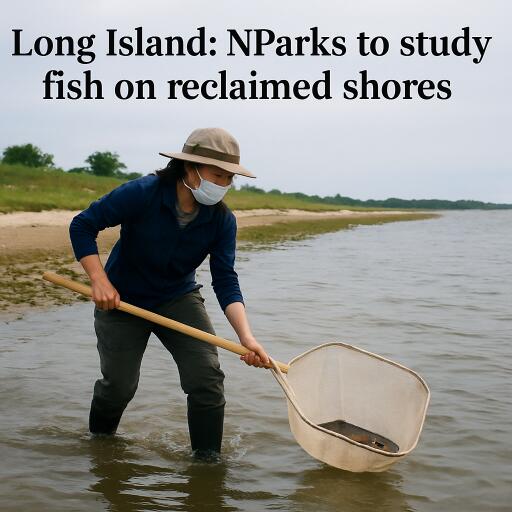
Long Island: NParks to study fish on reclaimed shores
As Singapore moves toward the next phase of the Long Island coastal project, the National Parks Board is preparing a multi-year study of fish living along reclaimed shorelines, including waters off East Coast Park. The research is intended to improve how artificial coastal habitats are planned, designed and managed in the future.
The study was conceived in 2025 and is expected to run for about three years, although its official launch date has not been disclosed. Researchers are expected to examine how fish communities are structured, where adult and juvenile fish are found, and how non-native species may be influencing these altered marine environments.
For ecologists, the timing is significant. Preparatory works for Long Island are scheduled to begin at the end of 2026, raising questions about how nearby marine life — especially around Bedok Jetty — may be affected by construction activity such as sand infilling.
Government agencies have said any disruption to fish populations is expected to be limited in both duration and area. Their assessment is based largely on the mobility of fish and the presence of alternative habitats outside the active work zones. Recreational fishing at Bedok Jetty is expected to continue during the works, though catches may decline.
Still, marine researchers and experienced anglers say the East Coast marine environment remains understudied, and they argue that more baseline information is needed before the shoreline changes further. One recurring concern is that conventional environmental assessments can miss species that are less conspicuous, including bottom-dwelling fish and organisms that burrow into sediment.
According to specialists familiar with local fish biodiversity, there has never been a thorough baseline survey for the East Coast area. That makes it difficult to judge precisely what could be lost, displaced or transformed once major works begin. They add that a meaningful biodiversity assessment usually requires many months of monitoring across seasons and with a variety of sampling methods.
Because East Coast Park itself sits on reclaimed land, the area is often treated as having lower ecological value than natural habitats such as coral reefs, mangroves or seagrass meadows. But that does not mean it is biologically empty. Over time, reclaimed shorelines can develop into functioning habitats that attract surprisingly diverse marine life, especially around structures that create shelter and feeding opportunities.
Bedok Jetty is one such example. Long known as a popular fishing spot, it also appears to act as a gathering point for many fish species. Scientists say the planned study could generate insights not only for Long Island but also for the management of man-made coastal features that concentrate marine life.
The value of such data extends beyond academic interest. In other parts of the world, long-term monitoring of fish communities has informed rules on catch size, bag limits and habitat protection. Similar information in Singapore could help shape how urban shorelines are balanced between engineering needs, biodiversity goals and public recreation.
Public interest in this issue has also given rise to an unusual form of citizen science. A recently formed fish enthusiast group, started by four anglers in their 20s, has been documenting species found around Bedok Jetty and other local waters ahead of the reclamation works. What began as a small effort has quickly grown into a community of more than 80 members focused on recording fish diversity along Singapore’s changing coast.
The group logs the species they catch, releases most of them, and preserves selected specimens for scientific reference. Their aim is to create a more detailed picture of what still survives along heavily modified shorelines — places that can be overlooked because they are not considered pristine ecosystems.
The anglers say their field observations suggest the waters near Bedok Jetty host a richer fish assemblage than many people assume. Their records, together with public biodiversity databases and museum contributions, point to a notable concentration of species in the area. This has fueled calls for environmental reviews to better reflect not just habitat categories, but the actual organisms present.
Researchers involved in discussions around the new fish study acknowledge that existing data gaps make impact forecasting difficult. With competing national priorities and limited time before preparatory works begin, a full pre-construction biodiversity inventory may not be realistic. Even so, experts say the upcoming survey could still provide valuable guidance if it uses multiple techniques and considers species with different behaviors and life stages.
The debate highlights a broader challenge in coastal development: how to measure ecological value in landscapes that are already engineered. Reclaimed coastlines may not resemble natural marine environments, but they can still support food webs, serve as nursery grounds, and offer refuge for wildlife adapting to urban seas.
For Singapore, where land-scarce planning often intersects with environmental limits, the Long Island project has become a test case in how science is integrated into shoreline expansion. The forthcoming fish study may not capture everything that exists today, but it could help establish a more informed approach to designing coastlines that are not only functional and resilient, but also more hospitable to marine life.



Leave a Reply