

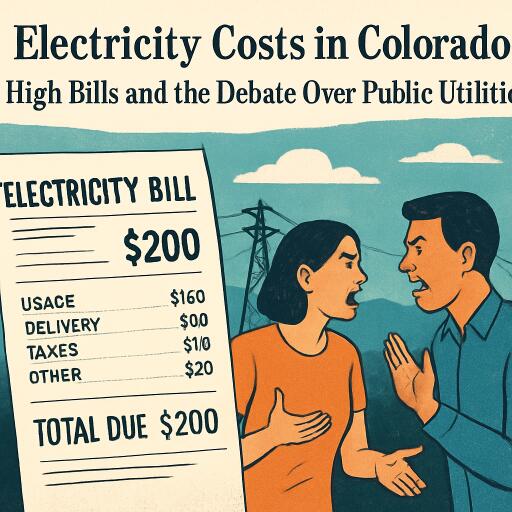
Electricity Costs in Colorado: High Bills and the Debate Over Public Utilities – Archynewsy
Colorado households are feeling the squeeze of rising electricity prices, especially as summer heat drives air conditioners into overdrive. After several years of steady increases across the country, Coloradans are grappling with higher monthly bills and a renewed debate about who should run the grid—and at what cost.
Why Your Bill Keeps Climbing
Multiple forces are pushing residential rates upward, and they’re not unique to Colorado—though the state’s geography, wildfire risk, and rapid growth make them particularly visible here. Utilities are spending heavily to harden lines against extreme weather and wildfires, update aging networks, and connect more renewable energy. Fuel price volatility—especially for natural gas, which still backs up wind and solar—adds another layer of unpredictability.
- Grid upgrades: Replacing old poles and wires, burying lines in high-risk corridors, and installing advanced meters all require major capital.
- Wildfire mitigation: Vegetation management, reclosers, and fire-resistant equipment raise costs but are now essential for safety and reliability.
- Fuel swings: When natural gas prices spike, the cost of generating electricity follows—often reflected in bill riders.
- Integrating renewables: New transmission and balancing resources are needed to deliver wind and solar reliably across long distances and variable conditions.
- Resilience investments: Extreme heat waves and winter storms demand higher system redundancy and emergency capacity.
Across many states, residential rates have seen double-digit gains since 2020. Utilities argue these expenses are necessary to keep the lights on and meet climate goals. Consumer advocates counter that households shoulder too much of the cost and frequently challenge proposed hikes before state regulators.
Public vs. Investor-Owned Utilities: Who Delivers Better Value?
Colorado’s energy landscape mixes municipal utilities, rural electric cooperatives, and large investor-owned utilities. The model matters:
- Public power and co-ops: Operate on a non-profit basis, with local boards and a mission centered on service rather than returns. They often finance upgrades at lower borrowing costs and can move quickly on community-driven priorities.
- Investor-owned utilities: Private companies that recover investments and an approved return on equity through rates set by regulators. Proponents say this model mobilizes large-scale capital for big projects; critics argue it can prioritize shareholder returns over affordability.
In practice, price differences reflect more than ownership. Resource mix, terrain, wildfire exposure, customer density, and timing of past investments all influence bills. Urban areas may benefit from economies of scale, while rural systems face higher per-customer costs. Meanwhile, the race to cut carbon—by retiring coal, expanding wind and solar, and adding storage—requires significant near-term spending that utilities recover from ratepayers over time.
How to Take Control of Your Energy Costs
While large system investments are outside household control, there are steps families can take to tame their bills—especially during heat waves and cold snaps.
- Seal and insulate: Air sealing, attic insulation, and duct repair often deliver the biggest bang for the buck, reducing heating and cooling loads year-round.
- Smarter thermostats: Programmable or smart devices can shave peak usage by pre-cooling or pre-heating when rates are lower, then coasting through high-price periods.
- Time-of-use plans: If available, shifting laundry, dishwashing, and EV charging to off-peak hours can cut monthly costs without sacrificing comfort.
- Appliance upgrades: High-efficiency heat pumps, water heaters, and ENERGY STAR appliances reduce consumption and may qualify for rebates.
- Home energy audits: Many utilities offer low-cost or free audits that pinpoint savings opportunities tailored to your space.
- Solar options: Rooftop systems or community solar subscriptions can offset usage, though economics vary by location, incentives, and roof conditions.
- Bill assistance: Income-qualified households can access state and federal utility-bill assistance, weatherization support, and targeted relief during extreme weather.
What’s at Stake in Colorado’s Utility Debate
As Colorado marches toward cleaner energy, the big questions aren’t just technical—they’re about fairness and accountability. How quickly should utilities move to modernize and decarbonize? Who bears the risk of big projects that promise savings over decades? And how can low-income households be protected when rates rise faster than wages?
Expect continued scrutiny of rate cases, wildfire safety plans, and new transmission proposals. More communities are also exploring local options—such as municipalization studies or expanded community solar—to gain greater control over costs and resilience. Meanwhile, shared goals remain: a safer grid that can withstand harsher weather, reliable service as demand grows, and steady progress toward a low-carbon future.
The Bottom Line
Rising electricity bills are a symptom of a system in transition—one that must upgrade critical infrastructure, manage mounting climate risks, and deliver cleaner power without sacrificing reliability. For Coloradans, the path forward lies in a balanced approach: rigorous oversight of investments, targeted protections for vulnerable customers, and practical tools that help every household use less energy when it matters most.



Leave a Reply