

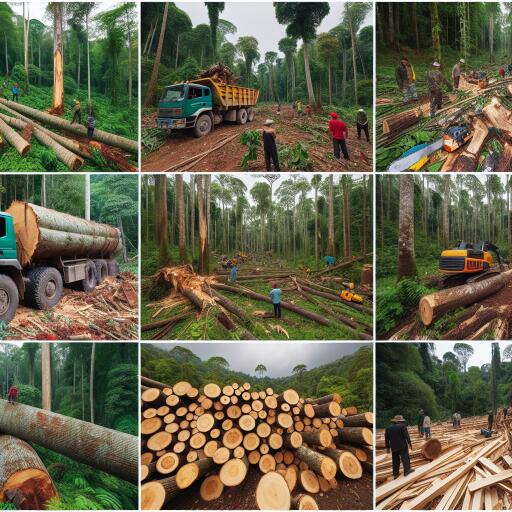
ILLEGAL LOGGING IN EKURI FOREST
Ekuri Forest, a community-managed rainforest in Nigeria’s Cross River State, is once again under siege. In mid-January, community forest guardians who attempted to halt timber trafficking were reportedly detained and harassed. They were later released without charge, yet residents allege that some security personnel stood by while chainsaws continued to bite into protected trees. The episode underscores a troubling pattern: when those defending the last strongholds of biodiversity raise the alarm, they often face intimidation, while the plunder of natural heritage carries on.
A rainforest that safeguards life
Spanning roughly 33,600 hectares and stewarded by Old and New Ekuri villages, the Ekuri community forest forms a vital buffer to Cross River National Park. This living mosaic of tropical hardwoods and rich understorey shelters some of West Africa’s most threatened fauna, including the Nigeria–Cameroon chimpanzee, drills, forest elephants, and elusive leopards. The area has long been celebrated as a model for community-led conservation and sustainable use. Yet its integrity has been repeatedly tested—first by a controversial superhighway proposal that would have carved through the landscape, and now by a resurgence of illicit logging that erodes both ecosystems and local livelihoods.
The true cost of timber theft
Illegal logging is more than a crime against trees; it is a direct assault on the people and species that depend on the forest. When valuable timber is extracted without proper planning or accountability, communities are often left with a fraction of the profits while absorbing the full cost of environmental damage. Forest loss destabilizes soils, increasing the risk of landslides that can wipe out farms, destroy infrastructure, and put lives at risk. It degrades water sources, strips away natural flood defenses, and fractures wildlife habitat. The result is a diminished capacity of the forest to regulate climate, protect biodiversity, and sustain livelihoods—ecosystem services that, once lost, are expensive and sometimes impossible to restore.
In Ekuri, community patrols have long discouraged illegal activities through social oversight and local bylaws. Undermining those community mechanisms—by silencing or intimidating forest defenders—creates a vacuum in which organized timber theft flourishes. Each truckload of logs that leaves the forest illicitly represents not just economic leakage, but a step backward for conservation built over decades.
Nigeria’s forests at a tipping point
Nigeria is losing tree cover at an alarming pace. Estimates indicate that the country records one of the world’s highest rates of forest loss, with annual deforestation measured in the hundreds of thousands of hectares. Today, only a small share of national land remains under forest—far below the level widely recommended to safeguard climate resilience, biodiversity, and water security. The principal drivers are well-known: agricultural expansion, logging (legal and illegal), and infrastructure development. Without decisive action, the remaining primary forests—especially biodiversity hotspots like those in Cross River State—will continue to shrink, with cascading impacts for people and nature.
Law, accountability, and community rights
Authorities tasked with environmental protection have signaled concern and initiated inquiries into illicit timber operations in Cross River. Conservation organizations and local stakeholders are calling for stronger enforcement, transparent investigations, and a clear demonstration that the law applies equally to everyone, including those who facilitate or profit from illegal logging. Community-based forest management remains a cornerstone of effective conservation, but it cannot succeed if local patrols are criminalized for doing the work the state is mandated to support.
In practice, that means ensuring forest defenders can operate safely, establishing independent monitoring that tracks timber from stump to market, and prosecuting offenders up the value chain—not just the laborers with chainsaws, but the buyers, middlemen, and officials who enable illicit flows. It also means recognizing and reinforcing customary land rights, since communities with secure tenure are among the strongest safeguards against deforestation.
What must happen now
- Protect community guardians: Guarantee the safety and legal standing of local patrols, with rapid-response mechanisms when intimidation or violence occurs.
- Strengthen enforcement: Conduct joint operations that include environmental agencies, community representatives, and independent observers to deter corruption and ensure evidence is preserved.
- Track timber legally: Implement robust traceability and verification systems so that illegal wood cannot enter markets unnoticed.
- Invest in alternatives: Support livelihoods that reward forest stewardship—non-timber forest products, ecotourism, and value chains that keep the forest standing.
- Restore degraded areas: Prioritize reforestation and assisted natural regeneration in damaged zones to rebuild ecosystem functions and habitat corridors.
- Plan development wisely: Subject new roads and infrastructure to rigorous environmental assessments, with clear no-go zones in high-biodiversity forests.
Ekuri as a bellwether
What happens in Ekuri will echo far beyond Cross River State. If a forest renowned for community-led stewardship can be cut open by illegal operators while its defenders are hauled into custody, the message to other communities is bleak. Conversely, if laws are enforced impartially, if defenders are protected, and if stolen timber is traced and seized, Ekuri can continue to serve as a beacon—demonstrating that rural livelihoods and intact forests can thrive together.
Illegal logging thrives in the gaps between policy and practice. Closing those gaps requires political will, community agency, and rigorous oversight. Above all, it demands that the people who risk their safety to guard Nigeria’s natural heritage are treated not as criminals, but as essential partners in safeguarding a living forest for generations to come.



Leave a Reply