

The Industrial Renaissance: Malaysia’s Shift Toward Next-Generation Manufacturing Hubs
Malaysia’s industrial map is being redrawn. A confluence of global supply chain diversification, policy clarity, and a rush of high-value manufacturing is pushing the country beyond its long-held role as a back-end semiconductor base. Data centers, electric vehicle components, and advanced electronics are anchoring a fresh wave of investment, with new facilities increasingly concentrated in the Klang Valley and northern growth corridors.
Why Malaysia, and why now
At the policy level, the New Industrial Master Plan 2030 is acting as the scaffolding for this transformation, aligning capital inflows with targeted ecosystems rather than standalone sites. Unlike earlier industrial cycles built on square footage and simple utilities, today’s investors ask different questions: How low-carbon is the power? Is connectivity ultra-reliable? Can the site demonstrate verifiable environmental and labor standards? The answer is taking shape in a new breed of “intelligent” estates where ESG metrics and Fourth Industrial Revolution technologies are integrated from day one.
From industrial parks to intelligent ecosystems
The traditional model of selling a plot and leaving the rest to the tenant is fading. Developers now curate end-to-end operating environments: on-site renewable energy and power purchase agreements to decarbonize load; 5G-ready networks for automation; AI-enabled control rooms for real-time monitoring; resilient water systems; and internationally compliant worker accommodations. In effect, these estates are turning into managed platforms that shorten the time-to-production for multinational manufacturers and reduce the risk of ESG non-compliance.
Blueprints in action
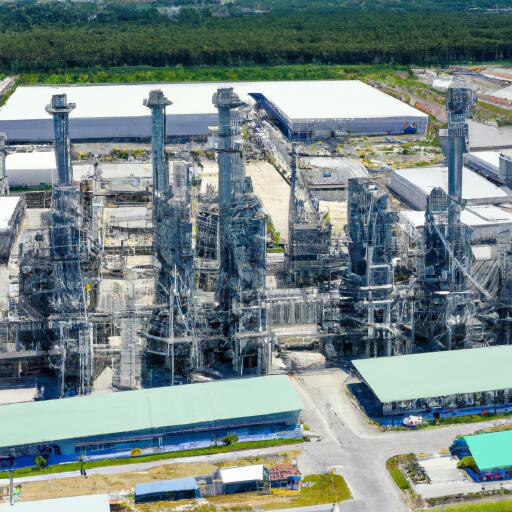
Among the projects that capture this shift is a smart industrial park in Sepang, positioned within the Integrated Development Region in South Selangor. Recognized as Malaysia’s first certified Managed Industrial Park and the nation’s largest ESG-focused industrial estate with GreenRE credentials, it functions as a living laboratory for next-generation manufacturing. An Intelligent Operation Centre orchestrates everything from energy and security to traffic flows, while 5G-ready infrastructure supports robotics, digital twins, and predictive maintenance. Centralized, AI-managed living quarters for workers are designed to meet international labor standards—an increasingly decisive factor for global brands auditing their supply chains.
Climate resilience is baked into the physical plan. Flood mitigation is engineered for extreme weather events, factory shells are solar-ready from the outset, and wastewater systems are set up for higher levels of reuse. These features do more than tick ESG boxes; they reduce operational volatility, lower lifetime costs, and improve a site’s bankability.
Capital, corridors, and scale
Consolidation in the sector is accelerating. A recent acquisition by the developer behind the Sepang park expanded its project pipeline and lifted its gross development value to over RM10 billion, providing the firepower to fast-track flagship sites. Another anchor initiative—an innovation-focused hub within the Delapan Special Border Economic Zone near the Thailand frontier—targets cross-border manufacturers that need seamless logistics, regulatory facilitation, and dual-market access.
This corridor strategy matters. By stitching together southern gateways with northern border economies, Malaysia is positioning itself as both a production base and a regional distribution node, capturing value that might otherwise bypass the country.
Energy, climate credibility, and the data center question
As power-hungry tenants such as data centers and chip-packaging lines grow, the credibility of a park’s energy plan becomes pivotal. Investors now probe the source and stability of electricity as closely as they evaluate land costs. The most competitive estates are moving beyond rooftop solar into multi-layered solutions: utility-scale renewables via PPAs, battery storage to shave peaks and improve grid resilience, and heat-recovery systems that cut waste in cooling-intensive operations. Water stewardship—rainwater harvesting, recycling loops, and river-buffer protection—has likewise shifted from “nice to have” to central design criteria.
Labor and governance are equally consequential. International procurement teams increasingly treat third-party assurance on worker welfare, safety performance, and supplier transparency as mandatory. Managed ecosystems that can deliver traceable compliance—not just policies on paper—stand to win the most demanding tenants.
What this means for manufacturers
- Faster commissioning: Pre-permitted sites with standardized, solar-ready factory shells reduce lead times.
- Lower emissions trajectory: Embedded renewables and energy management systems help hit Scope 2 targets.
- Digital-first operations: 5G and AI infrastructure enable automation, quality control, and predictive maintenance.
- Risk reduction: Flood-resilient design, water reuse, and certified labor housing cut environmental and social risk.
- Scalable growth: Multi-phase estates allow capacity expansion without relocating supply chains.
The larger arc: A different kind of industrial boom
This is not merely a real estate cycle; it is a structural reset in how production networks are built. Parks that operate as managed, ESG-verified platforms are becoming the default choice for multinational firms under pressure to decarbonize and digitize simultaneously. Malaysia’s advantage lies in meeting these needs at scale, backed by policy alignment and a maturing developer ecosystem capable of bundling energy, connectivity, and compliance into a single offering.
If current momentum holds, the country’s new hubs—anchored by smart, certified estates in strategic corridors—will shape the region’s manufacturing landscape well into the 2030s. The winners will be those who can keep integrating cleaner power, smarter systems, and stronger human rights practices without sacrificing speed or cost. In that convergence, Malaysia is beginning to look less like a stop on the value chain and more like a launchpad for the next generation of industry.



Leave a Reply