

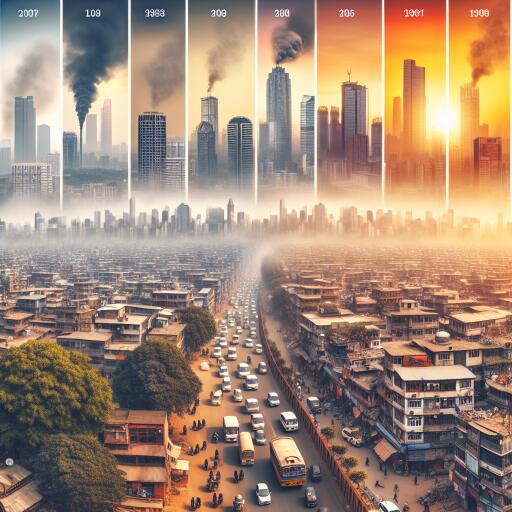
No Indian Metro City Had ‘Good’ Air Quality Even Once In 10 Years: Study
Not a single major Indian metropolis managed even one day of “good” air over the last decade, according to a new analysis of urban air quality from 2015 through November 2025. The assessment, covering 11 large cities, paints a sobering picture of persistent particulate pollution across the country’s biggest economic hubs.
A decade without clean-air days
The review tracked daily Air Quality Index (AQI) values and found that every monitored metro failed to enter the “good” band (0–50) at any point over ten years. While some cities registered modest improvements after the late 2010s, none sustained levels that meet health-protective thresholds. The data underscore a structural pollution problem rather than isolated seasonal spikes.
Delhi remains the pollution epicentre
Delhi consistently ranked as the most polluted among the cities studied. Average AQI readings climbed above 250 in 2016 and, despite a gradual easing since 2019, still hovered near 180 this year—firmly outside safe limits. The capital’s toxic mix is driven by high vehicle density, industrial emissions, frequent waste and biomass burning, and smoke from seasonal crop-residue fires drifting in from surrounding states, all exacerbated by the region’s geography.
Other north and west cities show uneven gains
Several urban centres in the northern plains—such as Lucknow and Varanasi—and in the west, including Ahmedabad, recorded periods of improvement compared with the earlier half of the decade, when AQI often exceeded 200. However, these gains were not enough to secure “good” air. Cities traditionally considered relatively cleaner—Mumbai, Pune, Chennai, and Bengaluru—fared better on average, yet they too remained outside the safe zone. Bengaluru posted the lowest levels among the metros studied, typically ranging between AQI 65 and 90, which falls in the “satisfactory” band at best, still short of “good.”
What the AQI measures—and why it matters
India’s AQI reflects the highest concentration among key pollutants, primarily fine particulate matter: PM2.5 (particles smaller than 2.5 micrometres) and PM10. PM2.5 is especially dangerous because it penetrates deep into the lungs and can enter the bloodstream, elevating risks of heart and lung disease, stroke, and premature death. AQI categories are designed to communicate health risk: “good” (0–50), “satisfactory” (51–100), “moderate” (101–200), “poor” (201–300), “very poor” (301–400), and “severe” (401–500).
Winter weather locks in pollution
Meteorology strongly shapes northern India’s air quality. As winter sets in, cold northwesterly winds, falling night-time temperatures, and frequent temperature inversions cap the atmosphere and trap pollution near the surface. This year, weaker-than-usual western disturbances brought fewer cleansing showers to the northwest. With little rain to wash particles out of the air, smog episodes formed earlier and lasted longer. Dense urban layouts—high-rises, narrow streets, and heavy traffic corridors—further slow wind speeds and hinder dispersion.
Sources: a persistent, mixed plume
Transport tailpipes, coal- and oil-fired industry, diesel generators, road dust, open waste burning, and seasonal agricultural residue burning all contribute to the urban pollution load. Their relative importance varies by city and season. In the Indo-Gangetic Plain, the flat terrain and winter stagnation intensify regional pollution, often overwhelming local clean-up gains unless action is coordinated across state boundaries.
Policy implications: from crisis response to sustained control
Experts argue that India’s fight against toxic air requires more than emergency measures during severe smog days. A durable solution rests on three pillars:
- Airshed-based governance: Pollution travels across districts and states; management plans must do the same. Coordinated targets for transport, industry, construction dust, and agriculture are essential.
- Reliable, granular data: Dense monitoring networks, low-cost sensors validated against reference stations, and transparent emissions inventories allow officials to pinpoint sources and track progress.
- Long-term, science-led policy: Phasing out the dirtiest fuels, accelerating clean public transport and vehicle electrification, retrofitting industries with effective controls, mechanizing dust suppression, and providing viable alternatives to crop-residue burning can bend the curve.
Short-term forecasts and public health advisories also matter. Early warnings enable schools, hospitals, and outdoor workers to adapt schedules; they help city administrations pre-position measures like traffic restrictions, construction pauses, and enhanced street cleaning during expected pollution peaks.
The bottom line
Ten years without a single “good” air day in any Indian metro is a stark marker of how entrenched the challenge has become. The slight improvements seen in some cities show that policy works—but only when it is consistent, coordinated, and backed by political will. Without sustained action across entire airsheds, India’s urban residents will continue to breathe air that falls short of healthy standards.



Leave a Reply