

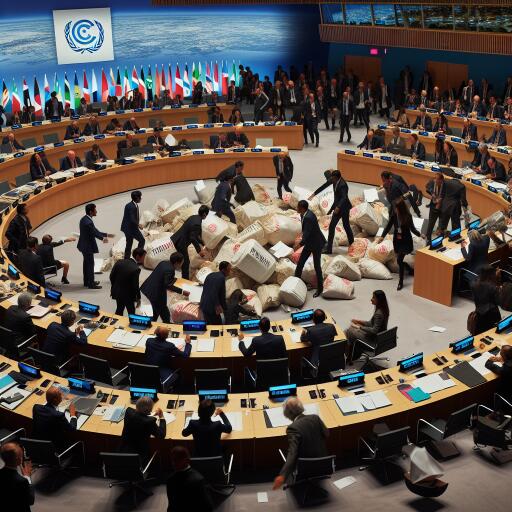
COP30 climate summit deadlocked as EU rejects draft deal
Hopes for a breakthrough at COP30 in Belém dimmed late Friday as the European Union rejected the Brazilian presidency’s proposed outcome, arguing the draft would not meaningfully advance global efforts to cut greenhouse gas emissions. With talks extending well past their scheduled close, negotiators faced a widening split over fossil fuels, emissions cuts, and climate finance.
Talks overrun as pressure mounts
The two-week conference in the Amazonian city was billed as a pivotal test of global climate cooperation. Brazil’s COP presidency urged countries to bridge divides and demonstrate that collective action remains the most credible route to tackling the climate crisis. Despite hours of closed-door sessions, the central trade-off remained unresolved: stronger language on phasing out fossil fuels versus clearer, larger financial commitments to support vulnerable countries.
Fossil fuels vanish from the text
The latest draft, circulated before dawn on Friday, dropped all references to fossil fuels—scrubbing options that had been present in earlier versions. That deletion followed resistance from a wide array of producers and exporters. Earlier in the summit, roughly 80 governments had pushed for a plan to transition away from oil, gas, and coal; by Friday evening, several diplomats indicated that many of these countries were reluctantly prepared to accept a deal without explicit fossil fuel language if other parts of the text were strengthened.
The EU, however, described the draft as too weak and signaled it would not accept an outcome that lacks clear direction on emissions reductions. European officials suggested they could be flexible on finance—provided the overall package includes stronger, time-bound commitments to curb planet-warming pollution.
Finance versus mitigation: the core standoff
Developing countries argued that any pathway addressing fossil fuels must be matched by a pathway for money—covering adaptation, loss and damage, and the transition to clean energy. Several negotiators from emerging economies pressed richer nations to step up with predictable funding and clearer timelines, noting that ambition without resources is likely to falter in implementation.
As the impasse dragged into the night, some European delegates privately floated the possibility of walking away rather than endorsing a diluted agreement. Brazilian officials, meanwhile, indicated that reintroducing fossil-fuel language into the main text would be highly unlikely, framing any changes as small adjustments rather than fundamental rewrites.
Side deal floated, red lines drawn
In parallel to the core talks, negotiators discussed a potential voluntary side declaration on fossil fuels that countries could endorse outside the consensus text. Such a signal could offer a path for high-ambition states to mark progress without derailing the broader package.
But pushback remained intense. Multiple people involved in the negotiations said the Arab Group emphasized that its energy sectors were not up for negotiation, warning that targeting those industries could collapse the talks. The stance underscored how any agreement that directly confronts fossil production risks fracturing the delicate COP consensus model.
Adaptation finance target triples—on paper
The draft calls for a tripling of finance to help countries adapt to climate impacts by 2030, measured from 2025 levels. Yet the text is silent on who provides the funds and how, leaving open whether money would come from public budgets in wealthy countries, development banks, or the private sector. Without clarity on sources and scale, vulnerable nations worry that an adaptation pledge could remain aspirational rather than operational.
Consensus strained in a fragile multilateral moment
All COP decisions require agreement from nearly 200 parties, making compromise both essential and arduous. The Belém presidency stressed the need for a united message at a time when multilateral cooperation faces headwinds and noted the symbolic weight of delivering a credible outcome from the Amazon region.
The absence of a U.S. delegation this year cast a further shadow over the process, intensifying scrutiny on other major economies to demonstrate leadership. “The world is watching,” the presidency reminded delegates, urging them to avoid a split that could reverberate far beyond the venue’s halls.
What to watch next
- Whether the main text regains any reference—direct or indirect—to fossil fuels, or if that debate shifts to a separate voluntary declaration.
- If the EU and high-ambition countries receive stronger, time-bound mitigation language in exchange for movement on finance.
- How the final draft clarifies the sources and scale of adaptation funding and whether it addresses loss and damage alongside adaptation.
- Whether a last-minute compromise preserves consensus or the talks risk concluding without an agreed outcome.
As negotiations continue into overtime, COP30 faces a defining question: can countries balance ambition with fairness—pairing tougher emissions pathways with the finance needed to deliver them—or will the summit close with a lowest-common-denominator text that falls short of the science? The answer will shape not just this year’s headlines, but the credibility of the entire climate process.



Leave a Reply