

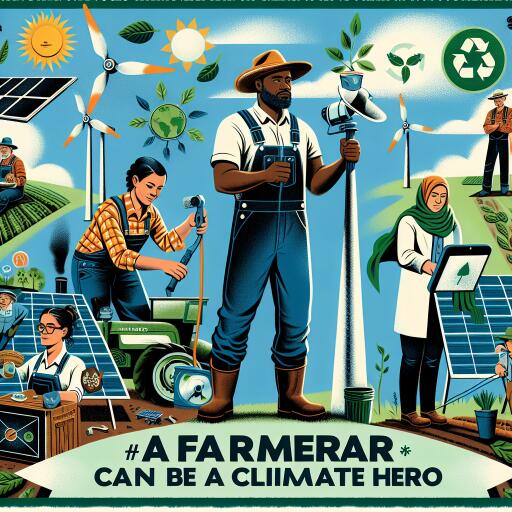
UPL launches #AFarmerCan campaign to celebrate farmers as climate heroes
With the next UN climate summit set for Belém, Brazil, UPL has unveiled a global campaign spotlighting farmers as frontline climate problem-solvers. Dubbed #AFarmerCan, the initiative positions growers as essential to climate resilience and urges decision-makers to place agriculture at the heart of policy negotiations during the conference, scheduled for November 10–21.
At the center of the effort is a collection of 20 stories from farmers across continents, sharing how practical changes on their land are cutting greenhouse gas emissions, boosting energy self-sufficiency, saving water, restoring soil health, and fostering biodiversity. These five themes mirror the company’s focus for the talks in Belém, underscoring how farm-level actions can scale climate benefits while keeping food production viable.
The message is as much cultural as it is technical: acknowledge farmers’ ingenuity, back them with the right incentives, and the climate payoff accelerates. The campaign calls on governments, institutions, and consumers to treat growers not as passive recipients of policy, but as co-authors of climate solutions.
A push for farmer-centered policy
To move from recognition to results, UPL is advocating a four-part framework aimed at strengthening farm resilience and rewarding climate-positive practices:
- Pay: Performance-based rewards for practices that deliver measurable climate and ecological benefits—such as cover crops, reduced tillage, precision nutrient management, renewable energy adoption, and diversified rotations.
- Protect: Risk shields that keep farmers whole when climate shocks hit, including insurance options, targeted subsidies, and contingency support for droughts, floods, and heat waves.
- Procure: Stronger market access through public purchasing of certified sustainable produce, helping to turn environmental improvements into stable demand and fair prices.
- Promote: Scaled access to digital tools, soil testing and data services, and practical training so farmers can measure impacts, improve decisions, and share knowledge.
Company leadership frames the campaign around a simple idea: climate resilience begins on farms. Many producers are already adapting and regenerating—often with limited recognition. Elevating their role, the argument goes, is critical to meeting climate goals while safeguarding livelihoods and food security.
On the ground in Belém
The #AFarmerCan rollout in Belém brings farmer stories into public spaces—airport displays, a fleet of taxis and buses, and citywide visuals that invite people to hear directly from growers. The presence extends online via targeted digital outreach and social media activity, alongside a short film that recasts farmers as climate heroes. Even the campaign’s merchandise is designed with low-impact materials to keep the message aligned with its environmental intent.
Why this moment matters
Agriculture sits at a complex crossroads in the climate debate. It contributes to global emissions, yet it also holds immense potential to store carbon in soils and landscapes, manage water more wisely, and regenerate biodiversity. Farmers are already piloting solutions—from agroforestry and integrated pest management to methane-reducing feed strategies and on-farm renewables—but scaling these requires predictable income streams, risk protection, and clear market signals.
Climate volatility is compressing that timeline. Intensifying droughts, floods, heat waves, and shifting pest pressures are eroding yields and squeezing margins. Resilience, therefore, is both ecological and economic: practices that build healthy soils and diverse ecosystems also help stabilize farm income and reduce exposure to climate shocks. Aligning public policy with these outcomes—through payments for ecosystem services, resilient procurement, and accessible measurement and verification—can turn early adopters into the mainstream.
As negotiators gather in Belém, watch for policy markers that determine whether farmer-led climate action can truly scale: reliable funding for climate-smart practices; insurance and safety nets that reflect new extremes; data systems that make soil and biodiversity gains visible and tradable; and procurement rules that reward verified sustainability. The #AFarmerCan campaign is designed to keep farmers’ voices front and center in that debate—reminding the world that the path to climate resilience runs through fields, pastures, and orchards as much as through conference halls.
The broader takeaway is clear: when farmers are equipped and recognized, climate ambition becomes more attainable. The campaign argues that the fastest route to durable climate progress is to make growers partners—paid, protected, and empowered—to do what they already know best: steward the land.



Leave a Reply