

The Planet’s Natural Carbon Sinks are Reaching their Limits, According to New Report
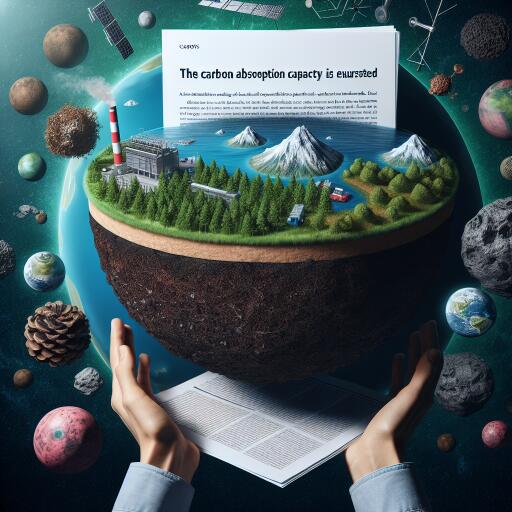
Nature’s ability to mop up humanity’s carbon emissions is faltering. A new international synthesis of recent climate research concludes that decades of warming have weakened the capacity of forests, soils, and oceans to absorb carbon dioxide, underscoring that deep, immediate emission cuts must be paired with responsible, large-scale carbon removal to keep climate goals within reach.
Nature’s carbon sponges are saturating
For years, policymakers have counted on the planet’s living systems to quietly offset a substantial share of human emissions. That safety net is fraying. The latest science indicates that land and ocean carbon sinks are less efficient than they used to be, increasing the fraction of carbon dioxide that remains in the atmosphere. In practical terms, this means the world may be underestimating both the current emissions gap and the speed of future warming if it assumes nature will keep pace as before.
Oceans are warming fast, and heatwaves are rewriting the marine rulebook
The ocean—long the world’s strongest climate buffer—now shows signs of strain. Accelerated sea-surface warming and more frequent, longer-lasting marine heatwaves are curbing the ocean’s capacity to store carbon. These extreme events, which can push water temperatures three to five degrees Celsius above seasonal norms for weeks or months, are dismantling kelp forests, bleaching coral reefs, and unravelling food webs. The impacts reverberate from biodiversity loss to disrupted fisheries and coastal economies.
Early warning offers a narrow window to act
There is a sliver of good news: scientists can increasingly forecast where and when marine heatwaves are likely to emerge. That forecasting ability opens a brief window for preparedness—mobilizing field studies in real time, guiding fisheries management, and helping coastal industries brace for impacts. Long-term ecological records and experimental facilities are proving vital for translating global temperature records into actionable local evidence.
Record heat is cascading through societies
The extraordinary warmth of 2023 and 2024 has strained water supplies, intensified wildfire risk, and expanded the range of disease-carrying mosquitoes. Heat stress is also diminishing labor productivity, particularly for outdoor and manual workers, with growing consequences for livelihoods and economic stability. These compounding risks emphasize that the climate crisis is as much about public health and equity as it is about temperature charts.
Science points to a twin track: cut fast, remove wisely
The report’s message is clear: slashing fossil fuel use and deforestation remains the non-negotiable core of climate action. But with natural sinks weakening, meeting climate targets will also require scaling up carbon-dioxide removal (CDR) that is evidence-based, verifiable, and focused on truly hard-to-abate emissions. Integrity matters—both in carbon markets and in the deployment of CDR—to ensure real, additional and durable climate benefits.
What the latest science highlights
- Possible acceleration of global warming: Recent observations suggest warming may be speeding up, amplifying climate risks sooner than expected.
- Rapid ocean heating: Marine heatwaves are becoming more intense and widespread, damaging ecosystems and increasing the odds of extreme weather.
- Strain on land sinks: Forests and soils show signs of saturation and stress, reducing their capacity to absorb carbon.
- Climate–biodiversity feedback: Loss of biodiversity weakens natural resilience and carbon storage, which in turn worsens climate change—a dangerous feedback loop.
- Declining groundwater: Hotter, drier conditions and overuse are accelerating depletion of aquifers, threatening water security.
- Climate-driven disease spread: Warmer temperatures are enabling wider transmission of vector-borne illnesses such as dengue.
- Heat and work: Rising temperatures are cutting labor productivity, endangering workers and incomes, especially in the world’s hottest regions.
- Scaling CDR judiciously: Carbon removal must complement, not replace, rapid emissions cuts, targeting sectors that are hardest to decarbonize.
- Integrity in carbon markets: Strong benchmarks, transparency, and independent verification are essential to avoid overstatement of climate benefits.
- Effective policy mixes: Combining standards, pricing, public investment, and just-transition measures delivers deeper, more durable emission reductions.
From pledges to proof
With another round of global climate talks approaching, the research community’s message is unequivocal: implementation must outrun rhetoric. Governments and industries need to align short-term decisions with long-term climate stability—by accelerating clean energy, protecting and restoring ecosystems, safeguarding water resources, and building heat-resilient health and labor systems.
Crucially, monitoring and early-warning systems—on land and at sea—should be expanded to anticipate extremes before they spiral into crises. Investing in data, science, and locally grounded adaptation can turn today’s alerts into tomorrow’s avoided losses.
The bottom line: the planet’s natural carbon sinks are no longer the dependable backstop they once were. Every fraction of a degree avoided still counts, and the path to a livable future runs through rapid emissions cuts, rigorous carbon removal where needed, and policies that deliver measurable results.



Leave a Reply