

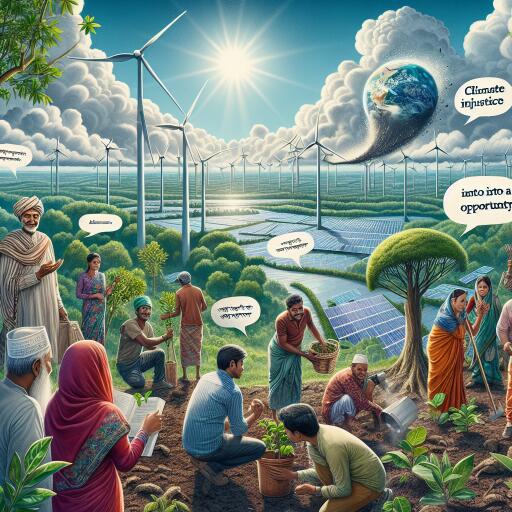
Bangladesh can turn ‘climate injustice’ to opportunity, utilising
Bangladesh emits only a sliver of the world’s greenhouse gases, yet it stands on the front line of rising seas, cyclones, flooding, and saltwater intrusion. That imbalance—often described as climate injustice—was reframed in Dhaka this week as a chance to lead. At a high-level dialogue on carbon markets, speakers argued that with the right rules and institutions, Bangladesh can draw climate finance at scale, cut emissions, and steer investment toward resilient, inclusive growth.
A momentum-building moment in Dhaka
At an evening forum titled “Climate Talk: Exploring a Robust Carbon Market in Bangladesh,” hosted at Bay Edge Gallery in Dhaka, diplomats, policymakers, business leaders, academics, and development professionals converged to map the country’s pathway to a credible market for emissions reductions. The discussion repeatedly underscored two realities: Bangladesh’s negligible contribution to the problem and its outsized exposure to climate impacts—and the need to transform that disparity into economic opportunity.
Denmark’s ambassador to Bangladesh emphasized that a well-designed carbon market could be a practical lever for sustainable development, channeling capital into cleaner energy, industrial efficiency, and climate-resilient projects. He stressed that success will depend on strong institutions, clear and predictable policies, and deep collaboration across government, the private sector, civil society, and international partners. Denmark, he noted, will continue to support Bangladesh’s green transition.
Carbon markets as a catalyst for growth
Carbon market specialist Shaymal Barman set out the economic case: a credible market can mobilize new finance, lower the cost of meeting national climate targets, and spur innovation by rewarding emissions cuts. For countries like Bangladesh, he argued, the mechanism can align climate ambition with growth—encouraging clean technologies, unlocking efficiency gains, and creating new revenue streams for both public and private actors as they pursue Nationally Determined Contributions.
From government, Mirza Shawkat Ali of the Department of Environment said Bangladesh is developing a Carbon Market Framework intended to attract investment, promote innovation, and ensure that climate action supports low-carbon development while delivering tangible benefits for local communities and the wider economy. The framework aims to set clear guardrails for integrity and inclusion as the market emerges.
Integrity first: building a market that works for people and planet
Speakers converged on a set of priorities that will determine whether the market delivers real results:
- Institutional strength and policy clarity: establish an independent oversight function, transparent rules, and a stable policy environment so investors can plan and communities can trust the process.
- Robust measurement, reporting and verification: ensure emissions reductions are real, additional, and permanent, backed by credible baselines and consistent methodologies.
- Social and environmental safeguards: protect livelihoods and ecosystems, prevent land-use conflicts, and design benefit-sharing mechanisms so local people see direct gains.
- Market transparency: publish data on projects, credits, and prices to build confidence and prevent greenwashing.
- Capacity building: train public agencies, verifiers, and project developers, and support small and medium enterprises to participate.
Where the early opportunities lie
Bangladesh’s mitigation potential is diverse. Energy efficiency in industry and buildings can cut costs and emissions quickly. Clean power—from solar to wind and modernized grids—can displace fossil generation. Methane reductions in waste and wastewater management, better rice cultivation practices, and climate-smart agriculture offer significant gains. Clean cooking solutions can improve health while reducing emissions. Nature-based approaches, including restoring degraded ecosystems, can lock in carbon and strengthen resilience to storms and flooding.
To convert potential into bankable projects, participants highlighted the need for a national registry, standard methodologies, and a pipeline of pilots that can scale. Coordinating the market framework with national strategies and the NDC will help target finance where it can achieve the greatest impact.
Turning inequity into leadership
The Dhaka dialogue made one point unmistakable: Bangladesh’s minimal emissions footprint does not preclude climate leadership. With credible rules, transparent institutions, and inclusive participation, a carbon market could become a powerful engine for jobs, technology transfer, and resilience—while contributing to global emissions reductions. International partners signaled readiness to support this transition, but the crucial steps now rest with the design and delivery of Bangladesh’s emerging framework.
If implemented with integrity and community benefits at its core, Bangladesh can turn climate injustice into a springboard—directing global climate finance toward a cleaner, safer, and more prosperous future at home.



Leave a Reply